
Portugal begins construction of high-speed rail line linking Lisbon and Porto
Portugal has begun building the first part of a new high-speed railway intended to transform travel between its two largest cities. Work started on Monday on

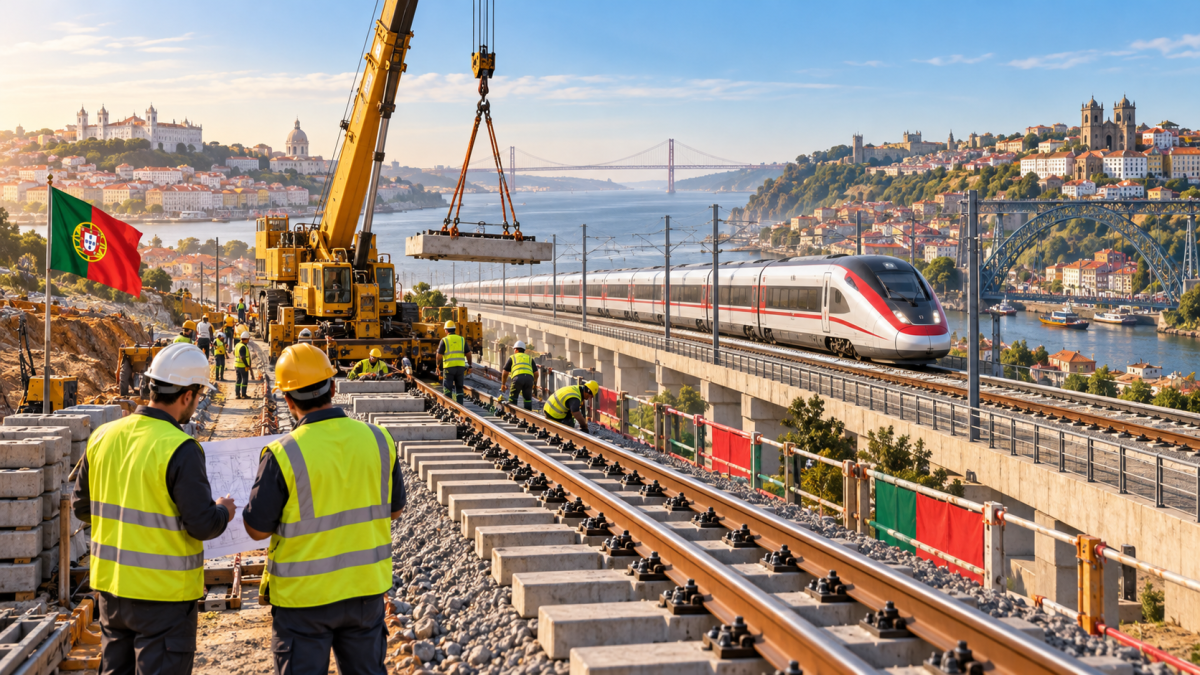
Table of Contents
Portugal launches high-speed rail project between Lisbon and Porto
Poinews.com – Portugal has begun building the first part of a new high-speed railway intended to transform travel between its two largest cities. Work started on Monday on the route running from Porto-Campanhã to Oiã, in the Aveiro district, marking the opening stage of the Lisbon–Porto high-speed line, known in Portugal as the LAV.
When the full route is complete, the planned journey time between Lisbon and Porto will fall to 1 hour and 15 minutes. The project is being presented as a major addition to the country’s transport network, with links to Portugal’s airport planning, wider rail investment and future connections across the Iberian Peninsula.
First section to cover 71 kilometres
The initial Porto–Oiã section will include 71 kilometres of high-speed track. Its construction programme also includes a new combined road-and-rail bridge across the Douro River, a new station at Vila Nova de Gaia-Santo Ovídio, and an enlarged, redesigned Porto-Campanhã Intermodal Station.
Porto-Campanhã already serves as a key transport gateway for the city, bringing together rail services and other forms of onward travel. The proposed overhaul is intended to prepare the station for a larger role within the future high-speed network.
The new Douro crossing is another central element of the plan. By pairing road and rail infrastructure within the wider scheme, the project will reshape an important transport corridor in the Porto metropolitan area while creating capacity for the dedicated high-speed line.
Investment backed by European funding
The concession agreement for the Porto–Oiã segment was signed on 29 July 2025. The government has put the cost of this first section at roughly €2 billion.
Its financing package includes €875 million from the European Investment Bank and €480 million through the Connecting Europe Facility. The scheme has been structured as a public-private partnership, placing it among Portugal’s most significant long-term infrastructure programmes.
The Ministry of Infrastructure and Housing has described the development as important to the public passenger transport system and to the region’s wider economic structure. It also places the line within European transport ambitions that seek to increase passenger rail use, reinforce conventional services and support travel that combines rail with other mobility options.
A wider strategy for Portugal and Spain
The Lisbon–Porto line is not being treated as an isolated rail project. The government sees it as part of the national airport strategy surrounding the planned new Lisbon airport, as well as a step toward closer railway integration with Spain.
By 2034, the government expects the broader high-speed programme to help establish a rail journey of about three hours between Lisbon and Madrid. That target would connect the Portuguese capital more directly to Spain’s high-speed rail system and give travellers another option for journeys across the Iberian Peninsula.
For passengers within Portugal, the most immediate promise is a faster connection between Lisbon and Porto. A journey time of 75 minutes could alter how residents, visitors and business travellers weigh rail travel against other modes, especially on a corridor that links two major urban centres.
The project also sits alongside the country’s conventional railway network rather than replacing it. Existing lines continue to serve communities beyond the new high-speed alignment, while the dedicated route is intended to provide quicker long-distance travel. The government’s approach stresses a multimodal system in which rail works alongside airports, roads and other transport choices.
Government calls for lasting consensus
Miguel Pinto Luz, Portugal’s minister of infrastructure and housing, said the scale of the railway project placed it among the defining infrastructure commitments of the century.
“Alongside the new Lisbon airport, high-speed rail lines represent the largest infrastructure projects the country will undertake this century,” Miguel Pinto Luz, Portugal’s minister of infrastructure and housing, said.
He argued that the programme requires broad and durable support, both for the high-speed line itself and for continued investment across the national railway system.
“It is therefore crucial that there be – as I know there is – a strong national consensus regarding high-speed rail and, more generally, the importance of investment in the railway system,” he added.
Starting construction on the Porto–Oiã section turns a long-term transport objective into an active building programme. The work now underway will provide the first physical portion of a route designed to shorten the Lisbon–Porto trip, upgrade transport infrastructure around Porto and contribute to Portugal’s planned rail connection with Madrid.
Delivery will depend on the successive stages of construction, financing and integration with the country’s broader transport plans. But the launch of work signals that Portugal has moved from planning its flagship high-speed link to building it.
Related Reading
Frequently Asked Questions
What is Portugal begins construction of high speed?
Portugal begins construction of high speed is the main topic of this guide. The article explains the context, practical details, and next steps readers should understand.
Why does Portugal begins construction of high speed matter?
Portugal begins construction of high speed matters because readers are looking for a useful answer, not just a short summary. Good content should match search intent and help them decide what to do next.