Eurogroup chief tells Euronews ‘fiscal policy must not contradict ECB’ effort to tame inflation
Eurogroup Chief Urges Fiscal Policy Alignment with ECB's Inflation Taming Efforts Eurogroup chief tells Euronews fiscal policy - In an exclusive interview

Eurogroup Chief Urges Fiscal Policy Alignment with ECB’s Inflation Taming Efforts
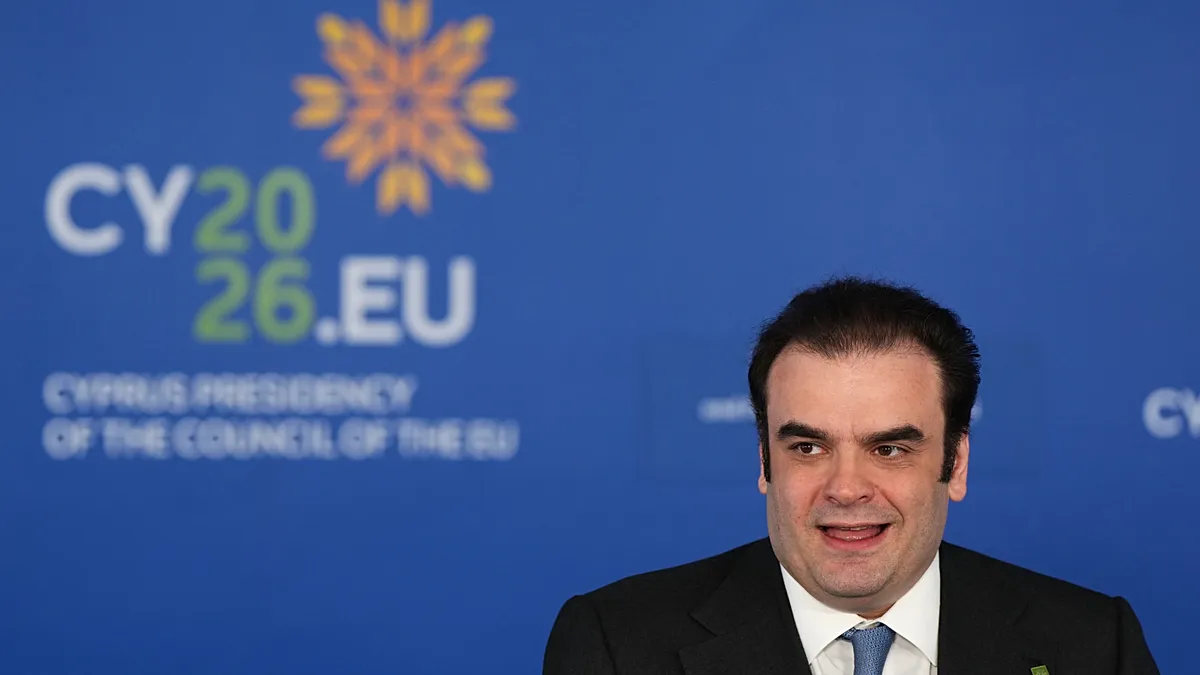
Poinews.com – In an exclusive interview with Euronews, Eurogroup President Kyriakos Pierrakakis emphasized the critical need for fiscal policies within the eurozone to align with the European Central Bank’s (ECB) measures to curb inflation. The remarks come amid rising energy costs driven by the ongoing Middle East conflict, which has intensified pressure on central banks to stabilize prices. Pierrakakis reiterated that coordinated fiscal strategies are essential to support the ECB’s monetary efforts, ensuring that government spending and taxation do not undermine inflation control targets. This call for unity follows the ECB’s recent decision to increase its primary interest rate by 25 basis points, raising it to 2.25% as part of a broader campaign to dampen inflationary pressures.
Monetary and Fiscal Synergy in Eurozone Strategy
Pierrakakis highlighted that while monetary policy remains the primary tool for tackling inflation, fiscal measures must complement these efforts. “We are in agreement with the ECB that inflation must be addressed decisively, but our fiscal policies need to be in sync to avoid conflicting outcomes,” he said during the interview. The Eurogroup’s stance reflects a growing consensus among eurozone leaders that targeted fiscal interventions—such as subsidies for vulnerable sectors—should be used judiciously to prevent price hikes from spiraling. This approach is seen as crucial to maintaining the credibility of the ECB’s inflation-fighting mandate, which is central to the eurozone’s economic stability.
Italy’s Demand for Fiscal Flexibility
Italy’s government has been vocal in its push for greater fiscal flexibility, with Prime Minister Giorgia Meloni framing the energy crisis as a matter of national survival. In a recent statement, Meloni and her finance minister, Giancarlo Giorgetti, proposed exempting energy-related expenditures from strict debt and deficit limits under EU guidelines. This would allow Italy to allocate more funds toward energy imports and infrastructure, despite the current requirement for member states to keep deficits under 3% of GDP. The Eurogroup’s challenge lies in balancing Italy’s urgent needs with the broader goal of fiscal discipline, a tension that could shape upcoming negotiations at the EU summit.
Brussels has been cautious in granting a general escape clause for the energy price surge, arguing that such leniency could set a precedent for future fiscal adjustments. However, the crisis has forced policymakers to reconsider rigid adherence to rules, with some advocating for temporary measures to protect households and businesses from the economic fallout. Pierrakakis acknowledged the complexity of the situation, noting that the Eurogroup must act as a bridge between the ECB’s monetary strategy and the diverse fiscal needs of member states. “Our role is to ensure that fiscal decisions are made with the ECB’s objectives in mind, while also considering the unique challenges each country faces,” he explained.
As the ECB continues its tightening cycle, the focus on inflation has reshaped the priorities of eurozone leaders. The central bank’s rate hikes are designed to cool down overheating economies, but their effectiveness depends on fiscal policies that do not create additional inflationary risks. For instance, excessive government spending on energy could offset the ECB’s efforts, leading to a cycle of higher prices and increased borrowing costs. Pierrakakis stressed that fiscal flexibility must be “targeted and time-bound” to avoid long-term consequences. He also endorsed the European Commission’s proposal for conditional fiscal adjustments, which would allow member states to deviate from standard rules if their energy costs exceed certain thresholds.
Meanwhile, the U.S. has intensified its pressure on Iran through Operation Epic Fury, targeting its military and economic sectors. However, Iran has maintained its stance, keeping the Strait of Hormuz closed—a critical artery for global oil exports—despite the growing economic risks. The standoff between Washington and Tehran underscores the broader geopolitical context of the energy crisis, which has further complicated the eurozone’s fiscal strategy. Pierrakakis acknowledged the interconnectedness of global markets, noting that disruptions in the Middle East could have cascading effects on European economies. “We must remain vigilant, as inflation is not just a domestic issue but a global one,” he warned.
European leaders are also exploring long-term solutions to reduce reliance on volatile energy markets. Pierrakakis called for increased investment in renewable energy infrastructure, arguing that this would enhance the eurozone’s economic resilience. “Fiscal policies should not only respond to immediate crises but also lay the groundwork for sustainable growth,” he said. This dual focus on short-term stability and long-term investment is a key theme in the Eurogroup’s evolving strategy. By aligning fiscal decisions with the ECB’s inflation targets, the eurozone aims to create a cohesive economic framework that supports both price stability and recovery.