World’s first large-scale hydrogen engine starts generating electricity
World's First Large-Scale Hydrogen Engine Marks a New Era in Sustainable Power Generation World s first large scale hydrogen - Spain’s national electricity

World’s First Large-Scale Hydrogen Engine Marks a New Era in Sustainable Power Generation
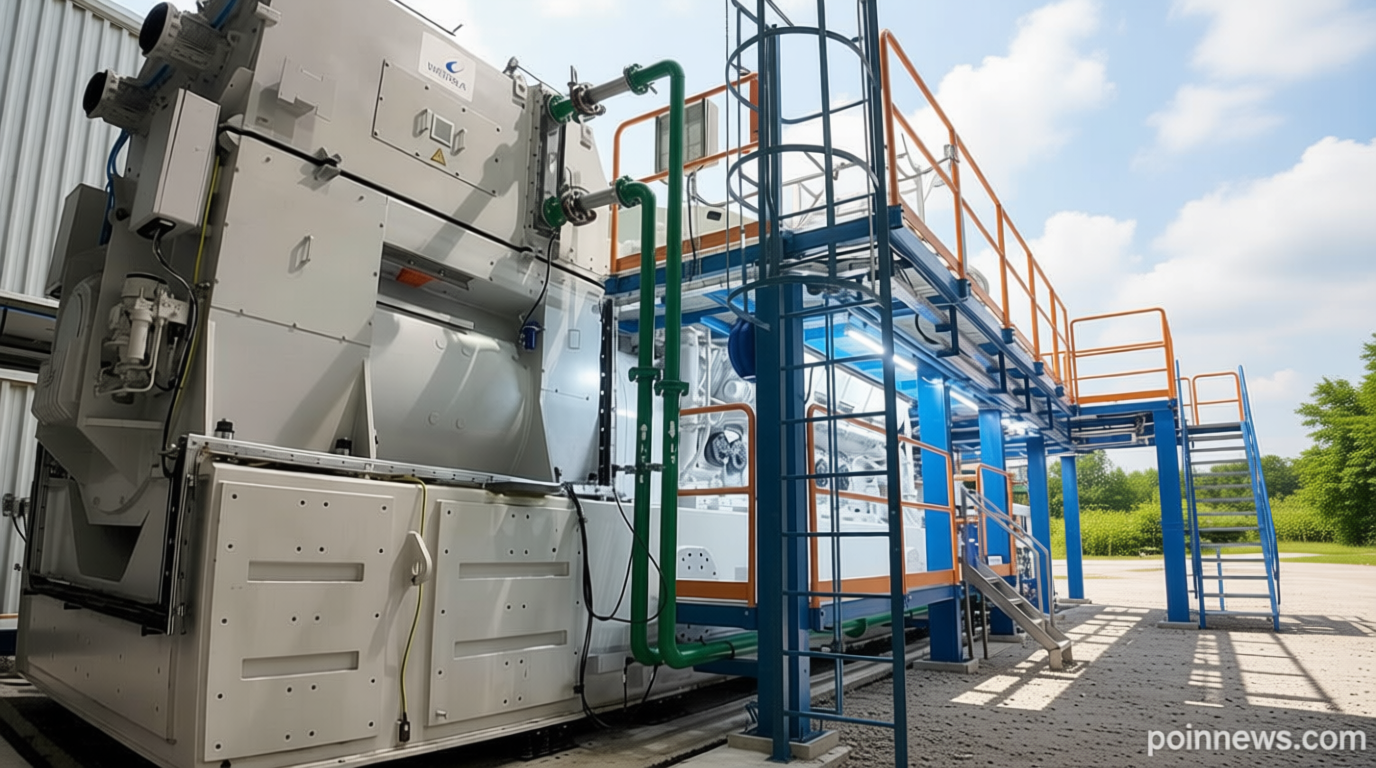
Poinews.com – Spain’s national electricity network has taken a groundbreaking step toward a cleaner energy future by successfully receiving its first power from a world’s first large-scale hydrogen engine. This milestone, achieved by the Finnish energy technology firm Wärtsilä, was demonstrated at its test site in northern Spain, signaling a major leap in the integration of hydrogen as a viable energy source. The engine operates entirely on hydrogen, addressing a key challenge in renewable energy systems: their dependence on weather patterns for consistent output. This innovation not only highlights the potential of hydrogen to supplement intermittent sources like wind and solar but also paves the way for a more resilient and sustainable grid.
How the Hydrogen Engine Works: A Breakthrough in Combustion Technology
Unlike traditional internal combustion engines that rely on fossil fuels, Wärtsilä’s hydrogen-powered system employs a modified combustion process to directly convert hydrogen into electricity. This approach is distinct from conventional fuel cells, which often use chemical reactions to produce energy. By adapting existing engine designs to run on hydrogen, the company has created a scalable solution that can be integrated into current power generation infrastructure. The engine’s ability to operate independently of weather conditions makes it an attractive option for balancing energy supply and demand, particularly in regions with high renewable energy penetration. This technology is designed to function as a flexible backup power source, ensuring grid stability even when wind or solar generation dips.
Global Implications for the Energy Sector
The world’s first large-scale hydrogen engine has significant implications for the global transition to renewable energy. As countries strive to meet net-zero emissions targets, hydrogen has emerged as a promising alternative to carbon-based fuels. This engine’s success could accelerate the adoption of hydrogen in utility-scale power plants, offering a way to store and utilize excess renewable energy. For instance, during periods of high wind or solar generation, surplus electricity can be used to produce hydrogen, which can then be stored and converted back into power when needed. This cyclic process not only reduces reliance on fossil fuels but also enhances the reliability of renewable energy systems, which are often criticized for their unpredictability.
Experts emphasize that the world’s first large-scale hydrogen engine is more than a technological novelty—it represents a strategic shift in how energy is generated and distributed. With the ability to operate continuously, this innovation could reduce the need for battery storage solutions, which are currently expensive and resource-intensive. Furthermore, the engine’s compatibility with existing grid infrastructure means it can be deployed without requiring extensive overhauls. This adaptability is crucial for scaling up hydrogen power as a mainstream energy source, particularly in countries like Spain, where renewable capacity is growing rapidly.
Challenges and the Road to Widespread Adoption
While the world’s first large-scale hydrogen engine is a major achievement, experts caution that widespread adoption will require overcoming several hurdles. One of the primary challenges is the production of hydrogen itself, which currently depends on renewable electricity and water. Scaling up this process to meet industrial demands will necessitate significant investment in electrolysis facilities and hydrogen storage infrastructure. Additionally, the cost of hydrogen fuel remains higher than that of natural gas, making economic viability a critical factor in its long-term success.
Another key consideration is the environmental impact of hydrogen production. While the engine itself emits only water vapor, the source of hydrogen—whether through green methods (using renewable energy) or gray methods (using fossil fuels)—determines its overall carbon footprint. The project’s success is also contingent on government policies that incentivize hydrogen development, such as subsidies for clean energy production or regulations that discourage the use of carbon-intensive fuels. As the world’s first large-scale hydrogen engine proves the feasibility of hydrogen as a power source, it sets the stage for policymakers and investors to prioritize its expansion.
Spain’s Leadership in Renewable Energy Innovation
Spain has long been a leader in renewable energy, with wind and solar power now accounting for over 50% of its electricity generation. The world’s first large-scale hydrogen engine further cements the country’s position at the forefront of sustainable technology. By leveraging its existing renewable capacity, Spain can use surplus energy to produce hydrogen, creating a closed-loop system that minimizes waste and maximizes efficiency. This approach aligns with the European Union’s broader goals of decarbonizing the energy sector and reducing dependence on imported fossil fuels.
The engine’s deployment in northern Spain serves as a pilot project for future utility-scale plants, which could generate hundreds of megawatts of power. This level of output is critical for addressing energy demands in both industrial and residential sectors. Wärtsilä envisions a future where hydrogen engines become a standard component of power grids, working in tandem with renewables to ensure a stable and sustainable supply of electricity. The project also underscores the importance of international collaboration in advancing clean energy technologies, as the world’s first large-scale hydrogen engine was developed through a partnership between Finland and Spain.