Backlash against Kallas reveals hard truths of EU foreign policy
Political Turmoil Highlights EU Foreign Policy Challenges Backlash against Kallas reveals hard truths - Kaja Kallas, the European Union’s High Representative

Political Turmoil Highlights EU Foreign Policy Challenges
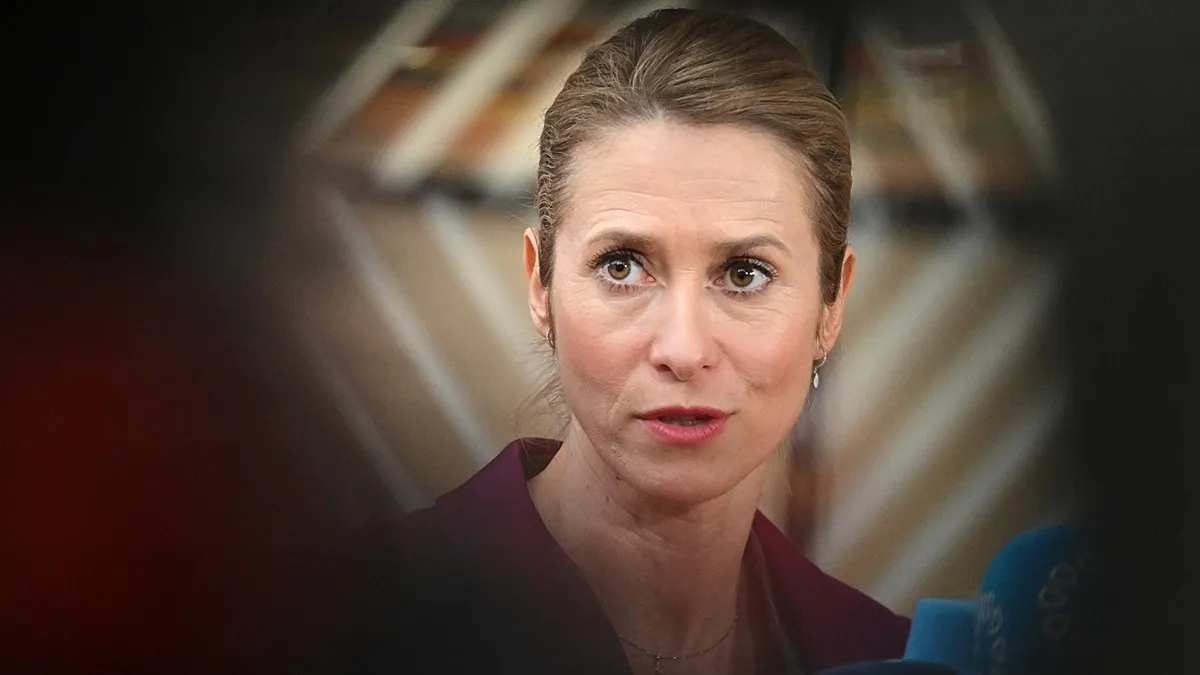
Poinews.com – Kaja Kallas, the European Union’s High Representative for Foreign Affairs, has found herself at the center of a political storm after a French government-backed document proposed significant changes to her role. The draft outlined three potential scenarios, with one aiming to bolster her authority and broaden her responsibilities to include trade and economic development. The other two options, however, would diminish her influence by transferring decision-making power to the European Commission or directly to member states.
EU Treaties Remain Central to Role Definition
Amid the controversy, Kallas reiterated that the EU treaties—documents that outline the structure and mandates of key institutions—will ultimately determine the scope of her position. In an internal message shared with Euronews, she emphasized,
“It is important to recall that the roles and responsibilities of the EU institutions are clearly defined in the treaties. That framework remains unchanged.”
The French document emerged as critics of Kallas grew more vocal, targeting her leadership style and policy decisions.
Critics Highlight Strategic and Diplomatic Concerns
Accusations against Kallas have centered on her assertive stance, including her remarks on China, her insistence on leveraging Russia’s frozen assets to fund Ukraine, and her tense relationship with the U.S. administration. Some also point to her tendency to push ambitious initiatives without prior alignment with EU member states. These criticisms suggest she still operates with the boldness of her former role as Estonia’s prime minister, often advocating positions that extend beyond the consensus of the 27-nation bloc.
Slovak Prime Minister Robert Fico, a known Eurosceptic, has repeatedly called for her removal. Multiple diplomats, speaking under anonymity, confirmed the backlash has intensified recently but noted differing views on the French paper. “She does, unfortunately, a lot to lose support,” one official said, “but France is currently in all-attack mode against all institutions.”
Institutional Struggles Undermine Foreign Policy Unity
France later softened its stance, describing the document as an exploratory note rather than a finalized proposal. However, diplomats argue the core challenges lie in the EU’s institutional framework. The High Representative is caught between the European Commission, where she serves as a vice president, and the European External Action Service (EEAS), which she leads. The requirement for unanimity in foreign policy decisions further complicates matters, allowing a single member state to block collective action.
“The EEAS and the High Representative’s position were created in a different time and age,” another diplomat remarked, “when the world looked completely different. If you were to build the system from scratch, you wouldn’t do it now the way it was done then.” This system, they say, inherently limits effectiveness, as past High Representatives have faced similar constraints.
Eastern European Background Fuels Debate
Some analysts have linked the political pushback to Kallas’ origins in Eastern Europe. Her firm stance on Russia, particularly her opposition to direct talks with Moscow over Ukraine, has drawn criticism from Western and Southern European nations. Despite her efforts to steer negotiations, her approach has not gained widespread support, highlighting the tension between regional priorities and EU-wide unity.
“Structurally, the High Representative cannot succeed, regardless of who it is,” a third diplomat noted. “She/he doesn’t have tools. All previous High Representatives failed, and so will those in the future. So it is not about the name.”