UN chief visits Haiti as gang violence soars and number of displaced hits 1.5 million
UN Chief Visits Haiti Amid Escalating Gang Violence and Displacement Crisis UN chief visits Haiti as gang - In a pivotal move to address the growing

UN Chief Visits Haiti Amid Escalating Gang Violence and Displacement Crisis
Poinews.com – In a pivotal move to address the growing humanitarian emergency, UN Secretary-General António Guterres UN chief visits Haiti as gang violence intensifies across the country. His arrival in Port-au-Prince comes as Haiti grapples with a devastating surge in gang activity, which has driven over 1.5 million people from their homes. According to the latest data from the UN, the number of displaced individuals has reached alarming levels, with the crisis threatening the stability of the nation’s already fragile infrastructure.
The Human Cost of Gang Violence
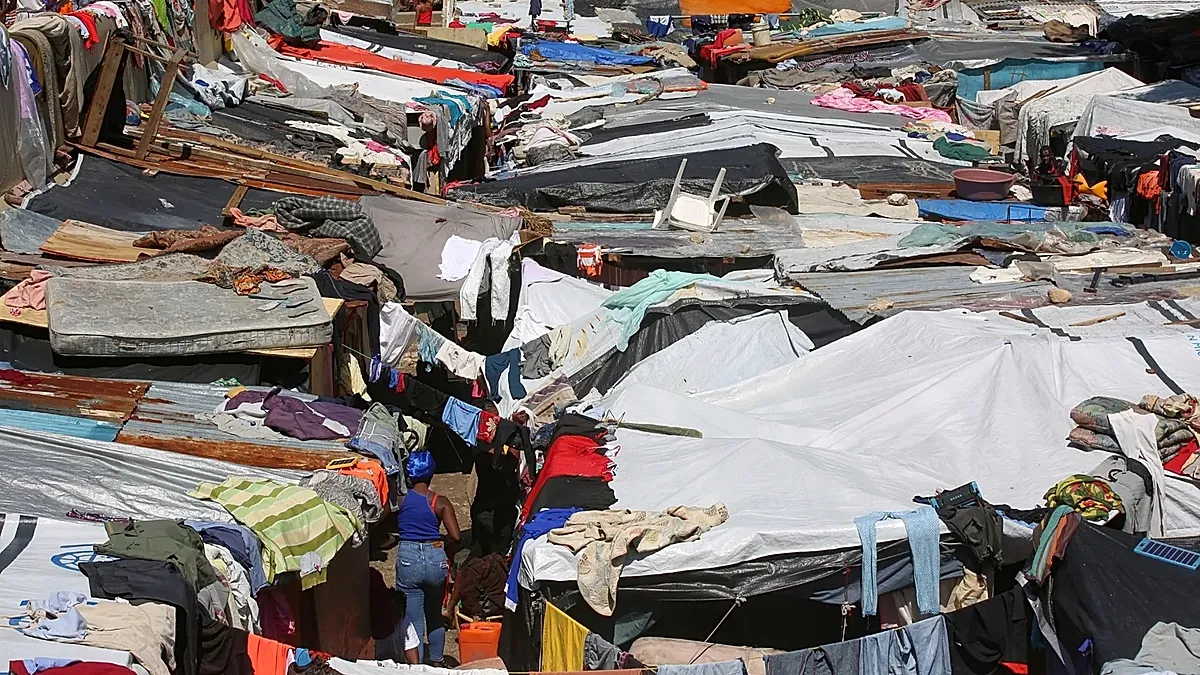
The visit follows a brutal weekend in Cité Soleil, a sprawling slum in the capital, where over 30 lives were lost in a single incident. The Cooperative for Peace and Development, a local human rights organization, reported the violence as part of a broader pattern of gang-related attacks that have intensified in recent months. Guterres observed the aftermath of the attack, where car dealerships were reduced to rubble, homes abandoned, and buildings scarred by bullet holes. The scene underscored the pervasive fear gripping the population, with many forced to seek shelter in makeshift camps.
Guterres’ remarks during the visit emphasized the urgency of the situation. “Gang violence is paralyzing Haiti, its economy, education system, and aid efforts. But the situation can be reversed,” he tweeted on X, highlighting the UN’s commitment to restoring order. His words echoed the concerns of residents like Clifford Lala, a 31-year-old who described the neighborhood as “not ready” for return, citing the devastation left behind by gang activities.
Displacement and Surviving Conditions
During his tour, Guterres visited a makeshift shelter in a former school, now housing over 1,200 displaced individuals. The conditions there reveal the dire state of the crisis: residents share sleeping spaces, and the shelter provides only one daily meal. A group of women spoke about the challenges of overcrowding, with one describing the cramped quarters as “skin-to-skin and mouth-to-mouth.” The UN chief listened intently, acknowledging the human toll of the violence and the need for improved living conditions.
The UN’s focus on displacement has intensified as the crisis worsens. With over 12 million people living in Haiti, the 1.5 million displaced represent nearly 12% of the population. Many have fled rural areas, fearing gang incursions that have targeted villages, farms, and communities. The sheer scale of displacement has strained local resources, with aid organizations struggling to provide adequate food, water, and medical care. Guterres’ visit aimed to coordinate international efforts and secure additional support for those in need.
Political and Security Challenges
Before his visit, Guterres met with Prime Minister Alix Didier Fils-Aimé, who faces mounting pressure to hold elections. Haiti’s transitional government has yet to elect a president since the assassination of Jovenel Moïse in July 2021, leaving political uncertainty and fueling public frustration. Fils-Aimé stressed that securing stability is critical for the country to move forward. “The transitional government must restore democratic rule, or the people will lose faith in the system,” he stated, underscoring the link between political instability and gang violence.
The UN leader also toured the headquarters of a newly established gang-suppression unit, authorized by the Security Council in September. This initiative replaces a previous UN-backed effort led by Kenyan police, which was hampered by insufficient funding and personnel. The new unit will collaborate with troops from Jamaica, Chad, El Salvador, and Guatemala, totaling fewer than 1,000, to bolster Haiti’s National Police and military. The plan reflects a coordinated international response to a crisis that has stretched the country’s resources to their limits.
International Response and Calls for Action
Guterres’ visit coincided with growing calls for immediate action from international watchdogs. Human Rights Watch urged the UN to prioritize civilian protection and address the root causes of the violence, such as poverty and political corruption. The organization’s letter to Guterres emphasized the need for a comprehensive strategy to curb the escalating humanitarian emergency. “The UN must act swiftly to ensure the safety of vulnerable communities,” the report stated, highlighting the urgency of the situation.
As the crisis deepens, the UN chief’s presence in Haiti signals a renewed global commitment to supporting the nation. However, challenges remain in coordinating efforts between local authorities, international partners, and aid organizations. Guterres’ visit also aimed to reassess the effectiveness of current measures, with a focus on long-term solutions to prevent further displacement and restore public trust in governance.