Germany and Poland sign new defence deal as balance of power in Europe shifts
Germany and Poland sign new defence pact as European power dynamics evolve Germany and Poland sign new defence - On June 17, 2026, Germany and Poland unveiled

Germany and Poland sign new defence pact as European power dynamics evolve
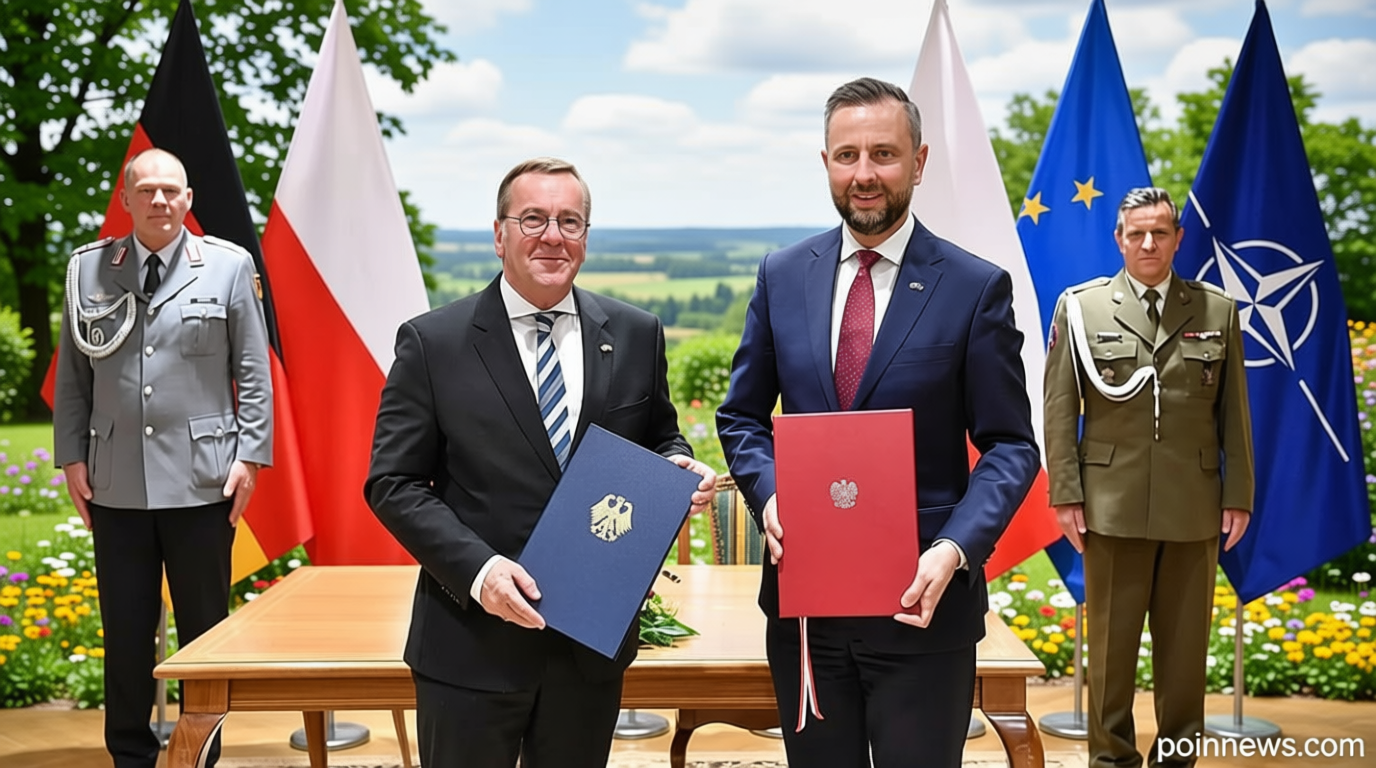
Poinews.com – On June 17, 2026, Germany and Poland unveiled a landmark defense agreement in Warsaw, signaling a strategic realignment in Europe’s security landscape. This collaboration comes as Russia’s 2022 invasion of Ukraine intensified regional tensions and as the United States recalibrates its military presence across the continent. The partnership reflects a pragmatic shift in bilateral relations, driven by Poland’s liberal government taking power in 2023 and the shared need for robust defense frameworks.
Historical reconciliation and future focus
“We are not forgetting the past,” said Polish Defence Minister Władysław Kosiniak-Kamysz during a joint press conference with his German counterpart, Boris Pistorius. “But the politics of the future—development and security—are our obligation.” The statement underscores a mutual effort to move beyond historical complexities and prioritize collective security. With the US considering a partial withdrawal from Europe, Poland has become increasingly determined to ensure its voice is central in safeguarding the continent’s eastern borders.
“We definitely don’t accept that any agreements about this part of Europe are made without Poland,” remarked Cezary Tomczyk, the Polish deputy defence minister, to the Associated Press. “We Germans need a strong Poland as an equal partner.”
Germany, too, is embracing a new role in military affairs after years of underinvestment. The country aims to restore its armed forces to a formidable state, with ambitions to establish the most powerful conventional army on NATO’s European side. This initiative positions Germany as a key anchor in the continent’s defense strategy, particularly in protecting the Baltic Sea region.
Logistics, economy, and military growth
Poland’s strategic value has grown significantly, bolstered by its role as a logistics hub for Ukraine and sustained defense spending. “Poland started building a strong army much earlier than other countries in Western Europe,” noted Tomczyk. “So we are ahead when it comes to capabilities.” Analysts highlight this progress, with the Polish deputy director of the Center for Eastern Studies, Justyna Gotkowska, stating that NATO’s defense plans now rely heavily on Germany’s coordination with Poland and other Eastern European nations.
“Germany is largely responsible for the defense of the Baltic states, and without cooperation with Poland, that will not happen,” Gotkowska explained. The Baltic countries, often seen as potential targets for a Russian incursion, benefit from this alliance. Germany’s military personnel will contribute to Poland’s Eastern Shield—a network of fortified barriers along its borders with Belarus and Russia—further solidifying regional resilience.
Shifting alliances and unresolved tensions
Despite Poland’s rising influence, Germany has historically made major decisions on Ukraine and Iran with France and the UK, sidelining Warsaw. This dynamic changed on June 7, 2026, when leaders of France, Germany, and the UK convened in London to address peace talks with Russia. Polish Prime Minister Donald Tusk emphasized the need for Poland’s inclusion in these discussions. “Any arrangements made without our participation will not be respected or binding for us,” he declared after the meeting.
“Poland must be taken more seriously today and, above all, must be respected more than we have seen in the past,” added Rolf Nikel, a former German ambassador to Poland and vice president of the German Council on Foreign Relations.
The new pact includes plans to enhance military mobility, infrastructure, cyber defense, and technological collaboration. It marks a pivotal moment in Europe’s evolving power structure, as Poland’s economic and military growth increasingly challenges the dominance of Western European nations. Analysts note that this shift reflects a broader realignment in NATO, where Germany’s role is now intertwined with Poland’s strategic aspirations.