Montenegro the cookie of the Balkans: ‘If you like it, you take more,’ PM tells Euronews
ccession Montenegro the cookie of the Balkans – a phrase that has become synonymous with its EU membership aspirations – was reaffirmed by Prime Minister

Montenegro: The Balkans’ ‘Cookie’ Model for EU Accession
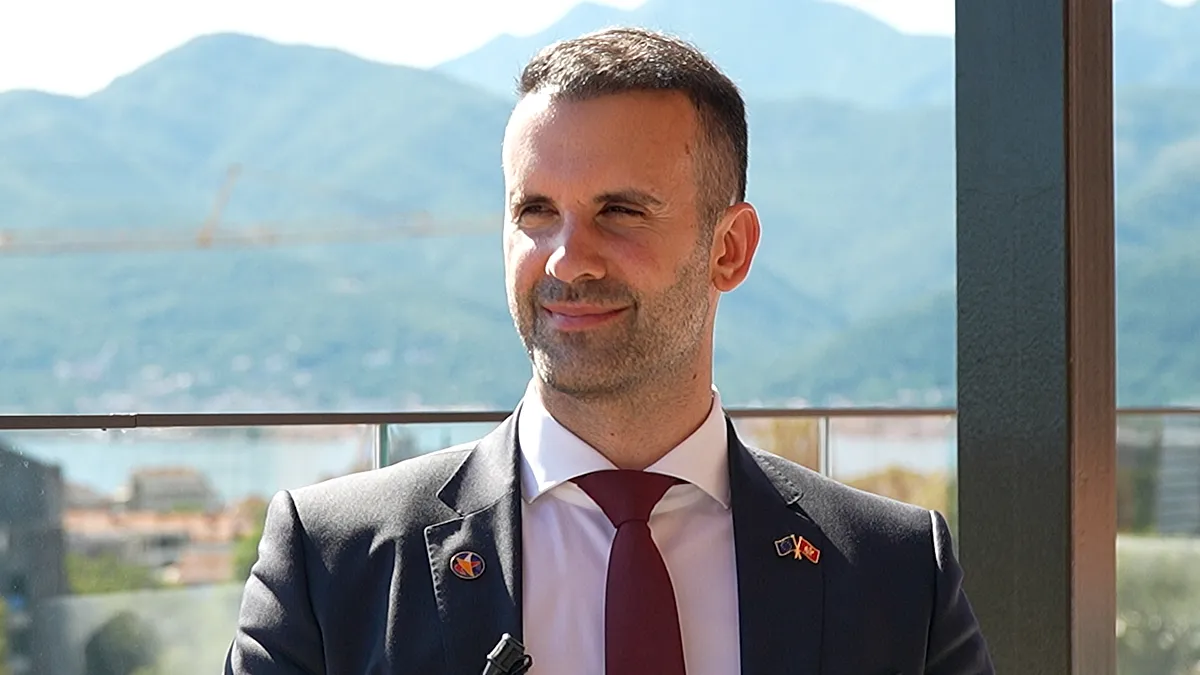
Poinews.com – a phrase that has become synonymous with its EU membership aspirations – was reaffirmed by Prime Minister Milojko Spajić during a recent summit in Tivat. The leader emphasized that his nation’s progress in meeting EU criteria serves as a blueprint for other Balkan countries vying for inclusion. Spajić’s comments were made in response to a high-level EU-Western Balkans meeting, where he highlighted Montenegro’s role as a catalyst for regional unity and reform. The phrase, which originated from a metaphor used by EU officials, underscores the nation’s perceived readiness to adopt European standards and its potential to inspire neighboring states.
EU’s Confidence in Montenegro’s Path
European Commission President Ursula von der Leyen reiterated that Montenegro’s integration into the European Union is “within reach,” while Council President António Costa suggested a possible timeline of 2028 for its accession. Spajić, echoing these sentiments, stated that the summit reinforced his belief in the country’s ability to fulfill its EU commitments. He noted that the process requires unanimous approval from all 27 member states, a challenge that has been mitigated by consistent European support. “Montenegro the cookie of the Balkans has demonstrated the viability of a structured, transparent approach to EU reform,” he added, positioning the nation as a critical stepping stone for regional cohesion.
“Montenegro is like a little sample, like a little cookie of the Western Balkans. If you can take the cookie, and if you like it, you take more.”
The country’s journey toward EU membership began in 2010 when it was formally recognized as a candidate. Since then, Montenegro has initiated negotiations on key reform areas, including the rule of law, public administration, and judicial independence. Its decision to unilaterally adopt the euro as its currency in 2016, despite not being part of the eurozone, showcased its commitment to aligning with European economic standards. Spajić’s remarks reflect the growing optimism among policymakers, who view Montenegro’s progress as a testament to the region’s capacity for transformation. “Montenegro the cookie of the Balkans has shown that ambition and effort can lead to tangible results,” he said, drawing attention to the country’s resilience in navigating complex political landscapes.
Reforms and Regional Challenges
Montenegro’s success in EU negotiations is attributed to its comprehensive reform agenda, which has addressed critical issues such as anti-corruption measures and environmental policies. The European Union has structured its expansion efforts through clusters of reforms, with Montenegro completing negotiations on 14 out of 35 required clusters. These clusters focus on areas like taxation, competition, and public procurement, which are essential for EU alignment. However, challenges remain, particularly in strengthening judicial independence and tackling organized crime. Spajić acknowledged these hurdles but remained confident that Montenegro’s progress would serve as a model for other Balkan states. “Montenegro the cookie of the Balkans has set a precedent for others to follow,” he said, highlighting the nation’s proactive stance.
With its status as a NATO member and a pro-European government, Montenegro has leveraged its geopolitical position to accelerate its accession process. The nation’s strategic location between the Adriatic Sea and the Balkan hinterland makes it a vital bridge for regional connectivity. Spajić pointed out that the EU’s focus on security cooperation has further bolstered Montenegro’s efforts, especially in countering hybrid threats and external interference. “A united Europe is the answer to all of these issues,” he asserted, linking Montenegro’s progress to broader European stability. This sentiment is echoed by analysts who view Montenegro as a key player in the Balkans’ political evolution.
Geopolitical Momentum and Future Prospects
The recent lifting of Hungary’s veto on Ukraine’s EU accession has been a significant milestone for Montenegro and other Balkan states. Spajić welcomed this development, arguing that progress in one country can catalyze momentum for others. “Montenegro the cookie of the Balkans is not just about its own success but about creating a shared vision for the entire region,” he explained. This perspective aligns with the EU’s broader strategy to integrate Western Balkan nations, which has gained traction amid global geopolitical shifts. The summit in Tivat marked a turning point, with Montenegro’s readiness to embrace EU reforms serving as a beacon of hope for neighboring countries.
While Montenegro’s path has been marked by steady progress, it has also faced setbacks, including public skepticism and economic pressures. The nation’s leadership has prioritized transparency and accountability, implementing measures to combat corruption and improve governance. Spajić highlighted that these efforts have not only strengthened Montenegro’s position but have also inspired greater confidence among European partners. “Montenegro the cookie of the Balkans has shown that even in challenging times, dedication to European values can drive meaningful change,” he said. This renewed optimism has positioned Montenegro as a leader in the Balkans’ bid for EU membership, setting the stage for a transformative era.