Video. Israeli settlers torch mosque in West Bank village of Jiljilya
Israeli Settlers Torch Mosque in West Bank Village of Jiljilya Israeli settlers torch mosque in West - In a recent incident that has sparked widespread

Israeli Settlers Torch Mosque in West Bank Village of Jiljilya
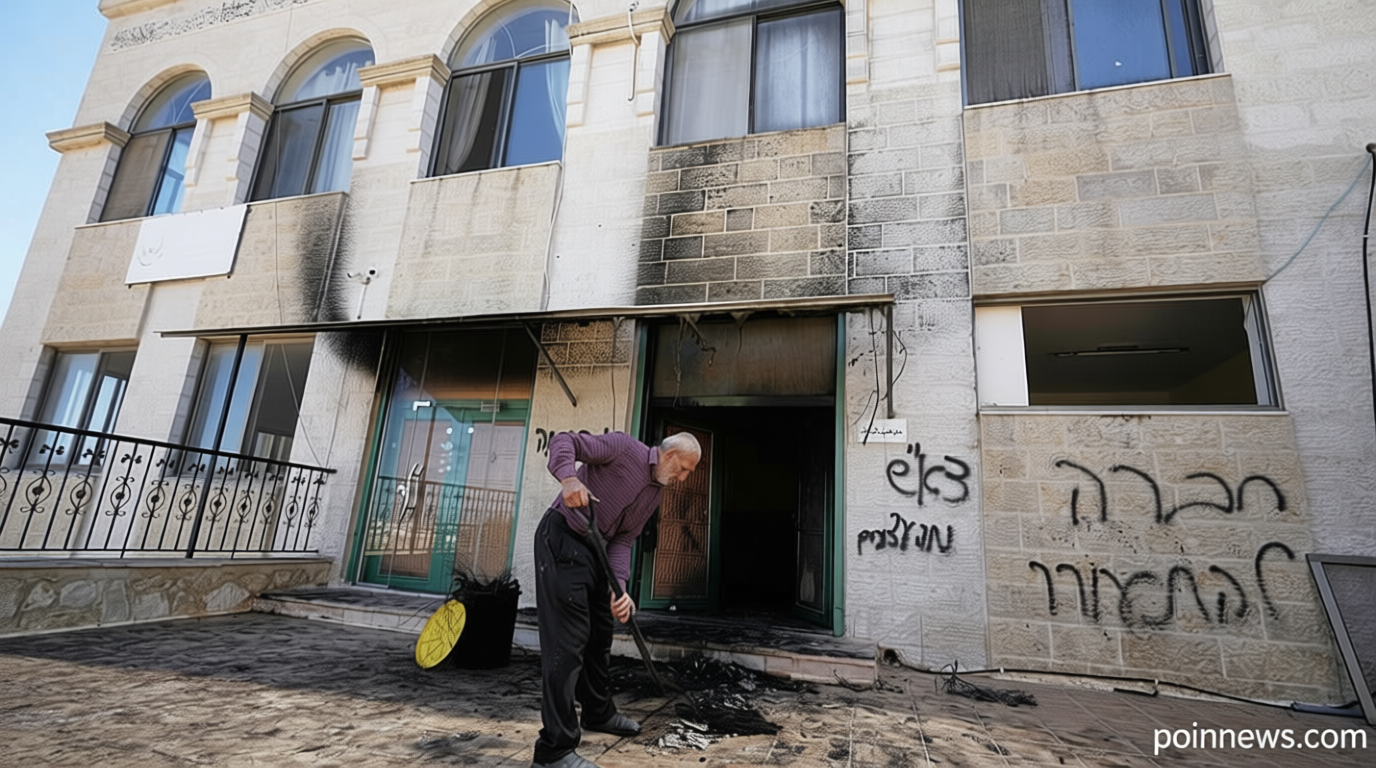
Poinews.com – In a recent incident that has sparked widespread concern, Israeli settlers carried out an attack on a mosque in the West Bank village of Jiljilya, torching its structure and leaving significant damage in its wake. The event, which occurred at approximately 2:00 a.m., was reported by local residents who heard explosions followed by thick smoke rising from the sacred site. Jiljilya, located in the occupied West Bank under the administrative control of the Palestinian Authority, is a community where Israeli civilian access is typically limited. According to Mohammad Khasib, the imam of the mosque, between 15 to 20 tyres were set ablaze inside the ablution area, causing extensive harm to the building’s interior and exterior.
The Attack and Its Immediate Aftermath
The attack on the mosque in Jiljilya was described as a coordinated act of vandalism by Israeli settlers, who reportedly used torches and other incendiary tools to target the structure. The flames spread rapidly, blackening the walls and doors while leaving cracks in the floor tiles due to the intense heat. The exterior of the mosque also bore Hebrew graffiti, including the word “revenge” and references to detainees, which underscored the symbolic nature of the assault. Residents arrived at the scene on Wednesday morning to begin clearing debris and restoring the damaged areas, though the mosque remained closed for several hours afterward.
“Between 15 and 20 tyres were burned inside the ablution area, causing extensive damage to the building,” said Mohammad Khasib, the imam of the mosque in Jiljilya. “This attack is not just about destruction; it represents a deliberate effort to erode the community’s religious and cultural identity.”
The incident in Jiljilya is part of a larger pattern of religious site attacks linked to Israeli settlers. Palestinian officials have noted that similar assaults occurred in two separate villages north of Ramallah during the night, indicating a rise in tensions between settlers and local communities. Since the start of 2026, numerous religious sites across the West Bank have been vandalized or damaged, with Israeli settlers often cited as the perpetrators. These attacks have been associated with a broader escalation in violence, reflecting the ongoing conflict between Israeli settlers and Palestinians in the region.
Broader Context of the Conflict
Jiljilya, a small village in the West Bank, has long been a focal point of friction between Israeli settlers and Palestinian residents. The area is part of the occupied territories, where settlers have established a presence and often engage in activities that challenge the rights of the local population. The attack on the mosque in Jiljilya highlights the increasing frequency of such incidents, which have become a recurring feature of the conflict. According to local reports, the damage to the mosque was significant, with parts of the structure requiring repair and the ablution area rendered unusable for an extended period.
The event in Jiljilya is particularly noteworthy because it occurred during a time of heightened tensions in the region. The Palestinian Authority has expressed concern over the growing number of attacks on religious sites, emphasizing that these acts not only harm physical structures but also threaten the cultural and spiritual heritage of the community. Israeli police and military authorities have not yet issued formal statements regarding the attack, though they have been actively investigating similar incidents in the area. The lack of immediate public response has raised questions about accountability and the measures being taken to prevent such acts in the future.
Israeli settlers have been accused of conducting a series of attacks on religious sites in the West Bank, with Jiljilya being one of the latest examples. These incidents often take place under the cover of darkness, allowing settlers to carry out their actions without immediate scrutiny. The attack on the mosque in Jiljilya was one such instance, with local residents describing the scene as chaotic and the damage as severe. The use of fire as a weapon in these attacks is a common tactic, designed to cause maximum destruction and psychological impact on the community.
International reactions to the attack on the mosque in Jiljilya have been mixed, with some organizations condemning the act and others calling for a calm response. The United Nations has previously expressed concern over the escalation of violence in the West Bank, particularly when it involves the destruction of religious sites. The incident in Jiljilya has been highlighted as a symbol of the ongoing conflict, with the focus keyword “Israeli settlers torch mosque in West” being used repeatedly to emphasize the pattern of aggression. The damage to the mosque not only affects the local community but also draws attention to the broader issue of settler activities in the occupied territories.