Sánchez backs international dialogue against other leaders: ‘A Europe open to the world’
Sánchez Backs International Dialogue Against Others: A Europe Open to the World Sánchez backs international dialogue against other - Spain's Prime Minister

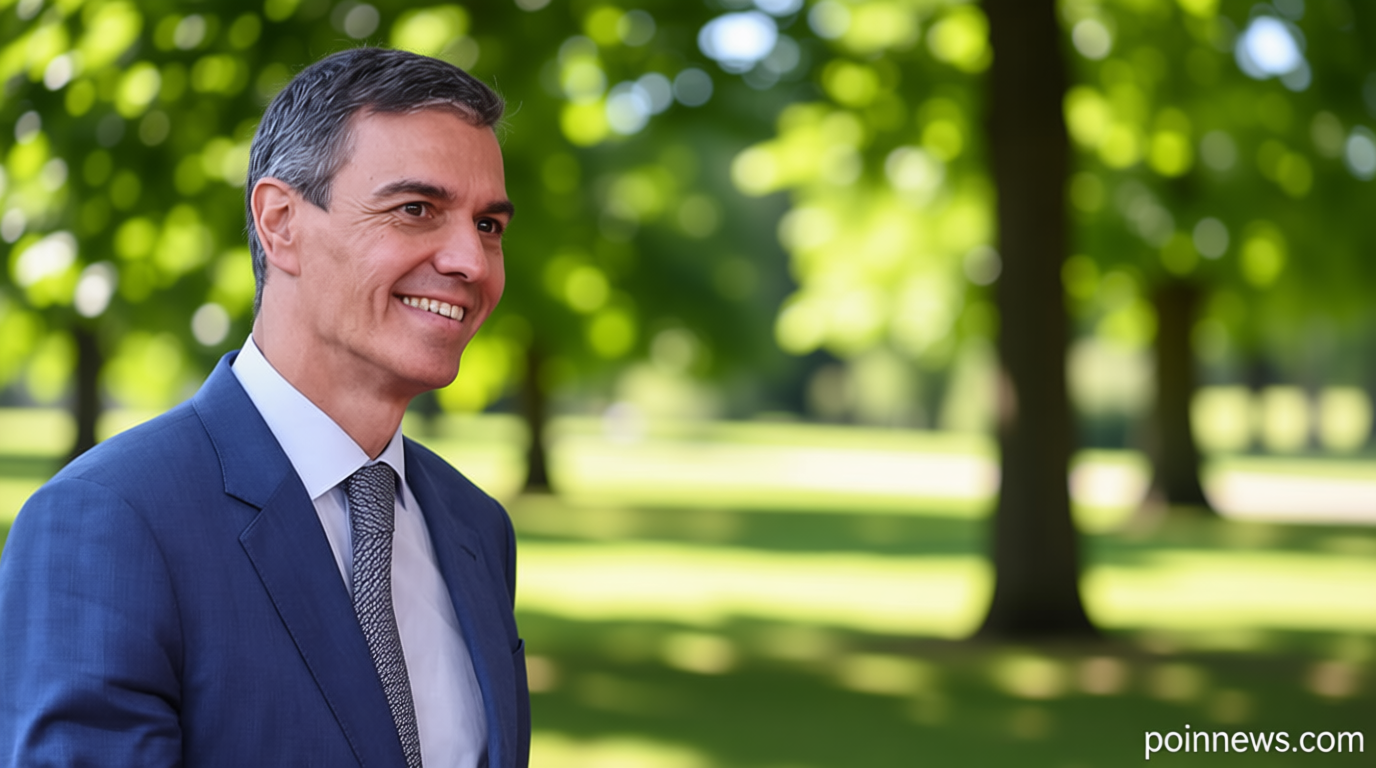
Table of Contents
Sánchez Backs International Dialogue Against Others: A Europe Open to the World
Poinews.com – Spain’s Prime Minister Pedro Sánchez has reinforced his commitment to international cooperation, emphasizing that a unified Europe must remain engaged with global partners. Speaking during a critical European Council meeting, he argued that the EU’s future depends on its ability to maintain open trade relations and strategic autonomy. ‘Europe needs to embrace the world, not retreat from it,’ Sánchez asserted, highlighting the importance of fostering dialogue with other leaders to strengthen the bloc’s position in a rapidly evolving international arena.
The Political Context of Sánchez’s Stance
Sánchez’s advocacy for international engagement comes amid domestic challenges, including ongoing corruption investigations that have tested his political standing. Despite these pressures, he has consistently promoted a vision of the EU as a cohesive and outward-looking entity. His push for a more ambitious Multiannual Financial Framework (MFF) underscores this strategy, aiming to bolster the EU’s economic resilience and global influence. By standardizing regulations and dismantling internal barriers, Sánchez believes the bloc can better compete with emerging powers like China and the United States.
EU’s Strategic Approach in a Shifting Global Landscape
The EU’s current geopolitical stance is defined by a balance between competition and collaboration. Sánchez’s call for international dialogue against other leaders reflects a broader trend of positioning the bloc as a dynamic force in global trade and diplomacy. Recent agreements with Mercosur, Mexico, and India exemplify this approach, expanding the EU’s economic reach and reducing dependence on traditional partners. ‘We must not be isolated; we need to integrate and adapt,’ Sánchez stated, framing his policies as essential to the EU’s long-term stability and growth.
Contrasting with France’s assertive stance on China, Sánchez has championed a more cooperative model. His government’s 19 bilateral deals with China, signed in April, demonstrate this commitment. However, some EU members have raised concerns about China’s economic practices, such as overproduction and trade imbalances. Sánchez insists that these criticisms should not overshadow the need for dialogue, arguing that engagement is key to achieving mutual benefits and shared prosperity.
Migration Policies and the EU’s Unified Front
On the issue of migration, Sánchez’s administration has taken bold steps, approving a controversial measure in April to grant legal status to nearly 500,000 immigrants. While this decision has drawn mixed reactions, Sánchez has defended it as necessary to address the complexities of migration. He stressed that the EU must adopt a collective approach, criticizing the creation of reception centers in third countries as a temporary fix that fails to address root causes. ‘A Europe open to the world must also welcome those seeking refuge and opportunity,’ he added, reinforcing his belief in a cohesive, outward-facing strategy.
Complementing this vision, the EU’s new Return Regulation, introduced in early June, allows member states to establish return centers abroad. This policy, inspired by Italy’s Giorgia Meloni, aligns with Sánchez’s broader goal of balancing integration with external partnerships. His recent dialogue with Meloni on the topic illustrates the interconnectedness of EU member states’ approaches, despite differing priorities. ‘We are all navigating the same global challenges,’ Sánchez remarked, underscoring the need for collaboration over confrontation.
“Europe does not need to step back from its values or its principles; it needs to take a step forward in its integration,” said Sánchez, framing his vision for a cohesive and forward-looking EU. This sentiment echoes his long-standing belief that the bloc’s strength lies in its ability to adapt while maintaining core principles. By prioritizing international dialogue against other leaders, Sánchez seeks to position the EU as a leader in global governance and economic cooperation.
Sánchez’s emphasis on dialogue is not just a policy stance but a strategic necessity. As the EU grapples with internal divisions and external pressures, his call for unity resonates with a broader need for consensus. The recent G7 summit in Évian highlighted this, with Sánchez supporting Italian leader Giorgia Meloni after U.S. President Donald Trump criticized her during the event. This solidarity underscores Sánchez’s belief that the EU should remain resilient against external attacks while fostering stronger transnational partnerships.
With the EU’s future hanging in the balance, Sánchez’s advocacy for international engagement against other leaders serves as a clarion call for unity and ambition. By prioritizing a multi-faceted approach that includes economic diversification, migration reform, and diplomatic solidarity, he aims to secure the EU’s position as a global leader. As the bloc continues to navigate challenges, Sánchez’s vision of a Europe open to the world offers a roadmap for sustainable growth and international influence.