Ukraine’s president says US air defence ‘absolutely necessary’ after Russian strikes
Ukrainian Leader Emphasizes Urgent Need for US Air Defense Support Amid Escalating Russian Attacks Ukraine s president says US air defence - On Tuesday

Ukrainian Leader Emphasizes Urgent Need for US Air Defense Support Amid Escalating Russian Attacks
Poinews.com – On Tuesday, Ukrainian President Volodymyr Zelenskyy reiterated his plea for European nations to strengthen their independent air defense capabilities, while highlighting the critical role of American military aid in countering Russian aggression. The call followed a recent wave of devastating drone and missile strikes that targeted Ukraine, leaving at least 13 civilians dead and over 100 injured. Zelenskyy’s remarks underscored the growing urgency for a robust defensive strategy, as Russia continues to escalate its campaign in the war-torn nation.
Leaders Urge European Self-Reliance and US Assistance
In a post on X, Zelenskyy stated,
“Europe needs its own anti-ballistic defense so that this war can finally be brought to an end. Assistance from the United States in supplying missiles for Patriot systems is absolutely necessary.”
This assertion came after a coordinated Russian assault that included hypersonic missiles and hundreds of drones, marking another significant escalation in the conflict. The attack, described by Ukrainian authorities as a “massive barrage,” was the latest in a series of strikes that have intensified over the past year, undermining fragile peace prospects.
Supporting Zelenskyy’s stance, Foreign Minister Andrii Shyiiba emphasized that the scale of the strikes revealed Russia’s dwindling military options.
“Putin is a war criminal and loser who has no cards except terror. Moscow is losing on the battlefield. No number of missiles can change this,”
Shyiiba declared on social media. He further warned that unless Russia’s regime acknowledges the futility of its attacks, the war will persist, with the cost of its actions continuing to rise.
Strategic Context of the Russian Strikes
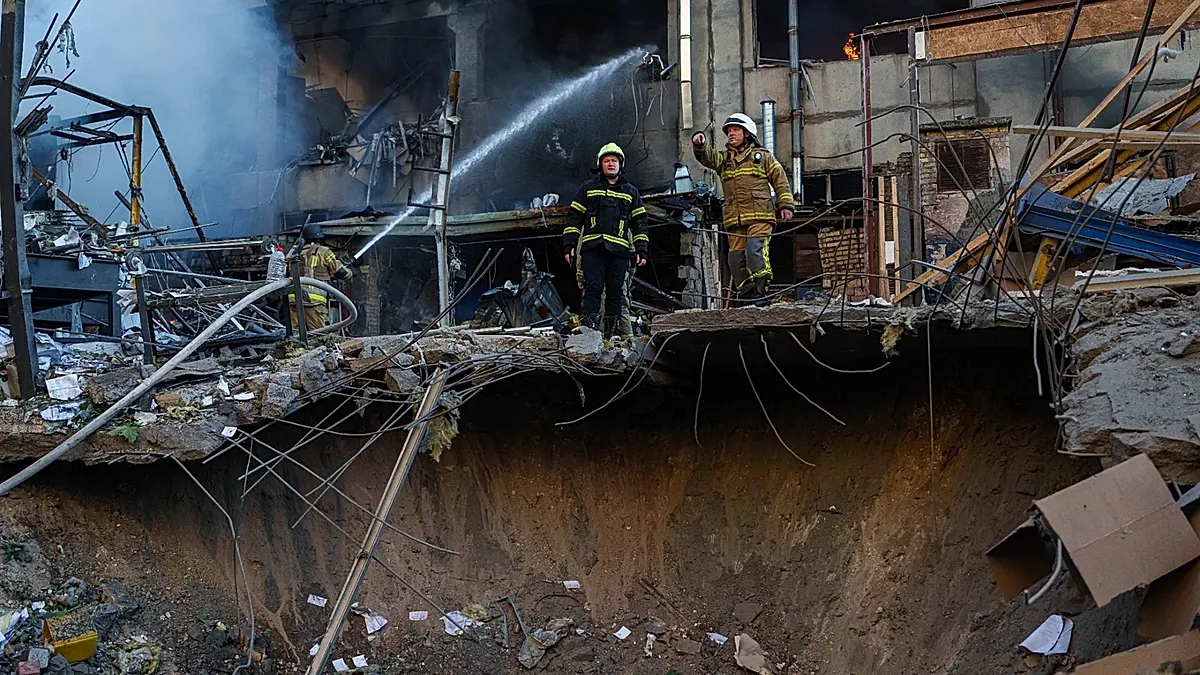
The latest barrage targeted key infrastructure, including Ukraine’s military-industrial complex, with Russia asserting it was a precision strike aimed at disrupting Ukrainian war efforts. Despite these claims, the attack has been met with fierce criticism, as it has caused widespread destruction and displaced thousands. The Ukrainian air force reported that 73 missiles and 656 drones were launched, of which 602 drones and 40 missiles were successfully intercepted. However, the remaining 40 missiles struck critical areas, underscoring the vulnerability of Ukraine’s defenses.
Zelenskyy’s remarks align with a broader narrative that has emerged since the full-scale invasion began in February 2022. The war, now the deadliest on European soil since World War II, has claimed hundreds of thousands of lives and displaced millions. With the conflict entering its fourth year, the demand for external support has never been more pressing, particularly as Russian forces continue to outmaneuver Ukrainian defenses with increasingly sophisticated weaponry.
Peace Efforts Under Threat
Recent developments have cast doubt on the viability of a longer ceasefire, which was agreed last month under US mediation. While the three-day pause offered a glimpse of potential stability, accusations of violations on both sides have weakened its effectiveness. The current uptick in strikes, including the record 8,150 long-range drones launched in May—up 24% from April—has further dented hopes for a negotiated resolution. The White House, meanwhile, faces its own challenges, with the Iran war diverting attention from Ukraine.
Adding to the tension, a Ukrainian drone strike killed one person in Russia’s Kursk region, near the border with Ukraine. Regional governor Alexander Khinshtein confirmed the incident, while another drone attack sparked a fire at an oil refinery in Krasnodar, southwest of Moscow. These strikes highlight the war’s growing reach beyond Ukraine’s borders, with both sides employing aggressive tactics to gain strategic advantage.
Leadership Calls for Global Solidarity
Zelenskyy’s call for European self-reliance follows a pattern of appeals to international allies, emphasizing the need for collective action against Russian aggression. He warned that without improved defenses, Ukraine would remain exposed to relentless attacks, with the potential for even greater casualties. The president’s message resonated with many in the West, who are increasingly concerned about the long-term sustainability of military support for Kyiv.
Shyiiba’s comments echoed this sentiment, framing Putin’s actions as a desperate bid to prolong the conflict.
“Terrorists in Moscow must realize that their brutal attacks won’t bring them anywhere. The only way out for Putin is to immediately end this war,”
he added, underscoring the moral and strategic stakes of the war. As the situation grows more dire, both Zelenskyy and Shyiiba are relying on global solidarity to bolster Ukraine’s defenses and counter Russia’s overwhelming firepower.
Strategic Challenges and Future Outlook
Despite intercepting nearly 90% of incoming drones and missiles in May, Ukraine struggles to neutralize ballistic missiles, which are more challenging to detect and destroy. This weakness has been exploited by Russian forces, who have increasingly targeted strategic locations with hypersonic weapons and other advanced systems. The Ukrainian military’s ability to respond effectively depends heavily on continued support from the United States, which has been a key supplier of Patriot systems and other critical equipment.
As the war enters its fourth year, the balance of power remains precarious. Russia’s daily bombardments have kept Ukraine on high alert, with authorities in Kyiv warning citizens to heed sirens and seek shelter whenever possible. The recent strikes have not only tested Ukraine’s resilience but also highlighted the importance of international aid in sustaining its war effort. With the US and Europe at a crossroads, the question remains: will additional support be enough to tip the scales in Ukraine’s favor?
Analysts suggest that the continued reliance on US arms is vital for Ukraine’s survival, as it allows the nation to maintain its defensive capabilities against Russian advances. However, the cost of this reliance is rising, with Kyiv facing pressure to demonstrate its ability to defend itself independently. The upcoming months will likely define the trajectory of the conflict, as both sides prepare for new phases of the war. For now, Zelenskyy’s appeal serves as a reminder that the fight for Ukraine’s sovereignty depends on a unified front of global allies.
Global Implications of the Conflict
The war in Ukraine has drawn international attention to the importance of air defense systems in modern warfare. As Russia demonstrates its capacity to launch large-scale attacks with hypersonic missiles and drones, the need for advanced technology and strategic partnerships becomes more evident. The US, through its military aid, has played a pivotal role in enabling Ukraine’s ability to resist these assaults, but its commitment could be tested by ongoing geopolitical shifts.
Meanwhile, the conflict’s impact extends beyond the battlefield, influencing global energy markets and diplomatic relations. Russia’s attacks have disrupted supply chains, while the presence of US forces in the region has strengthened Ukraine’s position in negotiations. As the war continues to evolve, the interplay between military strategy and international politics will shape its outcome. For Zelenskyy and his government, the stakes are clear: without decisive support, Ukraine’s fight for survival may become more difficult than ever.