Péter Magyar quotes Donald Tusk: ‘The V4 is back’
The Revival of the Visegrád Group: A New Era of Regional Unity Péter Magyar quotes Donald Tusk - During a recent press conference at the Grassalkovich Palace

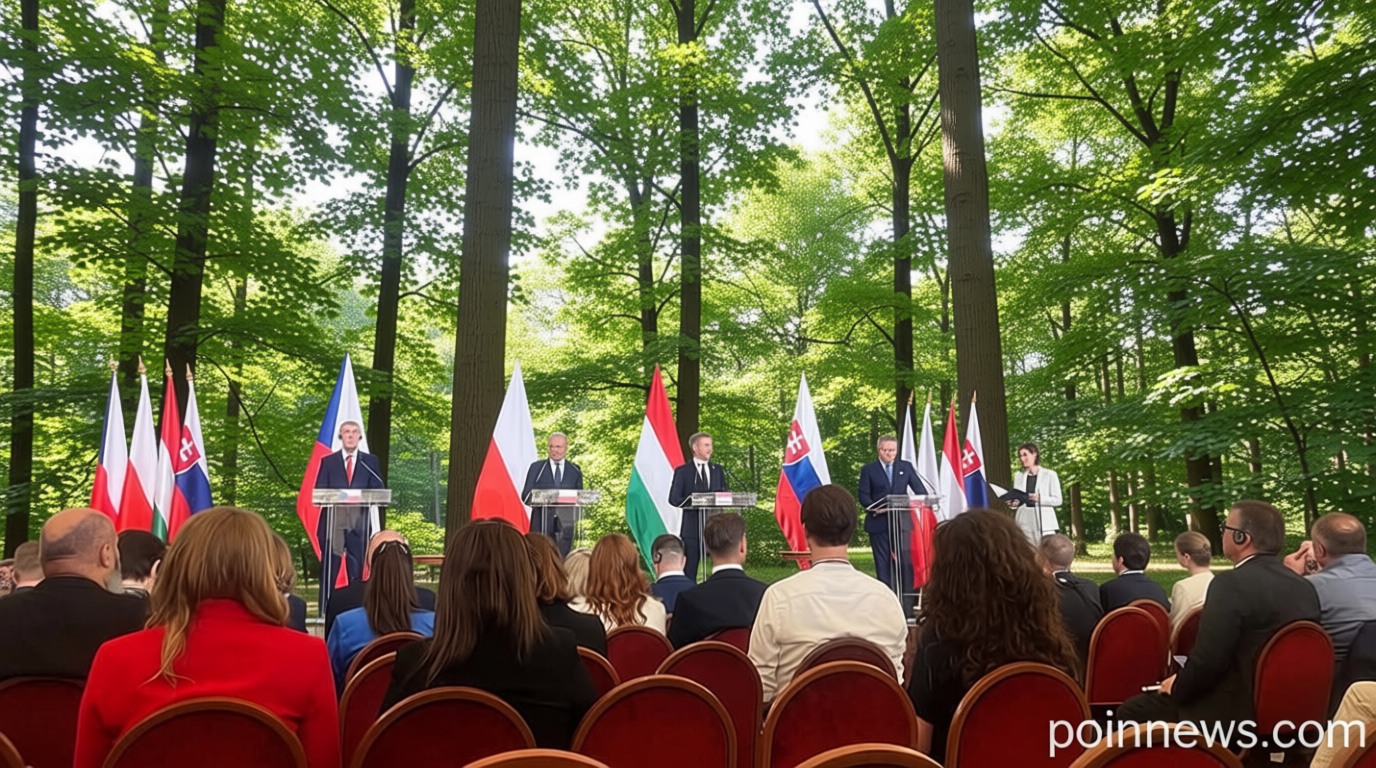
Table of Contents
The Revival of the Visegrád Group: A New Era of Regional Unity
Poinews.com – During a recent press conference at the Grassalkovich Palace in Gödöllő, Hungary’s Prime Minister Péter Magyar rekindled the narrative of the Visegrád Group (V4) by quoting Polish leader Donald Tusk’s declaration that “the V4 is back.” This moment marked a significant shift in the group’s strategy, as the four Central European nations—Hungary, Poland, the Czech Republic, and Slovakia—reaffirmed their commitment to collaborative governance. The event brought together Magyar, Donald Tusk, Czech Prime Minister Andrej Babiš, and Slovak Prime Minister Robert Fico, highlighting the renewed emphasis on joint decision-making within the European Union.
The Historical Context of the V4
Magyar began the press conference by reflecting on the 35th anniversary of the Visegrád Four, a milestone that underscored the group’s enduring relevance. “Three and a half decades ago, it was acknowledged that unity among our nations outweighs their differences,” he remarked, drawing a direct link to the current political climate. The leaders emphasized that the V4’s collective strength lies in its ability to act as a cohesive bloc, even as individual nations face unique challenges. This sentiment was echoed by Tusk, who framed the group’s revival as a response to the EU’s need for more assertive regional representation.
“Thirty-five years ago it was recognised that more unites our countries than divides them, and that it is easier to achieve success together.”
Strategic Priorities and Policy Alignment
The summit focused on aligning national priorities to amplify the V4’s influence within the EU. Magyar’s quote of Donald Tusk served as a rallying point for the group’s renewed emphasis on solidarity, particularly in addressing economic and social challenges. Central Europe has emerged as a key growth area in the Union, and the leaders recognized the importance of cohesion policies in fostering development. The discussions highlighted the EU’s upcoming seven-year budget, with all four nations agreeing that funding for infrastructure and rural projects must remain a central concern.
“There was more hand-wringing than substance” in recent European Council debates on China.
Slovak Prime Minister Robert Fico, who opened the meeting, framed the current V4 presidency as a critical opportunity to tackle pressing issues like energy costs and migration. He noted that the group’s previous collaboration on the European migrant crisis had proven successful, but current debates about China’s role in the EU often lacked concrete action. Fico proposed four core goals for the Slovak presidency, including boosting competitiveness in the EU budget, arguing that cohesion and economic strength are not mutually exclusive. His remarks drew parallels to Mario Draghi’s analysis on energy costs as a major economic concern, underscoring the group’s unified stance on energy policy.
Czech Prime Minister Andrej Babiš expressed optimism about the V4’s potential, stating that the group’s “chemistry” could drive meaningful outcomes. His comments were made after receiving a gift of a notepad from the hosts, symbolizing the close ties between the nations. Babiš reiterated concerns about energy prices, carbon quotas, and the EU’s financial framework, suggesting that the V4’s coordinated approach would help counterbalance the influence of larger member states. Meanwhile, Babiš and Tusk both stressed the importance of aligning positions before European Council meetings to ensure a unified voice.
Infrastructure and Cultural Collaboration
A major point of discussion during the summit was the proposal for a high-speed rail network connecting Warsaw, Prague, Bratislava, and Budapest. This initiative, supported by all four leaders, aims to enhance regional connectivity and reduce travel times, fostering economic integration. The project was presented as a tangible example of the V4’s ability to drive large-scale infrastructure investments, which have long been a priority for Central European nations. In addition to transport projects, the leaders also agreed on cultural and civic initiatives to strengthen public engagement and promote shared European values.
Magyar’s emphasis on the V4’s revival was further reinforced by the group’s focus on long-term projects that benefit all members. The summit underscored the need for sustained cooperation, with each leader pledging to prioritize the group’s agenda. Tusk, in particular, highlighted how the V4’s historical role in European politics, such as its stand against larger EU members like Germany and France, could serve as a blueprint for future unity. This strategy is seen as crucial in an era of growing internal divisions within the Union.
As the V4 prepares to take on new challenges, the leaders acknowledged the importance of maintaining momentum. The press conference not only reaffirmed the group’s partnership but also set the stage for increased coordination in upcoming EU debates. With a clear vision for the future, the V4 aims to leverage its collective strength to shape policies that reflect the needs of Central Europe. Péter Magyar’s quote of Donald Tusk, followed by the group’s unified commitments, signals a renewed era of regional solidarity and influence.