‘Security of the Baltics is our security’: Merz meets Baltic leaders before NATO summit
'Security of the Baltics is Our Security': Merz Convenes Baltic Leaders Before NATO Summit Security of the Baltics is our security - As the NATO summit in

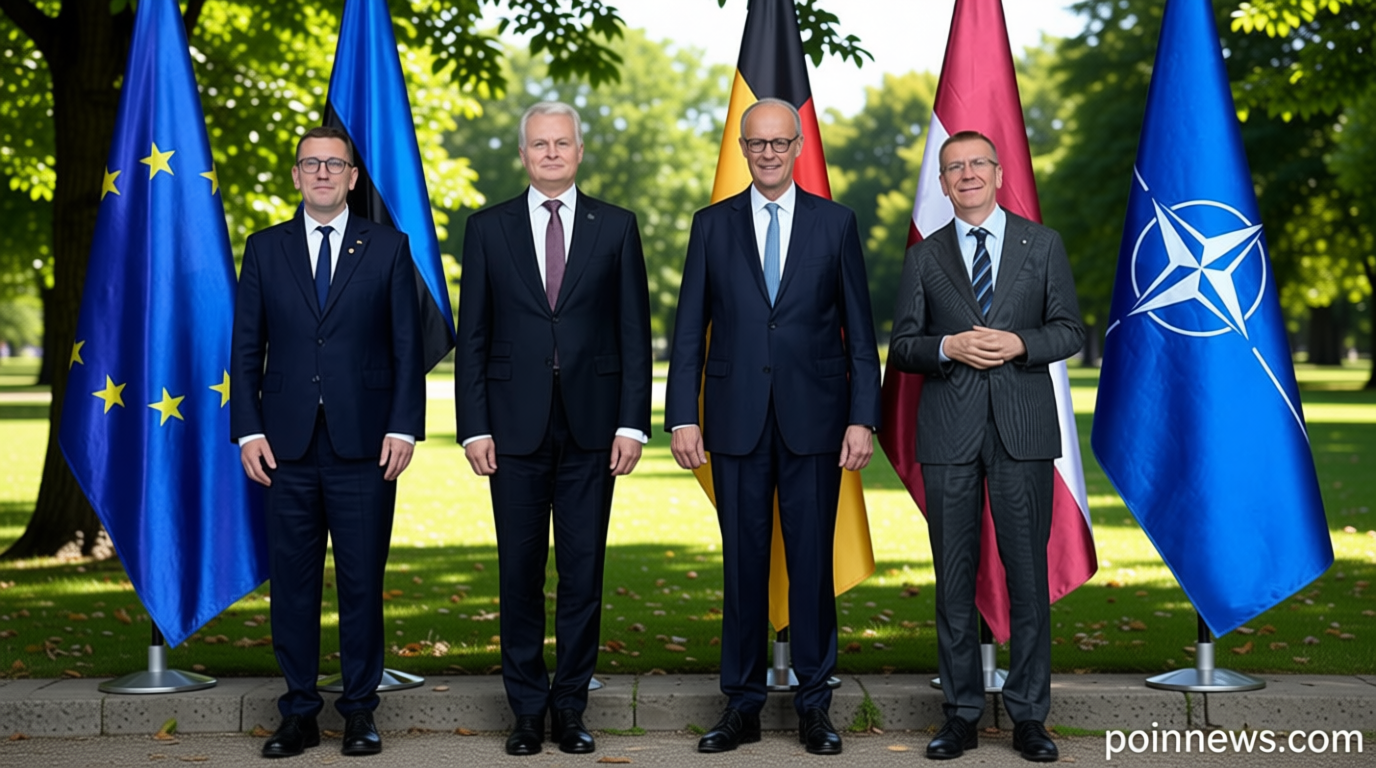
‘Security of the Baltics is Our Security’: Merz Convenes Baltic Leaders Before NATO Summit
Poinews.com – As the NATO summit in Ankara, Turkey, approaches, German Chancellor Friedrich Merz (CDU) has engaged in high-level discussions with leaders from Estonia, Latvia, and Lithuania in Berlin. The central theme of these talks revolves around the mutual security of the Baltic states, with Merz underscoring that “the security of the Baltics is our security.” This declaration echoes a historical commitment, reflected in a plaque at Vilnius Town Hall that reads, “The security of Lithuania is our security. The defense of Vilnius is the defense of Berlin.” The phrase, once a symbol of past alliances, now serves as a powerful reminder of the region’s enduring strategic importance.
The Historical Link to Modern Security Priorities
Merz’s emphasis on the Baltic states’ security aligns with a broader narrative of German-NATO collaboration. His remarks during the meetings are reminiscent of a speech delivered in May of last year at the formation ceremony of Lithuania’s 45th Armoured Brigade, which highlighted Germany’s dedication to reinforcing NATO’s eastern flank. The chancellor stressed that maintaining close coordination with the three Baltic nations remains a top priority, stating, “Our alliance with Estonia, Latvia, and Lithuania is not just a matter of policy—it is a matter of heart, and it will endure far beyond this summit.”
In a joint press conference, the leaders reaffirmed their shared goals, with Merz pointing to the historical plaque as a testament to their long-standing bond. “This connection is more than symbolic,” he said. “It reflects our mutual understanding that any threat to the Baltic region is a threat to the entire alliance.” The summit in Ankara, set to address pressing security challenges, will serve as a platform to solidify this partnership and address emerging risks, such as Russia’s hybrid warfare tactics and the need for enhanced military readiness.
Defense Spending and Operational Readiness
Latvian President Edgars Rinkēvičs highlighted the importance of translating defense pledges into concrete military assets. “We achieved 5% defense spending last year in The Hague, but the real challenge lies in converting this into actionable resources,” he noted. “Sometimes, the issue isn’t just funding—it’s about acquiring the right technology and equipment to strengthen our capabilities.” Rinkēvičs argued that the alliance must remain united, especially in the face of Article 5 threats, and that continued support for Ukraine is essential to maintaining stability in the region.
“The alliance must stay united, especially when it comes to Article 5, and demonstrate solidarity against all forms of aggression,” Rinkēvičs said. “Continued support for Ukraine is also vital to maintaining the stability of our eastern flank.”
Estonian Prime Minister Kristen Michal echoed this sentiment, emphasizing the urgency of transforming defense commitments into operational readiness. “Estonia has already committed over 5% of GDP to core defense, and we must ensure similar progress across the region,” he stated. Michal also called for closer collaboration in defense procurement and industry, stating, “This is how we solidify our collective security and demonstrate solidarity.”
Merz acknowledged the Baltic states’ proactive stance in addressing security concerns, citing their efforts to surpass the 3.5% defense spending target set at the 2026 NATO summit in The Hague. He warned that Russia’s hybrid tactics—such as cyberattacks and damage to undersea cables—pose a direct threat to NATO’s cohesion. “Moscow is testing our unity. The past four years in Ukraine have shown the risks of Russian revisionism,” the chancellor remarked, underscoring the need for a robust and integrated defense strategy.
Lithuanian President Gitanas Nausėda pointed to the permanent deployment of Germany’s 45th Armoured Brigade, which is set to be fully stationed in Lithuania by 2027. “This is a clear sign of our shared defense goals,” he said. “When Lithuanians see German soldiers in their cities, they know it’s a testament to our unity and trust.” The brigade’s presence will bolster the Baltic Air Policing mission, a key component of NATO’s eastern defense posture, and signal Germany’s continued investment in the region’s security.
As the NATO summit nears, the focus remains on strengthening the alliance’s eastern front. Merz’s meetings with Baltic leaders underscore the critical role these nations play in safeguarding European stability. With Russia’s ongoing aggression and the evolving security landscape, the leaders are united in their commitment to ensuring that the Baltics’ safety is a shared responsibility. This collaboration not only reinforces NATO’s collective security framework but also demonstrates the resilience of transatlantic partnerships in the face of global challenges.