Video. Humanoid robots showcase football skills
Humanoid Robots Showcase Football Skills in RoboCup 2026 Humanoid robots showcase football skills - At the RoboCup competition in Incheon, South Korea

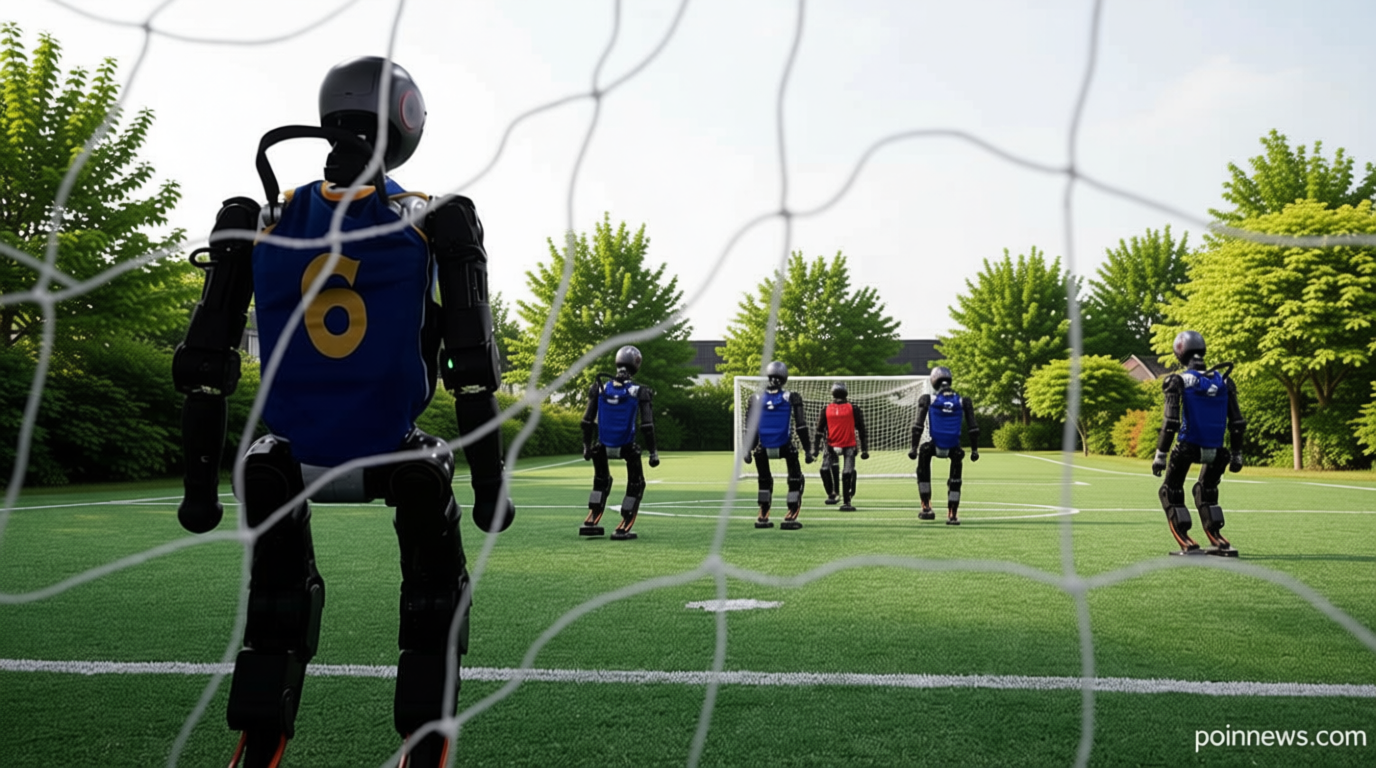
Humanoid Robots Showcase Football Skills in RoboCup 2026
Poinews.com – At the RoboCup competition in Incheon, South Korea, humanoid robots demonstrated their growing proficiency in football by performing tasks such as chasing the ball, scoring goals, and even maintaining balance on the field. This year’s event highlighted the remarkable advancements in robotic technology, as machines now navigate pitches with increasing precision and coordination. The spectacle not only captivated audiences but also provided a glimpse into the future of sports, where humanoids might one day join human players in competitive play.
The Precision of Robotic Football Play
The footage from the tournament captured multiple matches simultaneously on small, carefully marked pitches, showcasing robots that executed passes, kicks, and defensive maneuvers with a level of accuracy that defies expectations. Teams from around the globe competed to display their innovations, with humanoid robots at the forefront of this robotic revolution. These machines, equipped with advanced sensors and machine learning algorithms, were designed to mimic human athletes in real-time scenarios, often requiring split-second decisions under dynamic conditions.
“Although their movements remain slower and less fluid than those of professional players, visitors say the technology is more advanced than they expected,” remarked a spectator at the event.
RoboCup has become a critical testing ground for autonomous robotics, where engineers refine the balance, vision, and decision-making capabilities of these machines. By competing in football, the robots are pushed to adapt to unpredictable environments, such as sudden changes in ball direction or opponent positioning. This year’s competition emphasized not just physical performance but also the integration of artificial intelligence, enabling humanoid robots to showcase football skills with an increasing degree of independence.
Technological Breakthroughs in Humanoid Robotics
The progress in humanoid robotics during the 2026 RoboCup event underscores significant breakthroughs in both hardware and software. Advanced actuation systems allow the robots to move with greater agility, while improvements in machine vision and real-time data processing enable them to track and react to the ball with enhanced accuracy. These innovations are vital as humanoid robots continue to showcase football skills, proving that they can perform complex actions with minimal human intervention.
Researchers and developers participating in the tournament have also focused on improving the robots’ ability to collaborate as a team. The ability to showcase football skills in a group setting, such as passing and receiving in coordinated plays, is a testament to the sophistication of modern robotics. This level of teamwork is essential for the robots to compete effectively, as they must simulate the strategies and adaptability of human players in fast-paced environments.
Broader Implications for Robotics and AI
As humanoid robots become more adept at showcasing football skills, their potential applications extend far beyond the sport. The technologies developed for these robots—such as dynamic balance, sensor fusion, and autonomous decision-making—can be adapted for use in industries like manufacturing, healthcare, and logistics. The RoboCup event acts as a proving ground, where innovations in artificial intelligence and mechanical design are refined through real-world challenges.
Moreover, the growing complexity of robotic football play provides valuable insights into the development of AI systems that can handle unpredictable scenarios. These robots not only showcase football skills but also serve as a model for how autonomous systems can function in environments requiring precision and adaptability. Their performance on the field highlights the potential for future breakthroughs in robotics, which could revolutionize various aspects of daily life.