Overcrowded bus plunges into ravine in southwest Pakistan, killing 40 passengers
Overcrowded Bus Plunges into Ravine in Southwestern Pakistan, Killing 40 A Devastating Incident in the Dana Sar Region Overcrowded bus plunges into ravine in

Overcrowded Bus Plunges into Ravine in Southwestern Pakistan, Killing 40
A Devastating Incident in the Dana Sar Region
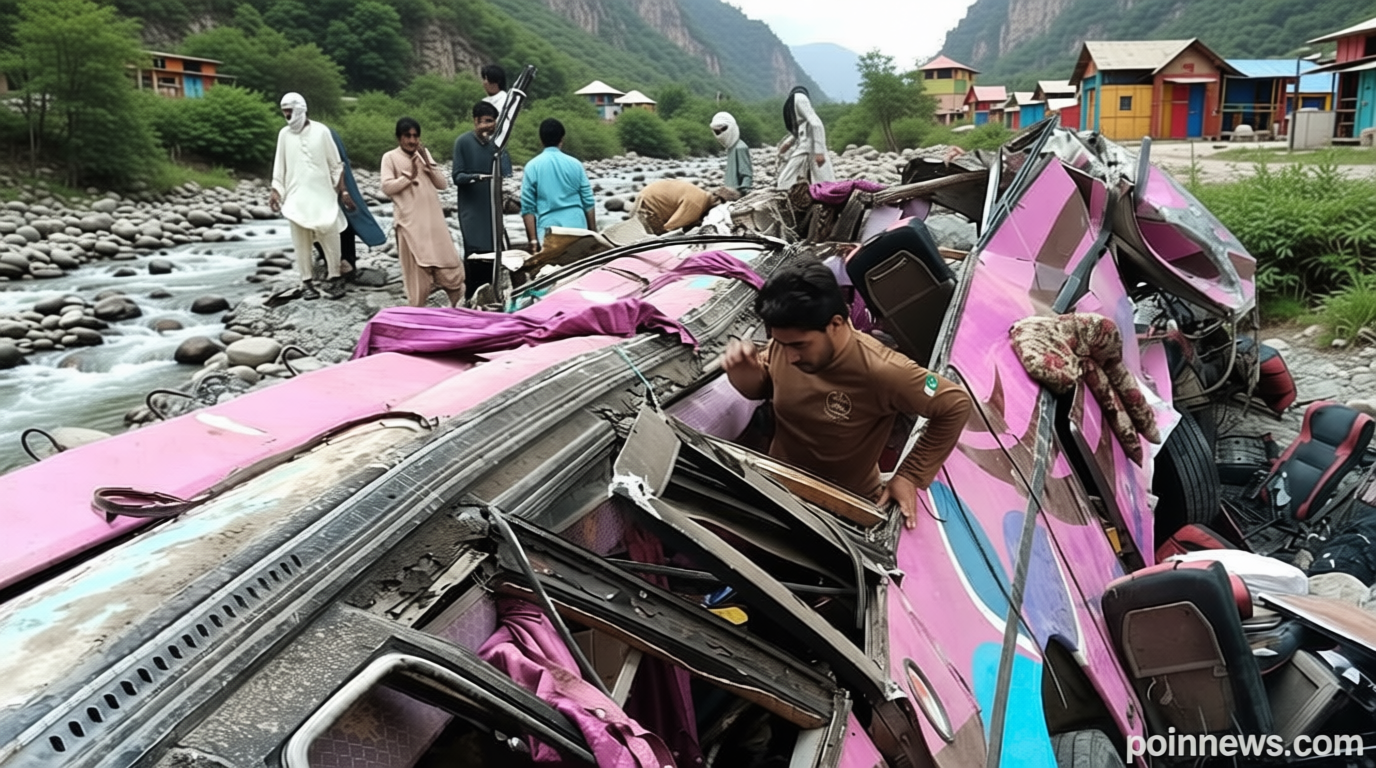
Poinews.com – An overcrowded bus that was reportedly exceeding its capacity by nearly 20% plummeted into a deep ravine in the Dana Sar region of southwestern Pakistan on Friday morning, resulting in the tragic loss of 40 lives and leaving eight passengers injured. The accident, which occurred on a remote stretch of the highway between Balochistan and Khyber Pakhtunkhwa provinces, has sparked widespread concern over road safety in the area. Emergency services arrived swiftly at the scene, but the sheer scale of the disaster left many families in shock as they awaited news of their loved ones.
“The bus was carrying not only its own passengers but also individuals from a stranded vehicle, which led to the overcrowding,” stated Shahid Rind, a representative of the Balochistan government. This statement highlights a critical factor in the incident: the vehicle was overloaded with additional passengers, increasing its risk of instability. Initial reports suggest that the bus was traveling at high speeds, exacerbating the danger when it encountered a sudden dip in the road.
Causes and Contributing Factors
Investigators are currently examining the causes of the accident, with the primary focus on the bus’s overloading and the driver’s decision to stop and assist stranded travelers. According to local authorities, the bus was transporting 48 passengers, far exceeding the recommended capacity for such a route. This led to a precarious situation where the vehicle’s weight distribution became uneven, making it more susceptible to tipping over. The incident also raises questions about the enforcement of traffic regulations, as drivers often prioritize speed and convenience over safety, especially in less populated areas.
The mountainous terrain of the Dana Sar region, combined with narrow roads and sharp turns, further compounds the risks. Witnesses reported that the driver, while attempting to assist another vehicle, lost control of the bus, leading to the catastrophic plunge. This underscores the importance of maintaining proper vehicle maintenance and driver training. Experts have warned that similar incidents are not uncommon in Pakistan, where outdated infrastructure and a lack of regulatory oversight create a dangerous environment for travelers.
Rescue Efforts and Immediate Response
Rescue teams, including local volunteers and emergency responders, worked tirelessly to recover the victims from the ravine. Despite the challenging conditions, efforts to extract the injured and identify the deceased continued for several hours. The local medical facility in Zhob, which received the 40 fatalities, is currently overwhelmed with patients, prompting calls for additional resources. Meanwhile, the eight injured were taken to the district headquarters hospital for treatment, where they are being monitored for critical injuries.
Officials have emphasized the need for a comprehensive review of road safety protocols following the incident. The Balochistan regional administrator, Hazrat Wali Kakar, confirmed that the bus was carrying 48 passengers at the time of the accident and reiterated the urgency of improving infrastructure and enforcing traffic laws. The tragedy has also prompted discussions about the role of public transportation in Pakistan, where overcrowded vehicles are often a common occurrence due to limited options and high demand.
Political Reactions and Calls for Accountability
President Asif Ali Zardari expressed deep sorrow over the incident, offering condolences to the families of the victims and calling for a thorough investigation into the causes of the accident. “This disaster has highlighted the importance of prioritizing road safety across the nation,” he said in a statement. Similarly, Balochistan’s Chief Minister Sarfraz Bugti emphasized the need for accountability, directing authorities to conduct a detailed analysis of the incident and implement measures to prevent future tragedies.
Local political leaders have also pledged to support the affected families and improve emergency response systems. The incident has become a focal point for debate on transportation policies, with some calling for stricter penalties for drivers who overload vehicles. Others argue that the government must invest in better infrastructure, including road widening and improved signage, to mitigate risks in high-traffic areas. These calls for action reflect a growing awareness of the systemic issues contributing to such accidents.
Broader Implications for Pakistan’s Road Safety Crisis
This incident is a stark reminder of the persistent road safety challenges in Pakistan, where over 5,000 people are killed annually in traffic accidents. The Dana Sar accident, with its combination of overcrowding, speeding, and poor road conditions, exemplifies the multifaceted nature of the problem. Experts warn that without significant reforms, similar disasters are likely to recur, especially in rural and mountainous regions where resources are limited.
The overloading of buses is a recurring issue in Pakistan, often driven by the need to accommodate more passengers on a single trip. This practice, while economically practical, puts immense pressure on vehicles and increases the likelihood of accidents. In the wake of this tragedy, authorities are being urged to enforce stricter loading regulations and promote public awareness campaigns to educate drivers and passengers about the dangers of overcrowded transportation. The incident has also reignited discussions about the need for a national road safety initiative to address long-standing deficiencies in the system.