Spanish scientists discover new ‘bear-dog’ species in Catalonia from 15.9 million years ago
onia Spanish scientists discover new bear dog species - Spanish researchers have made a remarkable breakthrough by uncovering a previously unknown bear-dog

Spanish Scientists Discover New Bear-Dog Species in Catalonia
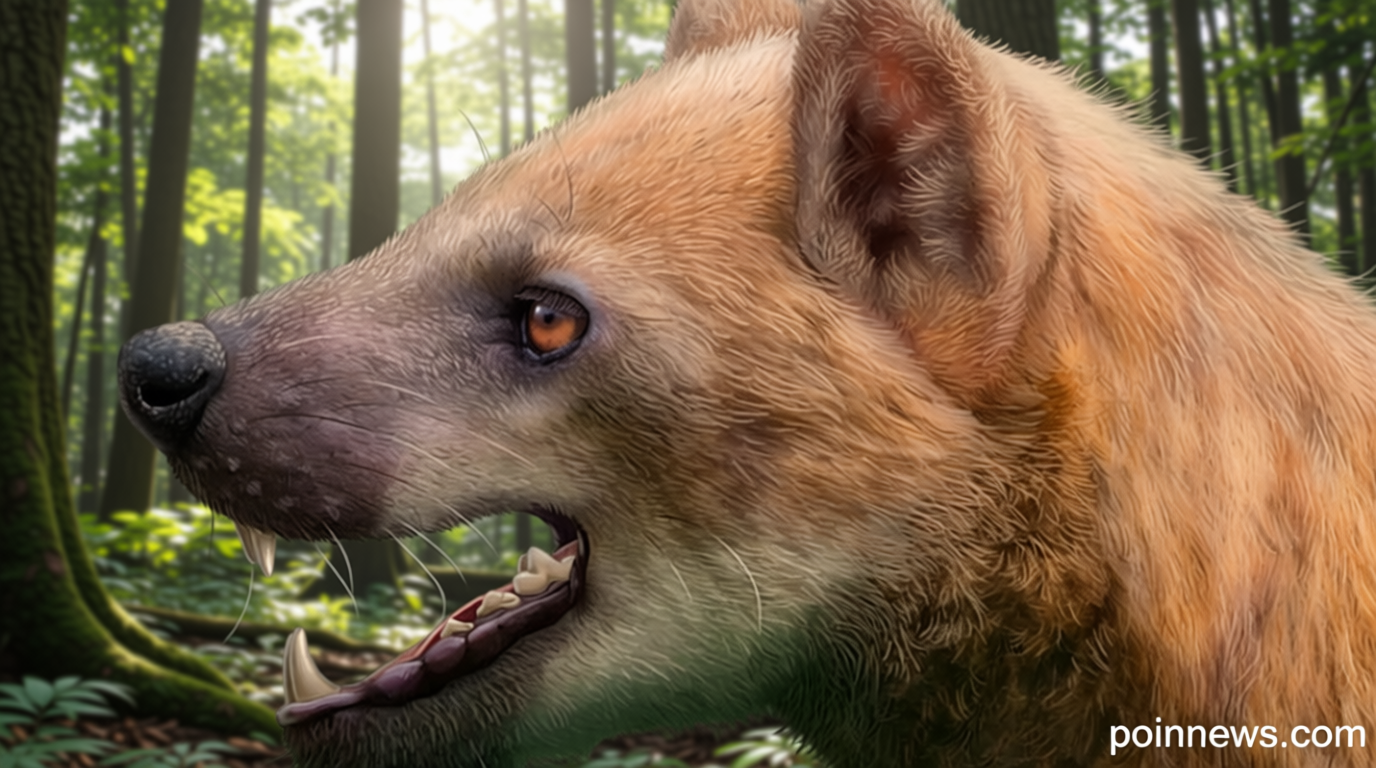
Poinews.com – Spanish researchers have made a remarkable breakthrough by uncovering a previously unknown bear-dog species, Paludocyon moyasolai, in Catalonia. This fossil, dating back 15.9 million years, was found at Els Casots, a significant Miocene site in Subirats, Alt Penedès. The discovery not only enriches the understanding of ancient European ecosystems but also highlights the ongoing advancements in paleontological research. The focus keyword, “Spanish scientists discover new bear,” becomes central to this narrative, underscoring the role of local expertise in unearthing prehistoric secrets.
A Fossil That Changed the Narrative
Although the fossil skull of *Paludocyon moyasolai* was unearthed in the 1990s, it remained largely unexamined for years. It was only during a 2014 doctoral thesis that scientists revisited the specimen, leading to its reclassification. The team from the Institut Català de Paleontologia Miquel Crusafont, in collaboration with international institutions, meticulously analyzed the remains. The skull’s distinct size and robustness set it apart from known *Paludocyon* species, which are comparable to modern lions and tigers. This revelation has redefined the evolutionary timeline of bear-dogs, a group of ancient mammals that once roamed across continents.
“The unique preservation of fossils at Els Casots provides critical insights into the Miocene era,” explained a lead researcher. “The site’s aquatic setting likely contributed to the exceptional state of the remains, allowing for detailed study of their anatomy and ecology.”
Evolutionary Insights and Ecological Role
The newly identified species exhibits specialized dental features, including a broad second upper molar and a third molar that exceeds usual proportions. These traits suggest a diet adapted to specific environmental conditions, possibly involving a mix of plant and animal matter. The analysis of *Paludocyon moyasolai*’s fossils also reveals its ecological niche, indicating it may have thrived in coastal or riverine habitats. This finding adds depth to the study of amphicyonids, a family of carnivores that dominated various ecosystems during the Cenozoic era.
Scientists believe the bear-dog’s existence reflects the dynamic changes in the Miocene landscape, which saw the expansion of forests and the emergence of open plains. The presence of such a species in Catalonia highlights the region’s importance as a biodiversity hotspot during this period. Researchers emphasize that the discovery contributes to the broader understanding of how ancient predators adapted to their environments, offering clues about the interplay between climate shifts and evolutionary development.
Global Collaboration and Scientific Impact
The research involved a coalition of institutions, including the Institut Català de Paleontologia Miquel Crusafont, the National Museum of Natural Sciences (CSIC), the University of Valencia, and others from Ecuador and South Africa. This collaborative effort demonstrates the global reach of paleontological studies and the value of interdisciplinary approaches. The findings have been published in the journal *Palaeontology*, underscoring their significance to the field. By integrating data from multiple sites, the study provides a more comprehensive view of Miocene carnivore communities, including the competition between species like bear-dogs, felids, and hyaenas.
The discovery of *Paludocyon moyasolai* also challenges existing theories about the diversification of amphicyonids. These animals, often referred to as “bear-dogs,” were part of a larger group that included both bears and dogs in their evolutionary lineage. The new species’ characteristics suggest a distinct adaptation, possibly related to its habitat or prey availability. This research opens new avenues for studying the evolutionary pathways of these creatures, shedding light on their survival strategies and ecological roles in prehistoric times.
Future Research Directions and Broader Implications
With the identification of *Paludocyon moyasolai*, scientists plan to explore further fossil deposits in the region to uncover more evidence of its behavior and habitat. The use of advanced techniques, such as stable isotope analysis, is expected to yield additional data on the species’ diet and interactions with other predators. Researchers also anticipate that this find will inspire more detailed studies of Miocene ecosystems, helping to reconstruct the complex food webs that once existed in Europe. The implications extend beyond Catalonia, as the species contributes to the global narrative of mammalian evolution during the Cenozoic era.
As the field of paleontology continues to evolve, discoveries like *Paludocyon moyasolai* play a crucial role in bridging gaps in our knowledge of ancient life. The work of Spanish scientists not only advances the study of bear-dogs but also underscores the importance of regional fossil sites in uncovering global evolutionary patterns. This breakthrough serves as a reminder that even well-documented regions can yield surprising insights, reinforcing the need for ongoing exploration and research in paleontological science.