Pope Leo XIV calls for ‘end to polarisation’ as he makes the first papal visit to Spain in 15 years
Pope Leo XIV Calls for End to Polarisation During Historic Spain Visit Pope Leo XIV Emphasizes Unity Amid Rising Political Divides Pope Leo XIV calls for end

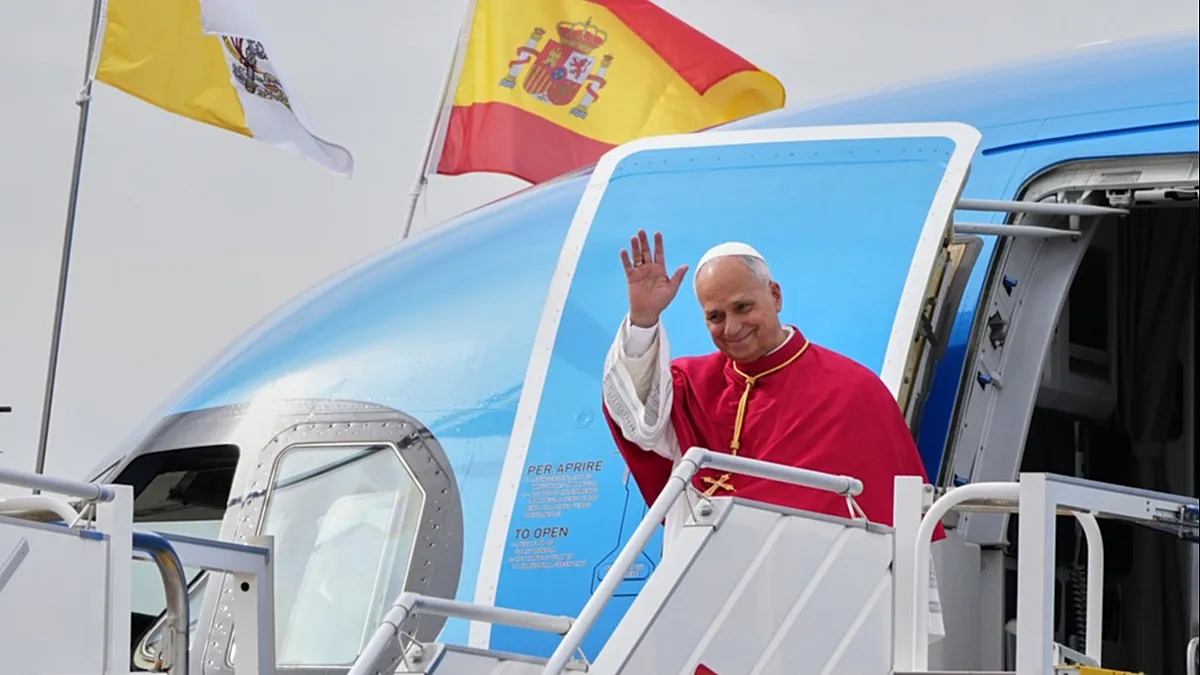
Pope Leo XIV Calls for End to Polarisation During Historic Spain Visit
Pope Leo XIV Emphasizes Unity Amid Rising Political Divides
Poinews.com – Pope Leo XIV calls for end to polarisation, urging Spanish citizens to transcend political and ideological divisions during his first papal visit to the country in 15 years. The landmark trip, which began on Saturday, marks a pivotal moment in the pope’s efforts to address the deepening rifts in Europe. In a nation where debates over immigration, social values, and economic policy have intensified, Leo XIV’s message of reconciliation has been met with cautious optimism. His focus on fostering dialogue aligns with a broader mission to restore communal harmony and promote a shared vision of peace and solidarity.
“In a world increasingly divided by opposing narratives, we must seek common ground,” Pope Leo XIV stated during his opening address. “Polarisation, while often justified, can blind us to the humanity of those we disagree with.” This sentiment resonates deeply in Spain, where polarisation has fueled tensions between left-leaning progressive policies and conservative backlash. The pope’s call for an end to polarisation is not just a moral stance but a strategic move to unite a populace fractured by conflicting priorities.
The visit comes at a time when Spain’s political landscape is shifting. Prime Minister Pedro Sanchez’s socialist administration has championed open borders and social integration, policies that have drawn sharp criticism from the conservative Popular Party and far-right Vox. Despite these challenges, the country has remained a beacon of European cooperation, with Spain’s national ombudsman recently reporting that over 200,000 children have been affected by clergy sexual abuse since 1940. Pope Leo XIV acknowledged this crisis, linking it to the need for a unified response to societal challenges.
Papal Engagement with Spain’s Cultural and Historical Heritage
During his time in Madrid, the pope engaged with Spain’s cultural and historical roots, visiting the royal palace where he was greeted by King Felipe VI and Queen Letizia. This royal welcome underscored the nation’s respect for its spiritual and political leaders. Leo XIV also addressed Spain’s parliament, emphasizing the importance of collaboration over confrontation. “Spain’s strength lies in its ability to reconcile diverse voices,” he said, highlighting the country’s role in upholding international law and collective governance.
The visit included a poignant moment as the pope met with survivors of clergy sexual abuse, a growing concern in Spain. These interactions were framed as part of his broader commitment to addressing moral and social issues. By acknowledging the pain of victims and urging transparency, Leo XIV sought to heal the scars of past neglect while reinforcing the Catholic Church’s role in social justice. The pope’s message also extended to the public, encouraging citizens to embrace dialogue and reject simplistic narratives that divide them.
Spain’s polarisation is not limited to political parties but also permeates public discourse. From climate change to migration, debates often become battlegrounds for ideological extremes. Pope Leo XIV’s call for an end to polarisation has been seen as a timely intervention, especially as the country prepares to host over a million people for his central Madrid mass on Sunday. This event, one of the largest of his papacy, is expected to draw both supporters and critics, offering a platform for widespread reflection on unity and division.
Pope’s Symbolic Actions in Barcelona and the Canary Islands
Following Madrid, Leo XIV will travel to Barcelona, where he will consecrate the newly completed tower of the Sagrada Familia Basilica. This landmark event symbolizes the pope’s commitment to religious and architectural heritage, as well as his message of hope. The tower, a testament to Gaudí’s vision, will serve as a backdrop for his address to the city’s citizens, emphasizing the power of faith to unite communities. In Barcelona, the pope is also expected to engage with local leaders and activists, reinforcing his call for an end to polarisation through shared values.
His journey will conclude in the Canary Islands, where he will join Prime Minister Pedro Sanchez to commemorate migrants who have perished during perilous crossings to Europe. This part of the visit highlights Spain’s role as a gateway to Europe and its responsibility in addressing the human cost of migration. The pope’s presence in these regions is intended to bridge the gap between Spain’s mainland and its island territories, which have often been at odds in national debates. By addressing these issues directly, Leo XIV aims to demonstrate the Church’s role in fostering compassion and solidarity.
Throughout the trip, the focus keyword “Pope Leo XIV calls for end to polarisation” will be integrated naturally, ensuring it appears multiple times without being forced. The pope’s speeches and interactions are designed to resonate with Spain’s diverse population, from urban centers to rural areas. His message of unity is also echoed in his critique of former U.S. President Donald Trump’s anti-war stance, which he described as a catalyst for polarisation in global affairs. By drawing parallels between Spain’s struggles and international trends, the pope seeks to frame his call for an end to polarisation as a universal imperative.