Space debris on Queensland beach: ‘space balls’ washed ashore, do not touch
Space Debris on Queensland Beach: Unraveling the Mystery of the ‘Space Balls’ Space debris on Queensland beach - Residents of Queensland, Australia, are now

Space Debris on Queensland Beach: Unraveling the Mystery of the ‘Space Balls’
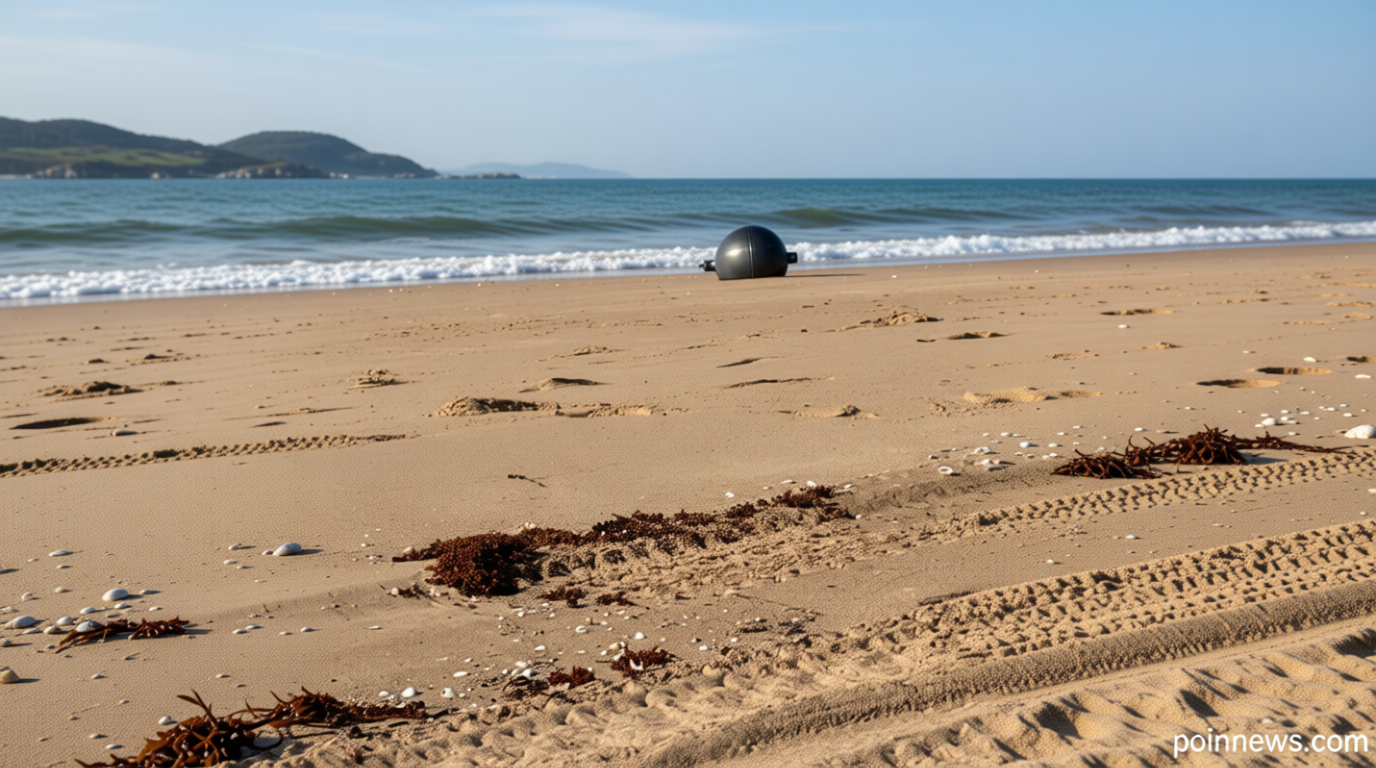
Poinews.com – Residents of Queensland, Australia, are now on high alert after a series of unusual spherical objects washed ashore near Forrest Beach, a coastal area located approximately 150 kilometers north of Brisbane. These objects, locally referred to as ‘space balls,’ have sparked public curiosity and concern, as they are believed to be remnants of a foreign rocket body that re-entered Earth’s atmosphere and landed on the shoreline. The discovery has raised questions about the increasing presence of space debris on our planet, emphasizing the need for greater awareness and preparedness in the face of this growing environmental challenge.
The Origin and Nature of the Debris
Experts from the Australian Space Agency (ASA) are currently analyzing the objects to determine their exact origin and composition. Preliminary findings suggest that the items are likely pressure vessels from a space launch vehicle, which are designed to withstand extreme conditions in space but can become hazardous once they descend to Earth. These containers may have carried fuels or other materials that could pose risks if disturbed. While the objects are not currently considered a direct threat to humans, authorities have issued warnings to keep a safe distance and avoid touching them until further assessments are complete.
“If you encounter any unknown objects in the affected area, do not touch them. Retreat to a safe distance and contact emergency services immediately,” said the Queensland Fire Department in a statement shared via social media.
Tracking Space Debris: A Growing Global Issue
The incident underscores the broader issue of space debris, a problem that has escalated dramatically in recent years. According to the European Southern Observatory (ESO), the number of orbital fragments has surged, with over 1.7 million satellites planned for launch into Earth’s orbit starting in 2027. This exponential increase in space activity has led to a greater likelihood of debris re-entering the atmosphere, sometimes landing in unexpected places like coastal regions. While most debris burns up during re-entry, larger components such as rocket bodies can survive and reach the surface, raising concerns about both environmental and safety impacts.
Queensland’s recent discovery is not an isolated event. The state has previously recorded notable cases of space debris, including fragments from the Skylab space station that landed in Western Australia in 1979 and a SpaceX Dragon rocket component found in New South Wales in 2022. These incidents highlight the long-standing challenge of managing orbital waste, which has become more urgent with the rise of private space ventures and frequent satellite launches. The ASA is working closely with international space agencies to track the debris and identify its source, which could provide valuable insights into the trajectory of space waste accumulation.
The Environmental and Safety Risks of Space Debris
While the immediate danger posed by the ‘space balls’ is low, their presence on Queensland’s beach serves as a reminder of the long-term risks associated with space debris. These objects, often made of durable metals and composites, can remain intact for years and may contain toxic substances such as hydrazine or other rocket propellants. If ingested by marine life or washed inland, they could contribute to ecological damage. Additionally, the proliferation of space debris has sparked debates about the sustainability of space exploration and the need for better debris mitigation strategies.
Scientists warn that the accumulation of orbital debris could eventually lead to catastrophic collisions in space, disrupting satellite operations and posing risks to future missions. On Earth, the debris also presents a challenge for coastal communities, which may need to adapt to the increasing frequency of such landings. The Queensland incident has prompted discussions about how to balance technological progress with environmental responsibility, especially as the global space industry continues to expand. With the current trajectory, experts predict that without effective measures, the problem will only worsen in the coming decades.
The Australian government has begun to address this issue by investing in space debris tracking systems and research initiatives. These efforts are part of a larger international movement to monitor and manage the debris population, which is estimated to include over 500,000 pieces of tracked space junk orbiting Earth. By improving detection and prediction technologies, authorities hope to minimize the risks of debris falling in populated areas and ensure safer space exploration practices. For now, the ‘space balls’ on Queensland’s beach remain a fascinating example of how human activity in space can have unexpected terrestrial consequences.