The Strawberry Moon rises tonight — and no, it isn’t strawberry-coloured
sn't strawberry-coloured The Strawberry Moon rises tonight - As the sun sets and stars emerge, the Strawberry Moon will make its appearance tonight

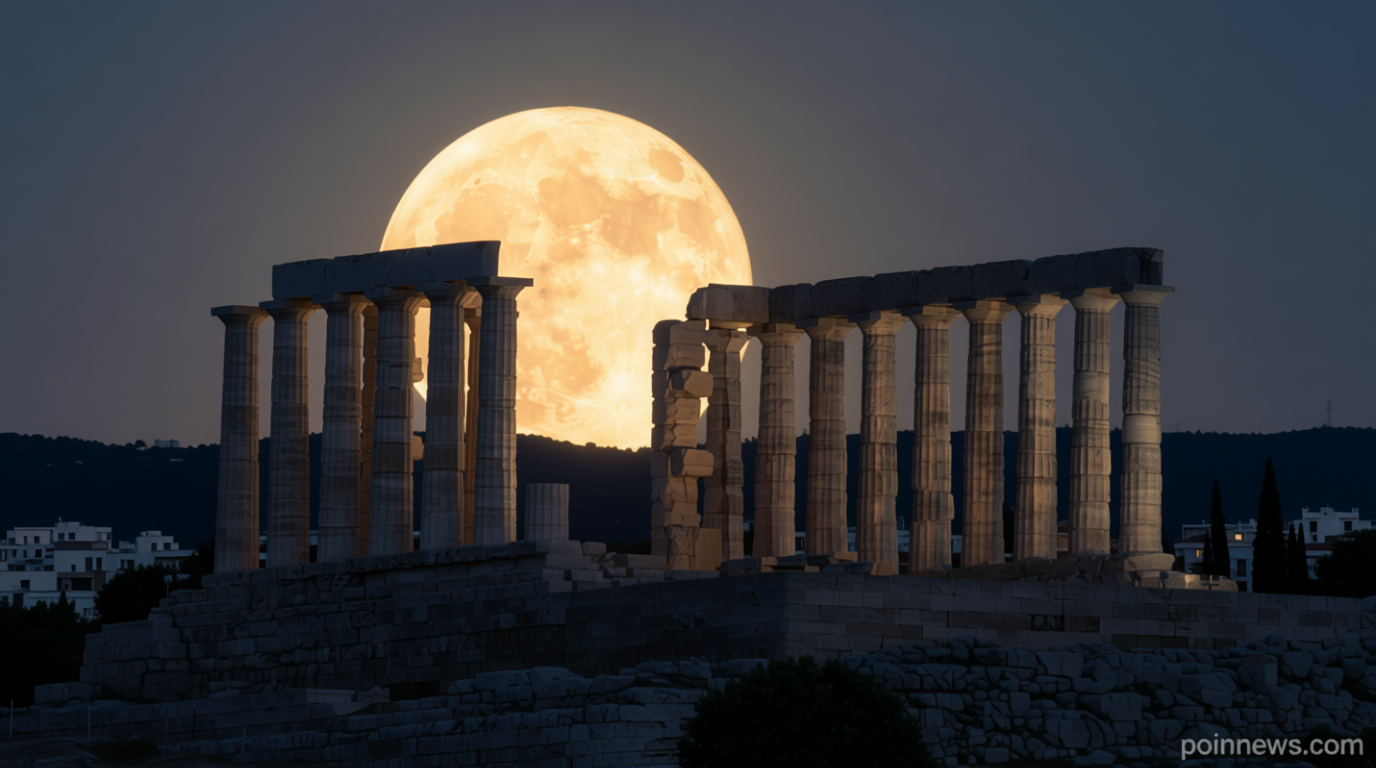
The Strawberry Moon rises tonight — and no, it isn’t strawberry-coloured
Poinews.com – As the sun sets and stars emerge, the Strawberry Moon will make its appearance tonight, captivating stargazers with its celestial spectacle. Though its name might suggest a vivid, rosy shade, the Strawberry Moon’s actual color is more of a golden hue, offering a striking contrast to the seasonal association it holds. This year, the full moon will reach its peak brightness at 01:57 CEST on Tuesday, but for much of Europe, the event will begin this evening, with the moon rising opposite the Sun and casting a unique glow. While the name hints at a fruity, sweet appearance, the moon’s color is largely influenced by atmospheric conditions, not its seasonal connection to strawberries.
Astronomical Timing and Visibility
For those in London, the Strawberry Moon will rise at 9:41 pm, while in Paris, Berlin, and Madrid, it will be visible at 22:13, 21:55, and 21:55 respectively. This timing places it directly in line with the summer solstice, which occurred on June 21, making it a perfect celestial event to mark the transition into warmer months. The moon’s rise is not just a visual phenomenon; it also aligns with the natural rhythms of the Earth and the Sun, creating an ideal opportunity for observation. For optimal viewing, it is recommended to look eastward just after sunset, as the moon will be low on the horizon, enhancing the opportunity to witness its golden glow.
Historical and Cultural Context
The name “Strawberry Moon” has its roots in Indigenous traditions, particularly among the Algonquian tribes, who used the June full moon as a seasonal indicator for the ripening of wild strawberries. This cultural significance has been carried forward through the Old Farmer’s Almanac, which popularized the term. However, the moon has been given different names across various regions and cultures, reflecting local agricultural practices and mythologies. For example, the Cherokee called it the “Green Corn Moon,” signifying the beginning of the corn harvest, while the Cree associated it with the emergence of leaves, marking the start of summer. Despite these diverse names, the “Strawberry Moon rises tonight” remains a globally recognized term, linking it to the summer season.
Why the Misleading Name?
It’s fascinating how the Strawberry Moon’s name can be misleading, as its color is not directly tied to the fruit it is named after. The moon’s golden hue is a result of atmospheric refraction, which bends and scatters light during its rise. This phenomenon is similar to the way sunsets appear orange, creating a visual effect that varies depending on the observer’s location and weather conditions. While the moon may not be strawberry-colored, its name serves as a reminder of the seasonal significance it holds, tying it to the ripening of strawberries in certain parts of the world. The “Strawberry Moon rises tonight” is more about the timing of the event than its actual color, which adds to the intrigue of this lunar spectacle.
Comparisons with Other Lunar Events
Unlike the dramatic “supermoon” phenomenon, which occurs when the moon is at its closest point to Earth, the Strawberry Moon is a “micromoon,” appearing slightly smaller and dimmer. This year’s micromoon will be about 21,000 kilometers farther from Earth than average, resulting in a 7% reduction in size and a 10% decrease in brightness. In contrast, the Blue Moon, which occurred last month, was only 102 kilometers closer, making it a more significant event in terms of visual impact. The “Strawberry Moon rises tonight” is not the only event of its kind; the moon’s position also allows for unique astronomical observations, such as its alignment with the galactic center.
Observing the Strawberry Moon
For the best viewing experience, it is advisable to observe the Strawberry Moon just after it rises, when it is at its most visible. The low position in the sky means that the moon will be bathed in the golden tones of the setting sun, creating a striking contrast against the darker backdrop of the night. While the “Strawberry Moon rises tonight” is a rare and beautiful event, it is important to remember that its color is a result of natural atmospheric conditions rather than the fruit itself. This celestial event is also an excellent time to explore the moon’s role in various cultural and historical contexts, as it has been celebrated in different ways throughout the centuries.