Floating barriers used against jellyfish and pufferfish in Greece: Do they work?
Floating Barriers Used Against Jellyfish in Greece: Do They Work? Floating barriers used against jellyfish and pufferfish - Swimming in Greece's coastal

Floating Barriers Used Against Jellyfish in Greece: Do They Work?
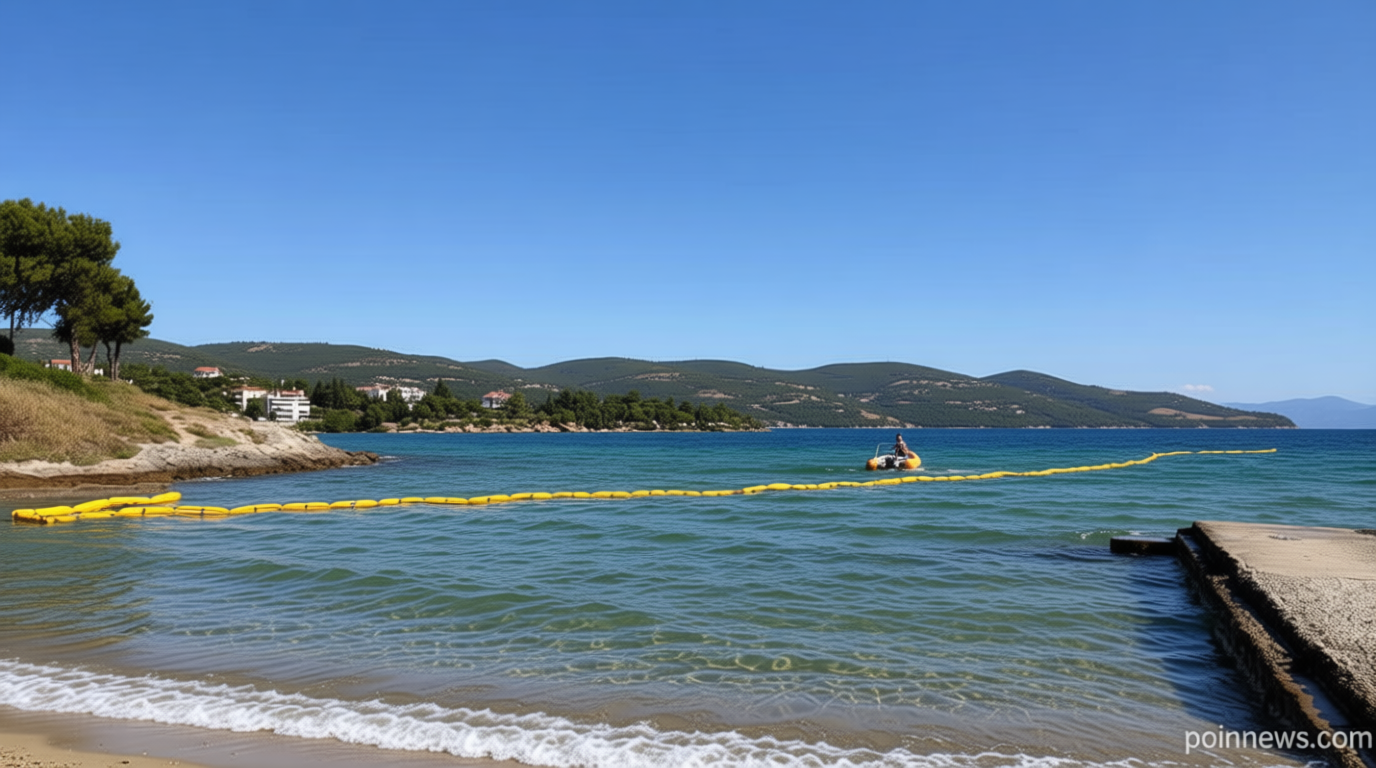
Poinews.com – Swimming in Greece’s coastal waters has become a more challenging experience for beachgoers, especially in regions plagued by jellyfish blooms. To address this growing concern, local authorities have introduced floating barriers as a novel method to protect swimmers from these stinging creatures. These barriers, designed to intercept jellyfish and pufferfish near the surface, have sparked debate about their effectiveness in safeguarding both locals and tourists from marine hazards.
Implementation and Funding
The Municipality of Chalkideon has spearheaded the installation of floating barriers at six beaches in the region, including Rodies, Alykes, Mpourntontas, Valopoula, Kalamia, and Zephyros. This initiative, supported by the Region of Central Greece, costs €366,950.10 and marks a significant step in modernizing coastal safety measures. Meanwhile, the Ports Organisation of Evia (OLNE) plans to deploy similar barriers on Sykies, Kourenti, Souvala, and Papathanasiou beaches. The project reflects a collaborative effort between municipal and regional authorities to tackle the issue of jellyfish-related incidents.
“We are grateful for the Region of Central Greece’s funding, which enables us to block jellyfish and floating waste from entering bathing zones,” stated the Mayor of Chalkideon. “These barriers improve safety for swimmers and help preserve the reputation of our beaches as family-friendly destinations.”
The barriers are part of a broader strategy to combat jellyfish invasions, which have become increasingly frequent in the Euboean Gulf. The system relies on a network of semi-circular or rectangular nets anchored to the seabed, creating a physical barrier that limits access to jellyfish and pufferfish. Special weights, such as chains or anchors, are used to keep the nets taut, while reinforced floats ensure they remain above the water’s surface even during turbulent weather conditions.
Effectiveness and Challenges
Experts suggest that floating barriers can be highly effective when properly maintained. By extending from the shore into deeper waters, they intercept jellyfish before they reach swimming areas, reducing the risk of stings. However, their success depends on consistent upkeep, as seaweed and marine growth can accumulate on the nets, diminishing their efficiency or creating gaps for jellyfish to slip through. Some swimmers at Rodies beach have pointed out that the barriers are positioned in shallow waters, which may restrict free movement and affect the overall swimming experience.
While the barriers show promise, their impact on marine ecosystems remains a topic of discussion. Environmentalists argue that these structures could inadvertently trap other marine life, including fish and crustaceans, raising questions about their ecological footprint. Additionally, the barriers’ ability to handle pufferfish, which are also a concern in certain areas, is still under evaluation. This highlights the need for further research and adaptation of the technology to ensure it meets the region’s specific needs.
Local authorities are closely monitoring the effectiveness of the barriers, with plans to expand their use in the coming months. The project aims to reduce the number of jellyfish incidents reported during the summer season, which has seen a rise in stings due to warmer waters and increased tourism. By combining engineering with environmental considerations, Greece is testing whether these floating barriers can serve as a viable solution to a persistent coastal challenge.