Lithuania seeks China reset while maintaining hard line on Russia
Lithuania seeks China reset while maintaining hard line on Russia Lithuania seeks China reset while maintaining - Lithuania's new government is pursuing a

Lithuania seeks China reset while maintaining hard line on Russia
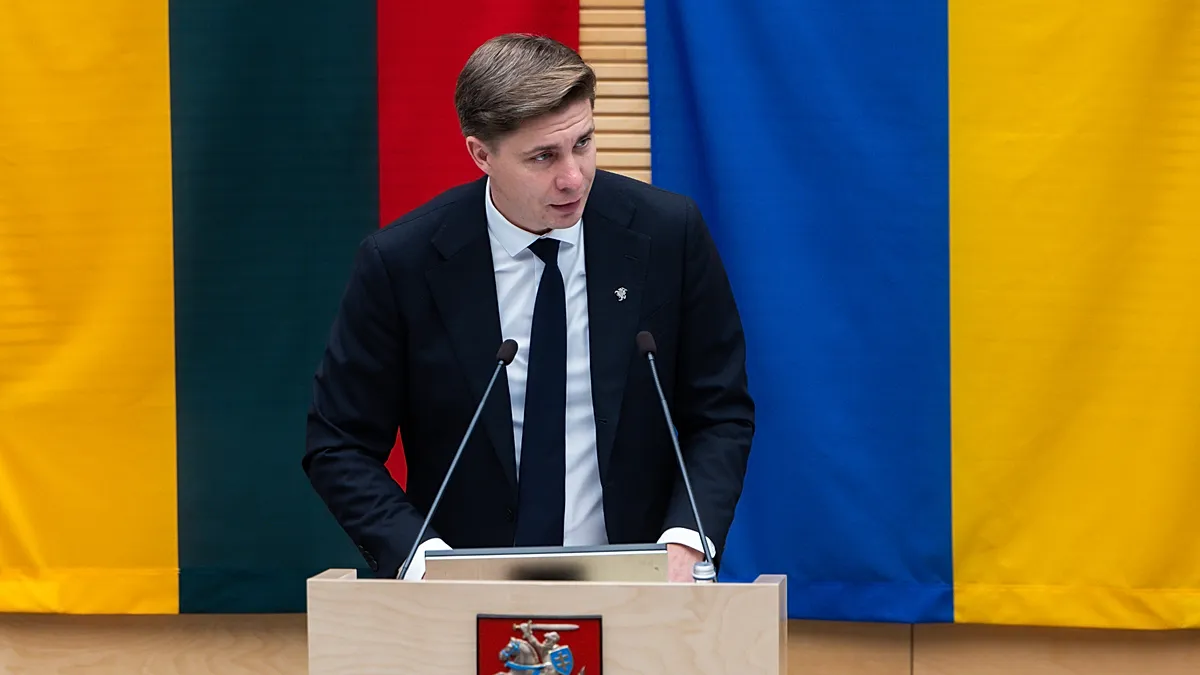
Poinews.com – Lithuania’s new government is pursuing a strategic realignment with China while keeping its firm stance against Russia, according to Prime Minister Mindaugas Sinkevičius. In his recent address to parliament, the leader emphasized the need to recalibrate bilateral relations with China, which have seen tension in recent years. This shift aims to bolster economic ties and expand trade opportunities, while ensuring that Lithuania’s security concerns regarding Russia remain uncompromised. The move comes as the Baltic nation continues to navigate a complex geopolitical landscape, balancing its alliances with the West against the growing influence of its eastern neighbor.
Defense Modernization and Technological Integration
As a frontline state in NATO, Lithuania has been increasingly focused on strengthening its national defense capabilities in response to perceived threats from Russia. The government has outlined ambitious plans to allocate at least 5% of GDP to military spending, which will be used to upgrade air defense systems and invest in cutting-edge technologies such as drones and artificial intelligence. This initiative reflects a broader commitment to modernizing the armed forces and enhancing civilian preparedness, ensuring the country can respond swiftly to hybrid warfare tactics. The integration of innovation into military strategy, as highlighted by Sinkevičius, is seen as crucial for maintaining deterrence in the region.
“Future conflicts will be won by the countries that integrate innovation into their military doctrine the fastest and can learn from modern warfare,” Sinkevičius stated, underscoring the importance of adapting to technologies like drones, artificial intelligence, and autonomous systems.
EU and NATO Collaborative Efforts
To solidify its security posture, Lithuania is actively seeking financial support from the European Union to bolster NATO’s northern flank. The government has prioritized the EU’s 2028–2034 long-term budget (MFF) as a key avenue for funding critical defense projects. This includes preparing for the deployment of a German military brigade by 2027 and ensuring national divisions are fully operational by 2030. The strategic partnership with the EU is framed as essential to maintaining a unified front against Russian aggression, even as the country opens channels for closer economic cooperation with China.
China Policy and Geopolitical Reassessment
Lithuania’s decision to pivot its approach toward China marks a significant departure from its previous foreign policy trajectory. The government has signaled a willingness to normalize diplomatic relations with Beijing, a shift from the earlier strain caused by Lithuania’s support for Taiwan’s representation in the EU. This change, while primarily driven by economic considerations, is part of a broader effort to diversify trade partnerships and reduce reliance on Russian energy and resources. However, the nation remains resolute in its opposition to Russian actions, with Sinkevičius reiterating that the China reset will not come at the expense of its hard line on Moscow.
Despite the improved economic ties with China, Lithuania’s foreign policy is still anchored by its strong alignment with Western institutions. The country’s strategy involves using its growing trade relations with Beijing to offset some of its economic dependence on Russia, while simultaneously reinforcing its commitment to the European Union and NATO. This dual approach reflects a calculated effort to secure both economic and geopolitical stability in an increasingly volatile region.
Strategic Balance and Regional Implications
Lithuania’s new administration is emphasizing a balanced foreign policy that integrates economic cooperation with China while maintaining a robust defense posture against Russia. This strategy is designed to enhance the nation’s strategic autonomy, allowing it to engage with global partners without compromising its security interests. The government has also reiterated its support for Ukraine, pledging to utilize frozen Russian assets to aid the country’s reconstruction efforts. This dual focus on economic diplomacy and security alignment underscores Lithuania’s determination to act as a key player in European geopolitics.
Long-Term Objectives and Future Outlook
As Lithuania embarks on this new phase of foreign policy, its long-term objectives remain clear. The government aims to foster a stable and prosperous relationship with China, which could provide significant economic benefits, while ensuring that its stance on Russia remains uncompromised. This strategic reset is expected to have far-reaching implications for the Baltic region, as other Eastern European countries may follow Lithuania’s lead in balancing their own relations with Beijing and Moscow. With ongoing tensions in Ukraine and the broader East-West divide, Lithuania’s approach is likely to shape the next chapter of European security and trade dynamics.