Video. Russian drivers face petrol shortages after Ukrainian strikes on Russian energy infrastructure
Russian Drivers Face Petrol Shortages Amid Ukrainian Attacks Russian drivers face petrol shortages after - Russian drivers face petrol shortages as Ukrainian

Russian Drivers Face Petrol Shortages Amid Ukrainian Attacks
Poinews.com – Russian drivers face petrol shortages as Ukrainian strikes on critical energy infrastructure intensify, disrupting fuel supply chains across key regions. The latest attacks, targeting oil refineries and storage facilities, have created a domino effect, leaving thousands of commuters and transport workers struggling to access gasoline. This development has raised concerns about the long-term impact on Russia’s transportation sector and its ability to sustain military operations, which rely heavily on reliable fuel supplies. With the conflict escalating, the effects on daily life are becoming increasingly pronounced, forcing drivers to adapt to unpredictable fuel availability.
Strategic Strikes on Fuel Infrastructure
Ukrainian forces have escalated their targeting of Russian energy infrastructure, particularly in strategic areas such as refineries, pipelines, and storage depots. These strikes, which have intensified since June, are designed to weaken Moscow’s logistical backbone and reduce its financial resources. By damaging key facilities, Ukrainian military actions have forced Russia to reroute fuel supplies, causing delays and shortages in urban centers like Saint Petersburg. The disruption has not only affected civilian vehicles but also military convoys, highlighting the vulnerability of Russia’s energy-dependent systems.
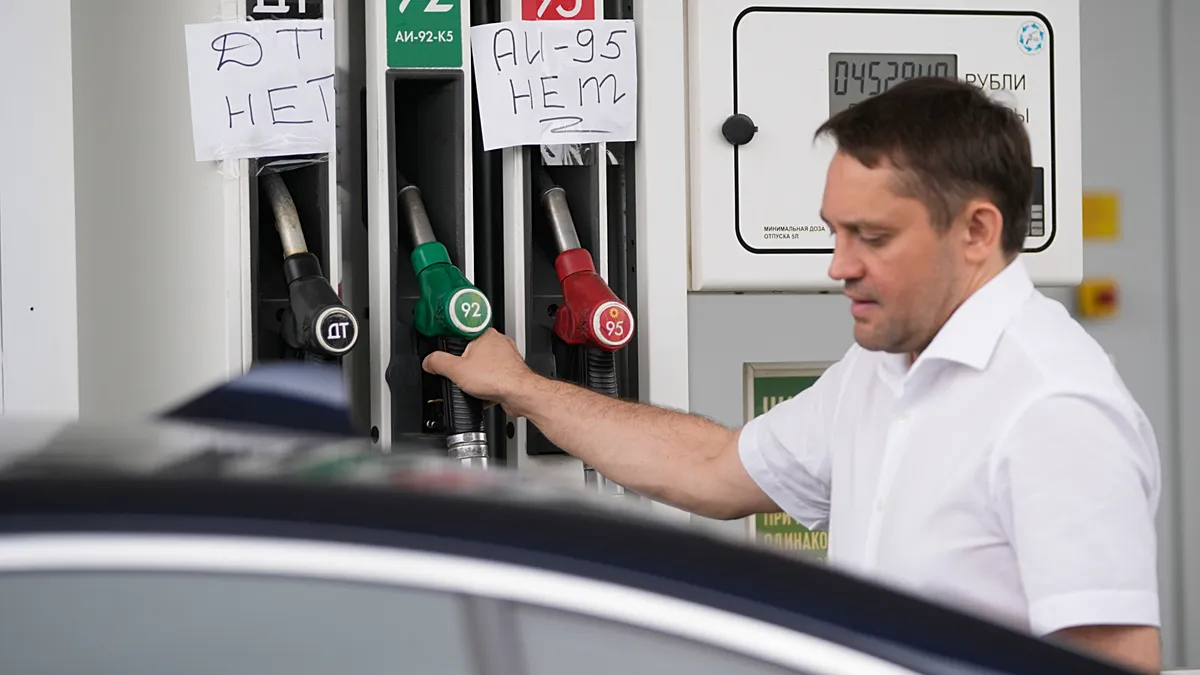
According to recent reports, the strikes have led to frequent outages at fuel stations, with some locations running completely dry. Drivers are now forced to spend hours waiting in line, often navigating empty lots and cones blocking pumps. The scarcity of premium fuels such as 92 and 95 octane has further complicated matters, as many stations have prioritized diesel over higher-grade gasoline. This situation has sparked frustration among residents, who are increasingly dependent on public transport or alternative fuel sources to cope with the crisis.
Challenges in the Leningrad Region
Reports indicate that the Leningrad region has become a hotspot for these fuel shortages, with residents describing a chaotic scene at gas stations. One commuter shared their experience, stating, “I visited 15 stations over the weekend—some had no petrol, others were closed with ‘out of stock’ signs, and cones were everywhere. It’s almost impossible to find fuel.” The region’s proximity to key oil terminals has made it a prime target, amplifying the impact of the strikes on local communities. With limited storage capacity and transport routes under threat, the situation is expected to worsen as winter approaches.
Meanwhile, officials in Saint Petersburg have reported a surge in demand for fuel, with some stations experiencing lines that stretch for blocks. The shortage has also affected the availability of electric vehicle charging stations, as many rely on diesel-powered generators. This dual crisis has forced drivers to rethink their travel plans, with some opting to travel in groups to increase their chances of securing fuel. The ongoing attacks on energy infrastructure have not only targeted physical facilities but also disrupted the flow of resources, creating a ripple effect across the country’s transportation network.
Broader Implications for Russia’s Economy
The petrol shortages are more than a logistical inconvenience; they represent a significant blow to Russia’s economic stability. As Ukraine continues to target oil infrastructure, the country’s ability to export crude oil and generate revenue has been undermined. This has led to a decline in fuel production and higher domestic prices, further straining households and businesses. The situation is expected to worsen as the winter months approach, when demand for heating fuels increases, and transportation networks face additional challenges.
Analysts warn that the disruptions could have long-term consequences for Russia’s economy. With fuel prices rising and supply chains becoming more fragile, industries reliant on transportation may face higher operational costs. The Ukrainian strikes, which have focused on ports and refineries, are part of a broader strategy to isolate Russia from global markets and weaken its war funding. This approach has already led to a reduction in oil exports, impacting the country’s balance of payments and overall economic growth. As the crisis deepens, the government may need to implement emergency measures to stabilize the situation.
Russian drivers face petrol shortages not only due to the immediate destruction of infrastructure but also because of the cascading effects of these attacks. The loss of storage capacity and refinery output has forced the country to rely on alternative sources, including coal and nuclear energy, to power its remaining fuel production. This shift has led to higher carbon emissions and increased energy costs, compounding the economic strain. The situation also underscores the importance of diversifying energy sources, as reliance on a single network leaves the country vulnerable to targeted strikes.
As the conflict continues, the petrol shortages are expected to become a recurring issue, affecting both civilians and the military. Drivers are now adopting new routines, such as filling up early in the morning or stocking up in advance, to avoid the long waits and empty stations. The Ukrainian strikes on Russian energy infrastructure have demonstrated the power of targeted warfare in disrupting supply chains, and the impact on daily life is a clear sign of the growing economic and logistical challenges facing Moscow. For Russian drivers, the struggle for petrol has become a symbol of the broader crisis threatening the nation’s stability.