Artemis II astronauts reunite with Orion after record-breaking Moon mission
Artemis II Astronauts Reunite With Orion After Record-Breaking Moon Mission Artemis II astronauts reunite with Orion - After a groundbreaking three-month

Artemis II Astronauts Reunite With Orion After Record-Breaking Moon Mission
Poinews.com – After a groundbreaking three-month mission that circumnavigated the Moon, the Artemis II astronauts finally reunited with their Orion spacecraft at the Kennedy Space Center in Florida, United States. This historic event marks the culmination of a journey that pushed the boundaries of human space exploration, setting a new record for the farthest distance traveled by humans from Earth—406,771 kilometers—during the lunar flyby. The mission, which launched in April 2026 aboard NASA’s Space Launch System rocket, was the first crewed test of the Orion capsule, a critical step toward achieving the long-term goal of establishing a sustainable presence on the Moon.
The Journey and Its Significance
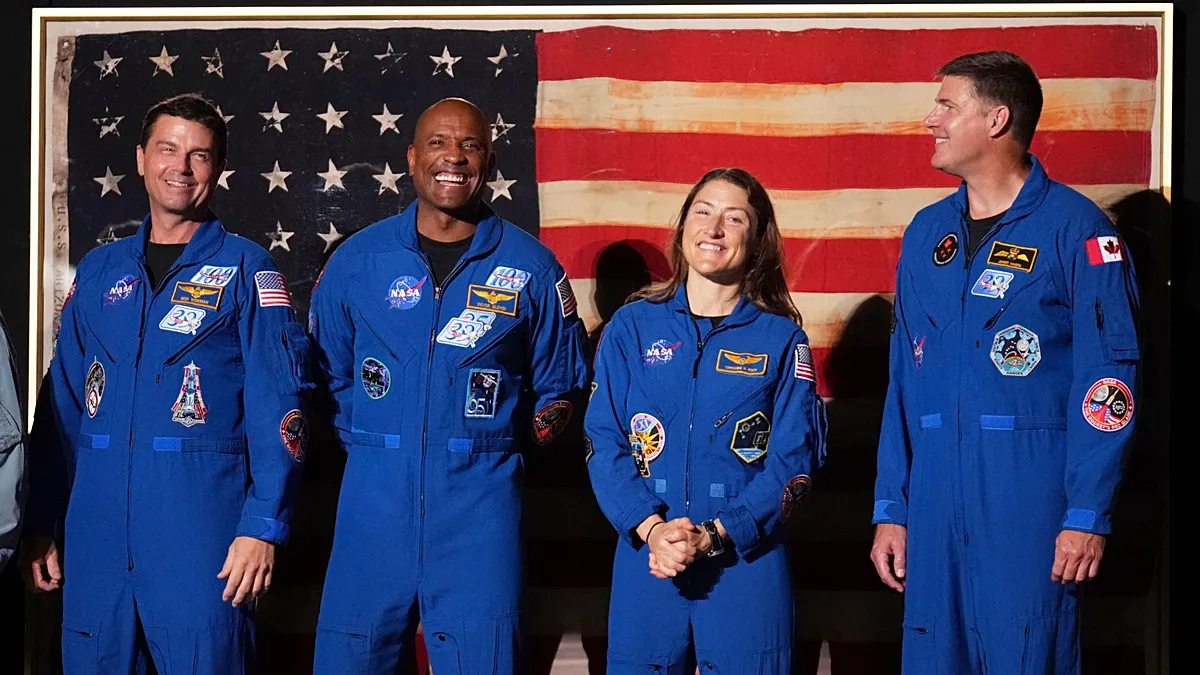
For the Artemis II astronauts, the reunion with Orion was more than a logistical necessity; it symbolized the successful completion of a mission that redefined what is possible in deep space travel. The crew, consisting of Reid Wiseman, Victor Glover, Christina Koch, and Canadian astronaut Jeremy Hansen, spent weeks in the Orion capsule, conducting experiments, testing systems, and capturing stunning imagery of the lunar surface and Earth from orbit. Their mission not only showcased the capabilities of the spacecraft but also demonstrated the resilience and adaptability required for long-duration space travel. This achievement is particularly notable as it breaks the five-decade gap since the last crewed Moon mission, underscoring NASA’s commitment to revitalizing lunar exploration.
The Artemis II astronauts’ reunion with Orion also highlighted the seamless integration of technology and human ingenuity. The Orion spacecraft, designed to carry humans beyond low Earth orbit, performed flawlessly during the mission, with its advanced life support systems and radiation protection shielding proving essential for the crew’s survival. The astronauts’ ability to navigate the challenges of deep space, including communication delays and microgravity effects, was a testament to the training and preparation that went into the mission. Their return to the spacecraft marked the beginning of a new chapter in the Artemis program, which aims to pave the way for future lunar landings and eventually missions to Mars.
Reflections From the Crew
As the Artemis II astronauts stepped back into the Orion capsule, they expressed profound gratitude for the teams that supported their mission. Reid Wiseman, the mission’s commander, shared his thoughts with reporters, stating,
“It’s a lonely place without that rocket on it.”
This quote captures the emotional weight of the journey, as the astronauts described the experience of being far from Earth and the camaraderie that kept them motivated. The mission’s success was not just a result of the crew’s dedication but also the collaborative efforts of thousands of engineers, scientists, and ground support personnel who worked tirelessly to ensure every detail was perfect.
Christina Koch, a key member of the Artemis II crew, emphasized the importance of focusing on the mission’s broader implications rather than individual achievements. She noted,
“I am so glad and so proud that that’s not the situation we have,” Koch told reporters.
This sentiment reflects the collective pride of the team, as they celebrated the milestones of Artemis II while keeping their eyes on the future. The presence of a woman in the Artemis II crew—Christina Koch—also served as a powerful reminder of the progress made in gender diversity within space exploration, setting a precedent for subsequent missions.
Following their return, the Artemis II astronauts are now transitioning to the next phase of the program. NASA has already begun planning Artemis III, which will feature a new crew of three U.S. astronauts and Italian ESA representative Luca Parmitano. This mission, scheduled for 2027, will focus on orbital operations, allowing the team to practice docking procedures with lunar landers being developed by SpaceX and Blue Origin. The Artemis II astronauts’ experience provides invaluable insights for the next crew, who will build on the data and lessons learned during the previous mission to prepare for more complex tasks.
The Artemis program is designed as a series of incremental steps, with each mission contributing to the ultimate goal of landing humans on the Moon. Artemis IV, set for 2028, is expected to be a pivotal moment, as NASA aims to achieve the first lunar landing since the Apollo era. While the identities of the Artemis IV astronauts have not yet been officially announced, the success of Artemis II and III will lay the groundwork for this ambitious endeavor. The Artemis II astronauts’ reunion with Orion underscores the importance of teamwork and preparation in achieving these milestones, as they continue to inspire future generations of explorers.