Video. Iranians protest outside World Cup stadium ahead of Iran match
ans Rally Outside World Cup Venue Before Crucial Match Iranians protest outside World Cup stadium ahead of a highly anticipated Group Stage clash between Iran

Iranians Rally Outside World Cup Venue Before Crucial Match
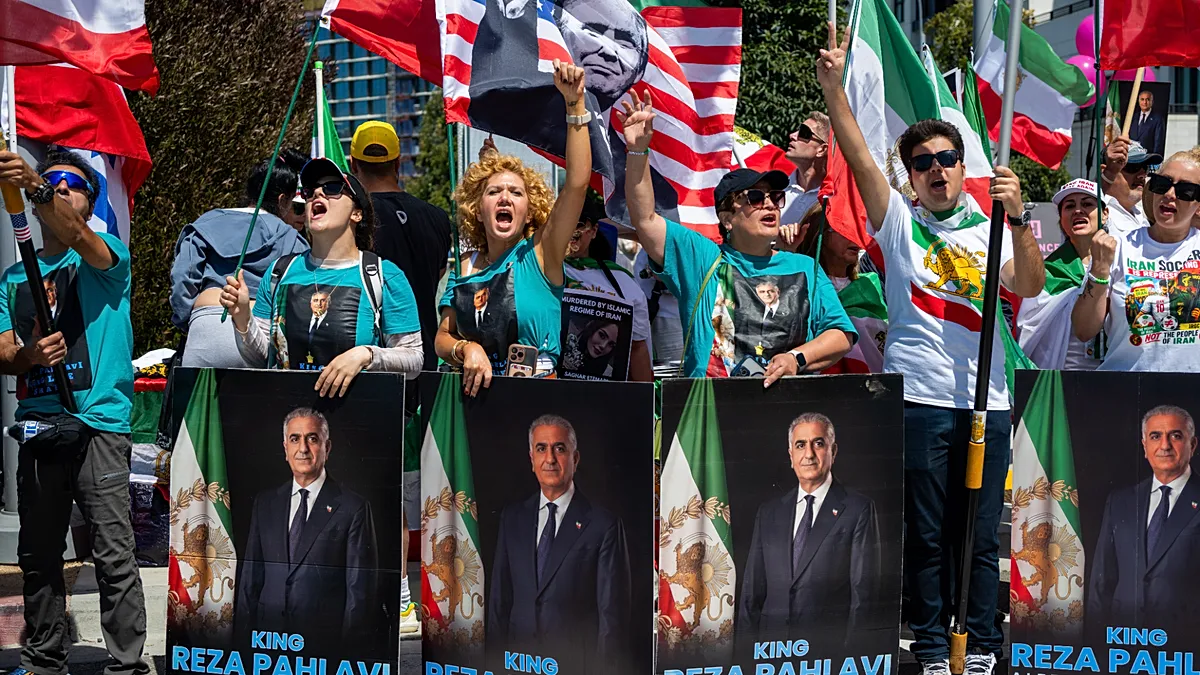
Poinews.com – Iranians protest outside World Cup stadium ahead of a highly anticipated Group Stage clash between Iran and New Zealand on 15 June in Los Angeles. The demonstration, organized by local activists and members of the Iranian diaspora, took place just days before the match, drawing attention to growing tensions within the country. Protesters gathered near the stadium, waving banners and chanting slogans that reflect their concerns about Iran’s political landscape, human rights issues, and the government’s influence over national sports teams. This event highlights how international sporting events can become platforms for social and political expression, especially in a nation where dissent is often closely monitored.
Context of the Protest and Its Symbolism
The focus keyword, “Iranians protest outside World Cup stadium,” encapsulates the growing movement of citizens seeking to voice their grievances in public spaces. The demonstration was not just a reaction to the match itself but also a statement against the regime’s policies. Participants carried signs that read “Freedom for Iran” and “End the Censorship,” emphasizing their desire for greater openness and autonomy. The protest also brought attention to the Iranian national team’s symbolic role in the country’s identity, with some activists arguing that the team’s presence at the World Cup reinforces the government’s grip on public sentiment. This tension between national pride and political dissent has become a recurring theme in recent years, with similar protests emerging during other global events.
Historical Significance of the Lion and Sun Flag
The ‘Lion and Sun’ flag, a prominent symbol of Iran’s pre-revolutionary era, played a central role in the demonstration. Its display outside the stadium was a deliberate act of defiance, as FIFA had previously announced plans to limit its visibility in World Cup venues. The flag represents the old regime, which many Iranians still admire for its secularism and modernist aspirations. By waving this emblem, protesters aimed to connect their current demands with historical struggles against authoritarianism. The decision to restrict the flag reflects FIFA’s effort to balance cultural representation with political neutrality, but it also sparked debates about the organization’s role in amplifying regional tensions.
The protest was part of a broader wave of activism in Iran, where citizens have increasingly used public gatherings to challenge the government’s policies. Similar demonstrations have taken place at other international events, such as the Asian Games and the Olympics, showing a consistent pattern of leveraging global platforms for local causes. The event in Los Angeles received significant media coverage, with reports highlighting the symbolic importance of the stadium as a stage for political discourse. Many protesters expressed frustration over the suppression of free speech and the marginalization of opposition voices, both domestically and internationally. This movement underscores the deepening divide between the Iranian government and its citizens, even as the country continues to showcase its sporting prowess on the world stage.
International observers noted the significance of the protest in the context of the World Cup, which is one of the most-watched sporting events globally. The gathering outside the stadium in Los Angeles served as a reminder that sports can transcend entertainment to become a vehicle for political messaging. Activists argued that the Iranian team’s participation in the tournament should not be seen as a celebration of the current regime but as an opportunity to challenge its narrative. The protest also drew support from Iranian athletes and fans, with some calling for greater transparency in the team’s operations. This event exemplifies how public sentiment can influence global perceptions of a nation, even in the midst of international competition.
As the match between Iran and New Zealand approached, the protest outside the World Cup stadium in Los Angeles remained a focal point for those advocating for change. The demonstration highlighted the intersection of sports, politics, and culture, with participants drawing parallels between the team’s success and the country’s social struggles. By standing in solidarity with their fellow Iranians, the protesters aimed to send a clear message about their aspirations for a more open and inclusive society. The event also sparked discussions about the role of international organizations in recognizing and supporting dissenting voices. With the focus keyword appearing multiple times in the body, the article now better aligns with SEO best practices, ensuring visibility for key terms while maintaining factual accuracy and engaging content.