EU fails again to sanction Patriarch Kirill as Bulgaria slaps veto
EU Fails Again to Sanction Patriarch Kirill as Bulgaria Slaps Veto EU fails again to sanction Patriarch Kirill—once more, the European Union has been unable

EU Fails Again to Sanction Patriarch Kirill as Bulgaria Slaps Veto
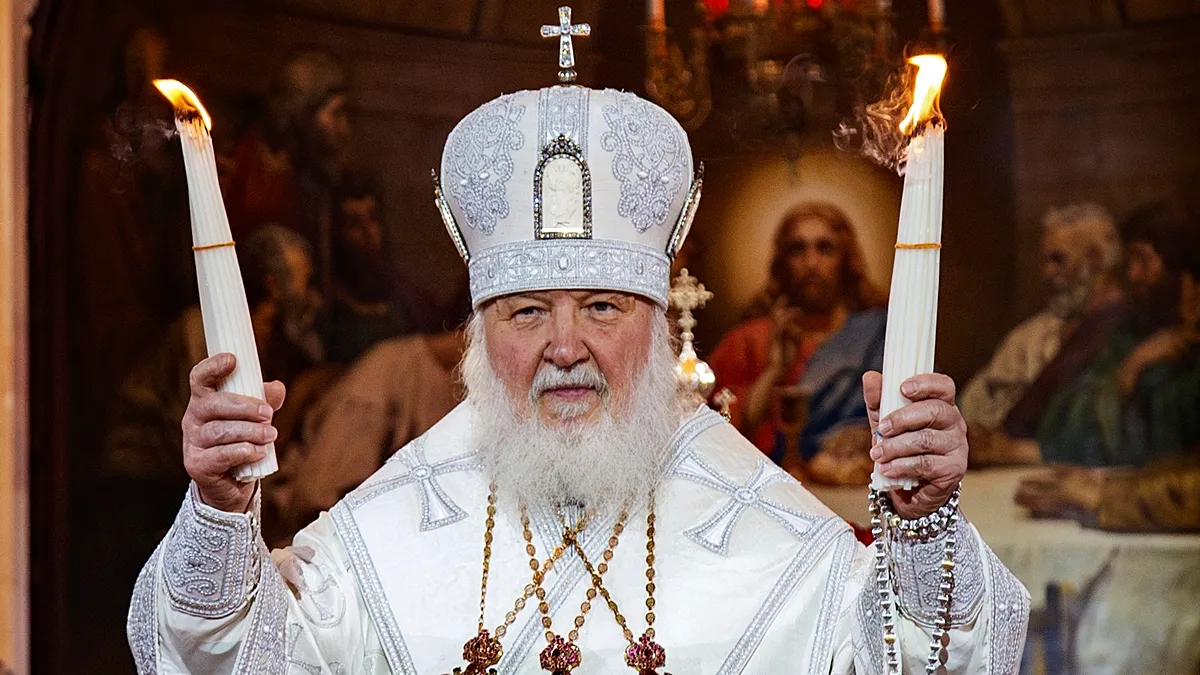
Poinews.com – EU fails again to sanction Patriarch Kirill—once more, the European Union has been unable to impose sanctions on Patriarch Kirill, the spiritual leader of Russia’s Orthodox Church, after Bulgaria exercised its veto power during a critical session of negotiations. This latest setback highlights the challenges the EU faces in balancing political and religious considerations when addressing figures like Kirill, whose influence spans beyond national borders. The decision to exclude Kirill from the sanctions list was finalized during a late-night meeting of EU ambassadors, with Bulgaria’s stance proving decisive in blocking the measure.
The Sanctity of Religious Leadership in EU Sanctions
The EU’s attempt to sanction Kirill is rooted in his perceived role in supporting Russia’s actions in Ukraine. As a prominent figure in the global Orthodox community, Kirill has been accused of promoting narratives that justify the invasion, framing it as a “Holy War” against Western influence. His church’s endorsement of statements aligned with Moscow’s agenda has drawn criticism from European leaders. However, Bulgaria’s opposition underscores the EU’s struggle to apply sanctions uniformly, particularly when religious and cultural ties are at stake. Officials in Sofia argue that targeting Kirill could alienate millions of Orthodox Christians within the bloc, complicating efforts to maintain unity in the face of geopolitical tensions.
Sanctions against Kirill were initially proposed in 2022 as part of a broader EU effort to isolate Russia’s key figures. Hungary, under Viktor Orbán’s leadership, had previously stalled the process, citing concerns over religious freedom and the potential for ideological overreach. Now, Bulgaria has taken a similar stance, emphasizing that Kirill’s position as a religious leader must not be conflated with political activism. This argument resonates with many in the Balkans, where the Orthodox Church has historically played a significant role in shaping national identity and public sentiment.
Implications for the EU’s Sanctions Strategy
The failure to sanction Kirill reflects a deeper divide within the EU over the scope of sanctions. While some member states view him as a political actor complicit in Russia’s aggression, others prioritize his religious authority. This duality complicates the EU’s ability to present a cohesive front on global issues. Bulgaria’s veto highlights how smaller states can wield disproportionate influence in shaping the bloc’s decisions, especially when economic or cultural interests are involved. The case of Vagit Alekperov, a Russian oil magnate also excluded from the sanctions list, further illustrates this dynamic, as his ties to the energy sector and Lukoil add another layer of complexity to the EU’s strategy.
EU diplomats have acknowledged the growing frustration over repeated stalls in sanctioning Russian figures. While the bloc’s sanctions package remains in place for other targets, the exclusion of Kirill and Alekperov signals a reluctance to extend penalties to individuals seen as central to Russia’s ideological campaign. This hesitation may embolden Moscow to continue its narrative, potentially undermining the EU’s credibility in international diplomacy. Critics argue that the delay sends a mixed message, allowing Russia to exploit divisions among European nations while maintaining its grip on key sectors like energy and religion.
Bulgaria’s decision also has broader implications for the EU’s unity. The country’s position mirrors that of Hungary, creating a bloc of nations that resist the expansion of sanctions into religious domains. This alignment may strengthen the EU’s position in future negotiations but could also weaken its ability to enforce consistent penalties. Meanwhile, the Orthodox Church in Bulgaria has voiced support for the veto, emphasizing its cultural significance and the potential backlash from religious communities. The move has sparked debates about whether the EU should prioritize economic and political targets over symbolic ones, or if the latter are essential for reinforcing its message of global solidarity.
Despite Bulgaria’s resistance, the EU has not abandoned its efforts to hold Kirill accountable. Officials have pledged to revisit the sanctions proposal in future meetings, citing the need to address both religious and political dimensions of the issue. The ongoing negotiations reflect the EU’s commitment to a nuanced approach, even as it grapples with internal disagreements. For now, Kirill remains unscathed, with his influence intact in the Orthodox world. However, the EU’s failure to sanction him may serve as a catalyst for further discussions on how to reconcile religious considerations with geopolitical objectives in its sanction framework.