ICE should continue traffic stops after shootings, Trump says, apparently contradicting new policy
ICE Should Continue Traffic Stops After Shootings, Trump Reaffirms Stance Amid Policy Shift ICE should continue traffic stops after - US President Donald

ICE Should Continue Traffic Stops After Shootings, Trump Reaffirms Stance Amid Policy Shift
Poinews.com – US President Donald Trump has defended the practice of Immigration and Customs Enforcement (ICE) traffic stops, asserting that they remain essential tools for combating crime even after recent fatal incidents. In a recent social media post, he emphasized that the agency “must not stop” its efforts to detain immigrants through traffic stops, seemingly at odds with a new policy that temporarily paused the practice. Trump argued that these stops are critical for identifying and apprehending individuals who may pose a threat to public safety, stating that “we cannot abandon ICE’s proven method for catching criminals.” His remarks highlight the ongoing tension between his administration’s hardline immigration enforcement approach and recent changes aimed at addressing controversy.
Policy Changes and Their Rationale
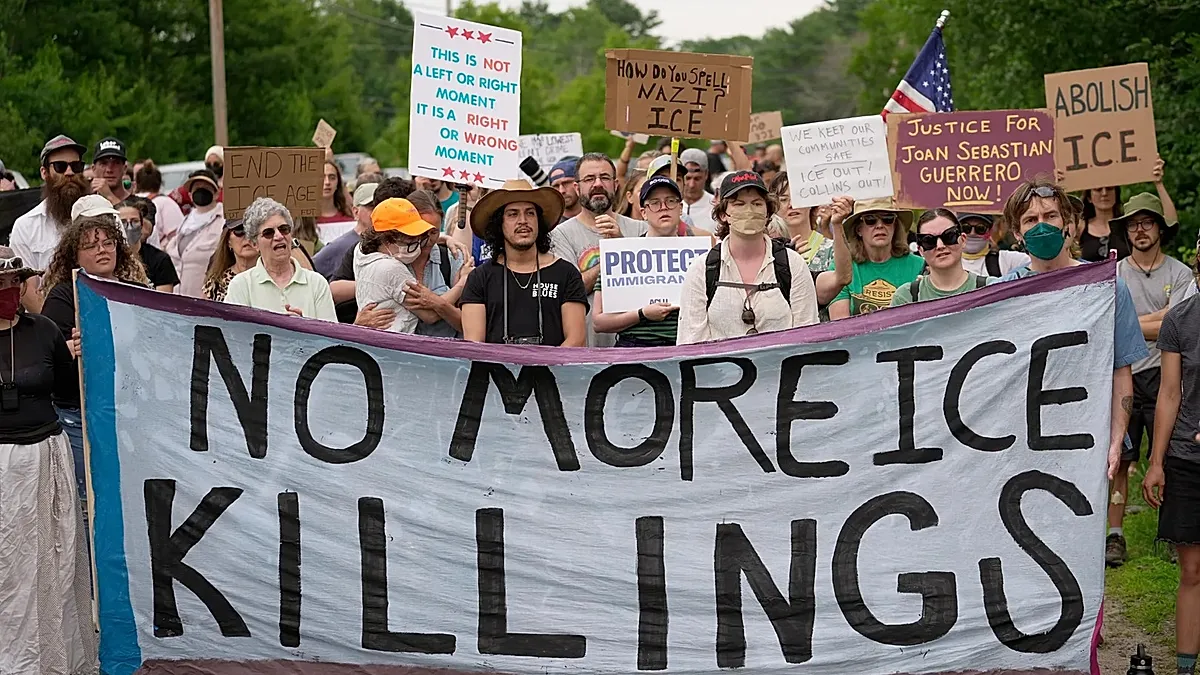
The suspension of ICE traffic stops was announced following two high-profile shootings by agents, which sparked national debate about the agency’s tactics. The Department of Homeland Security (DHS) instructed officers to avoid stopping moving vehicles for arrests or questioning, citing concerns over the potential for escalation. This decision, reported by outlets such as the Wall Street Journal, came after the deaths of Colombian driver Joan Sebastian Guerrero in Maine and another motorist in Houston, raising questions about the balance between enforcement and safety.
While the policy change was intended to reduce risks during traffic stops, critics argue it may have unintended consequences. Immigration advocates note that traffic stops have long been a key method for identifying undocumented immigrants, and their suspension could lead to fewer encounters and a potential slowdown in apprehensions. However, supporters of the policy highlight the need to address the issue of lethal force, particularly in cases where officers may target individuals based on their immigration status.
Trump’s push to continue traffic stops reflects his broader strategy of prioritizing immigration enforcement. He has frequently criticized the previous Democratic administration for allowing “criminals” to enter the country, framing traffic stops as a necessary means to combat this perceived threat. “We cannot give up one of ICE’s most important and effective crime-fighting tools,” he said, underscoring his belief in the tactic’s efficacy. This stance aligns with his administration’s emphasis on swift action and accountability in immigration matters.
Public Reaction and Political Divide
The policy shift has intensified discussions among political figures and advocacy groups. Colombian President Gustavo Petro, a prominent critic of Trump’s immigration policies, condemned the shooting of Guerrero, calling it “a murder of a Latin American at the hands of the US government.” He accused the administration of using traffic stops as a pretext to target individuals from his country, arguing that the practice perpetuates systemic discrimination. In Florida, a 28-year-old man was killed by a truck while evading immigration officers, adding to the growing scrutiny of the agency’s methods.
Meanwhile, Republican lawmakers have largely supported Trump’s position, with some calling for the reinstatement of traffic stops. US Senator Susan Collins, for example, had previously urged DHS Secretary Markwayne Mullin to “cease all non-urgent vehicle stops” during a hearing, but her comments have since been contrasted with Trump’s defense of the tactic. Legal experts, however, caution that the suspension of traffic stops could lead to a more fragmented enforcement approach, with officers relying on alternative methods to identify suspects.
The debate over ICE traffic stops also touches on broader questions about racial bias and police conduct. Critics point to historical data showing that traffic stops disproportionately affect minority communities, particularly Latinx individuals. While the administration maintains that these stops are necessary for national security, opponents argue that the policy should be revised to include safeguards and training to reduce the risk of lethal force. This divergence in perspectives underscores the complex political and social dynamics surrounding immigration enforcement.