Macron and Merz agree to deepen defence ties and push for tougher stance on China
Macron and Merz Deepen Defence Ties, Target China Macron and Merz agree to deepen - In a landmark move, French President Emmanuel Macron and German Chancellor

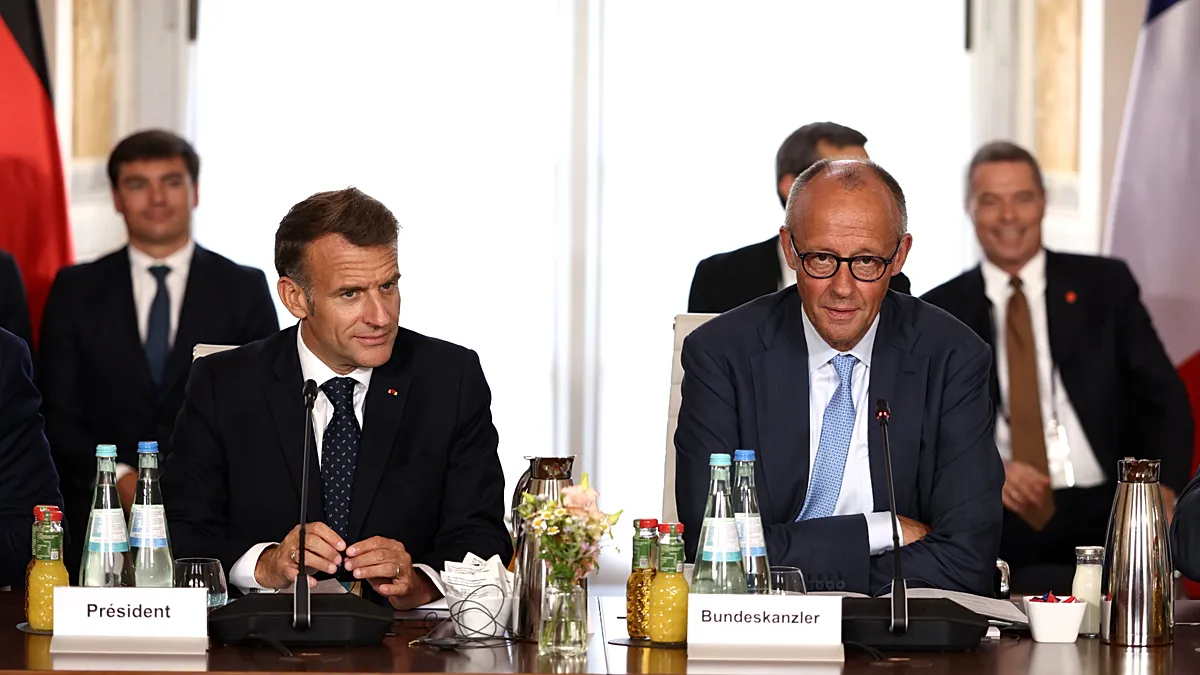
Macron and Merz Deepen Defence Ties, Target China
Poinews.com – In a landmark move, French President Emmanuel Macron and German Chancellor Friedrich Merz have agreed to strengthen their defence partnership, signaling a unified front against growing Chinese influence in Europe. The collaboration was formalized during a high-level meeting held in Cologne, where both leaders emphasized the need for coordinated military strategies to counter Beijing’s expanding economic and geopolitical reach. “Our joint efforts will not only enhance operational readiness but also send a clear message about our commitment to European security,” Macron stated, highlighting the importance of aligning their defence policies in a rapidly changing global landscape.
New Strategic Cooperation Framework
The bilateral agreement introduces a strategic steering group tasked with evaluating joint deterrence initiatives and refining cooperation mechanisms. This group, composed of military and economic advisors, aims to streamline decision-making processes and ensure a cohesive response to emerging threats. Merz noted that the initiative complements existing NATO frameworks while addressing specific European challenges, such as the reliance on Chinese technology and supply chains. “By synchronizing our nuclear capabilities, we can create a more robust deterrent against any potential aggression,” he said, underscoring the dual focus on regional and international security.
The plan includes a series of joint exercises, with Germany’s conventional forces participating in a French nuclear drill scheduled for late 2026. This exercise will test interoperability between the two nations’ armed forces, focusing on rapid deployment and joint command structures. The move reflects a broader trend of European countries seeking to reduce dependency on external powers, particularly in light of China’s growing military presence in the Indo-Pacific and its influence over global trade networks.
Economic and Trade Measures Against China
Macron and Merz also outlined a coordinated economic strategy to counter China’s trade practices, which they argue have undermined European industries for years. The duo announced a joint roadmap to be finalized by September, which will involve France’s and Germany’s economy, finance, and foreign ministers working together to implement stricter trade policies. “We must act decisively to protect our industries and ensure fair competition,” Macron emphasized, citing sectors like chemicals, automotive, and machine tools as key areas of concern. Merz added that the EU’s trade deficit with China has reached unsustainable levels, partly due to state-backed subsidies and currency manipulation.
The roadmap includes measures such as increased market investigations, enhanced regulatory scrutiny, and potential tariffs on Chinese imports. Both leaders acknowledged the urgency of these actions, given the recent surge in Chinese exports to Europe. “Our industries are being squeezed, and we need to respond with a unified strategy,” Merz said, calling for stricter enforcement of trade rules to level the playing field. The agreement marks a significant step toward a more assertive European stance in global trade negotiations, with a focus on safeguarding economic sovereignty and technological independence.
As part of their broader strategic alignment, France and Germany have also pledged to support Ukraine’s military efforts through a coordinated manoeuvre set for the autumn. This exercise, led by France, will involve Germany clarifying its role in the operation, which aims to demonstrate the coalition’s readiness to sustain long-term support for Kyiv. The Coalition of the Willing, a group of Ukraine’s allies, convened in Paris recently to discuss deployment strategies, with Macron and Merz attending to ensure alignment among key partners. “This is not just about military aid—it’s about showing solidarity and commitment to a free and democratic Europe,” Macron remarked, highlighting the symbolic and practical importance of the move.
The partnership between France and Germany is seen as a pivotal development in the EU’s response to China’s economic and strategic ambitions. Analysts suggest that the two nations’ combined efforts could set a precedent for other European countries to follow, fostering a more unified approach to countering Beijing’s influence. “Macron and Merz are leading by example, proving that solidarity among European leaders is achievable,” said a political strategist, adding that the collaboration could strengthen the EU’s bargaining power in global negotiations.
As the partnership solidifies, the focus on China’s trade practices and military presence is expected to intensify. With the strategic steering group and the joint roadmap in place, France and Germany aim to address both economic and security challenges simultaneously. The success of this initiative will depend on sustained cooperation and the ability to balance short-term interests with long-term strategic goals. “Our agreement is a foundation for future collaboration, not just a one-off effort,” Merz concluded, reflecting the long-term vision of the two nations’ partnership.