Second drone shot down over Romanian airspace in less than 24 hours
The Romanian military has successfully intercepted and destroyed a second unmanned aerial vehicle within a remarkably short timeframe, marking the latest

Second Drone Shot Down Over Romanian Airspace in Less Than 24 Hours
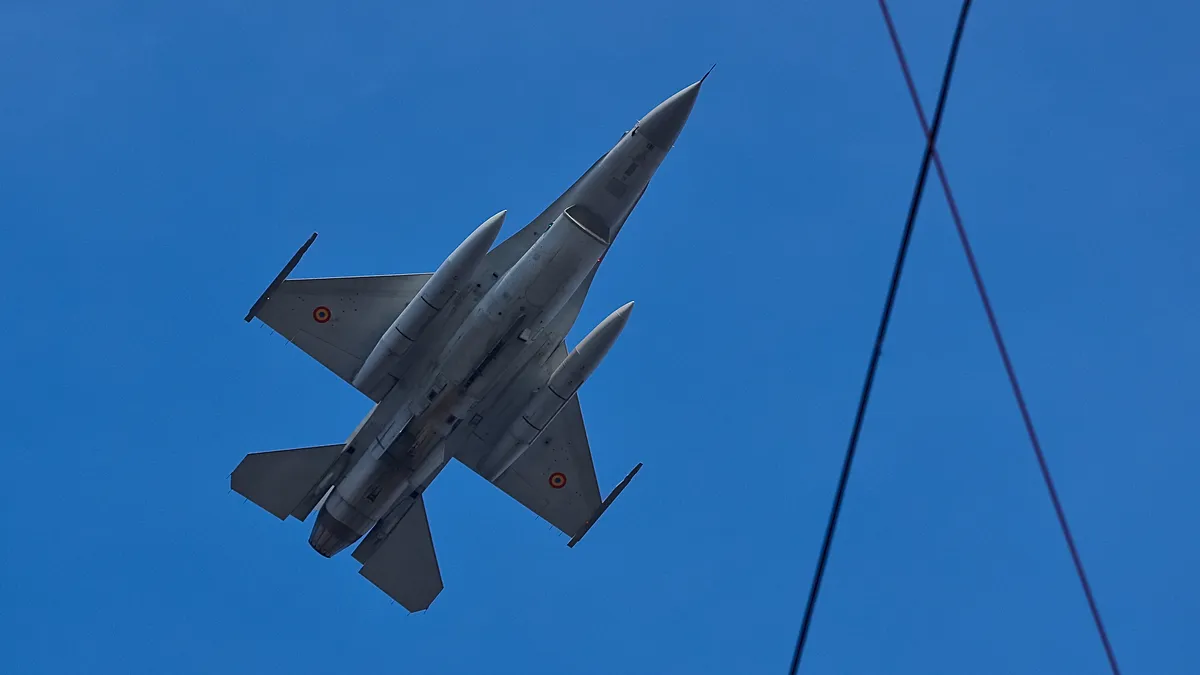
Poinews.com – The Romanian military has successfully intercepted and destroyed a second unmanned aerial vehicle within a remarkably short timeframe, marking the latest escalation in aerial incidents over the nation’s territory. This second drone shot down over Romanian airspace occurred less than a full day after the initial incident, demonstrating the country’s rapid response capabilities and heightened alert status. According to President Nicușor Dan, Romanian F-16 fighter jets intercepted the craft at approximately 8:30 am on Saturday morning, engaging the target at an altitude of roughly ten kilometers west of Sfântu Gheorghe in the eastern part of the country.
Immediate Military Response and Investigation
Romanian Defence Minister Radu Miruta provided comprehensive details regarding the ongoing investigation into the second drone incident. He noted that technical analysts are currently examining both the recovered wreckage and the precise location where the unmanned aircraft came down. The minister emphasized that the characteristics of this drone align closely with previously verified Russian drone operations in the region, suggesting a coordinated pattern of aerial activity.
“The impact site and the drone wreckage are currently being analysed,” Minister Miruta stated, adding that “the pattern is consistent with previous confirmed flights by Russian drones.”
Timeline of Recent Incidents
This latest event follows closely on the heels of another significant aerial interception that occurred on Friday morning. At around 11 am, a Romanian F-16 engaged a separate unmanned vehicle using an air-to-air missile during routine air policing operations. The fighter jet was conducting its mission from the Fetești air base located in eastern Romania, one of the country’s primary military installations.
During that earlier incident, advanced radar equipment tracked the drone as it traversed the Black Sea before moving westward toward the port city of Sulina and subsequently Buzău. The craft was ultimately destroyed over a sparsely populated zone near Padina, which lies northeast of the capital, Bucharest. Two Italian air force Eurofighter Typhoon jets stationed at the Mihail Kogălniceanu air base were also dispatched to assess the potential danger posed by the incoming aircraft.
Official Identification and European Response
According to Romanian Foreign Minister Oana Țoiu, the Prosecutor General’s Office has verified that the intercepted craft belongs to the Shahed class, a model frequently utilized by Russian military forces for various operations. The Defence Ministry’s official statement confirmed that the second drone was “safely shot down in an unpopulated area near the border” after two F-16s were scrambled to locate and neutralize the threat.
European Commission President Ursula von der Leyen commended Romania’s military for their prompt actions during this critical period. She highlighted the importance of maintaining robust security measures along the continent’s eastern frontier, particularly as regional tensions continue to evolve.
“Strengthening defence and deterrence along our Eastern border remains a top priority,” von der Leyen wrote in a social media message praising the “swift and effective response.”
Broader Regional Context and Future Implications
Romania has experienced a noticeable increase in drone crossings into its territory over recent months, reflecting the broader geopolitical situation in Eastern Europe. In May, a Russian drone loaded with explosives struck an apartment building in Galați, igniting a fire on the roof and leaving two individuals injured. Additionally, a Ukrainian naval drone detonated in the port of Constanta during June, further complicating the regional security landscape.
The Ukrainian navy attributed that earlier explosion to Russian electronic warfare capabilities, which reportedly pushed the drone off its intended path. These recurring events have drawn significant attention from European leaders, with von der Leyen describing them as “a direct consequence of Russia’s war against Ukraine.” The rapid succession of drone incidents over Romanian airspace underscores the need for continued vigilance and international cooperation in monitoring and responding to aerial threats in the region.