US strikes Iran in ‘proportional response’ to US Apache helicopter crash
US Strikes Iran in Proportional Response to Apache Helicopter Downing US strikes Iran in proportional response - Following the recent crash of a US Army

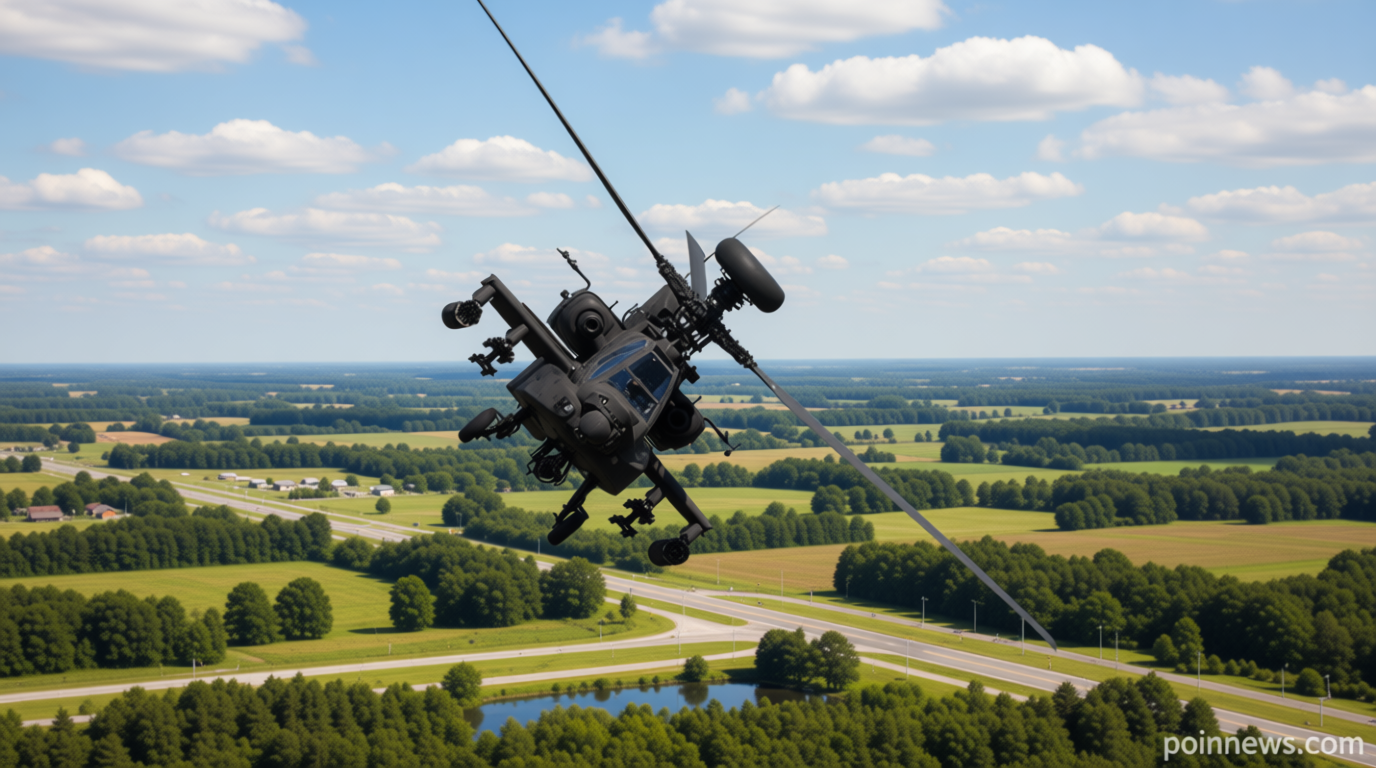
US Strikes Iran in Proportional Response to Apache Helicopter Downing
Poinews.com – Following the recent crash of a US Army Apache helicopter near the Strait of Hormuz, the United States has launched a targeted strike on Iran as part of a **proportional response** to the incident. The action, described by US Central Command (CENTCOM) as a necessary step to counter Iranian aggression, occurred on Tuesday evening, with officials emphasizing that the strike was calibrated to match the perceived threat level. While the specifics of the attack, including the number of targets and the type of weaponry used, were not immediately disclosed, the operation underscored the growing military tensions between the two nations.
Trump’s Direct Blame and Retaliatory Intent
President Donald Trump swiftly took responsibility for the decision to retaliate, asserting in a social media post that “the Iranians shot down one of our highly sophisticated Apache helicopters.” He framed the strike as a **proportional response** to Iran’s alleged provocation, highlighting the strategic importance of the Strait of Hormuz, a critical chokepoint for global oil shipments. The crash, which took place off the coast of Oman, was initially reported as a result of an Iranian drone attack, though details about the exact cause of the downing were still under investigation. Trump’s comments underscored the administration’s resolve to demonstrate force and deter further Iranian actions.
“They are safe and uninjured,” Trump wrote. “Nevertheless, the United States must, of necessity, respond to this attack.”
The operation marked a significant escalation in the ongoing conflict between the US and Iran, which has seen a series of military incidents in recent months. The **proportional response** to the helicopter crash was accompanied by a statement from CENTCOM, which highlighted the precision of the strike and its intent to target Iranian assets without causing widespread damage. This approach aims to balance military action with the goal of preventing further escalation, though the effectiveness of such a strategy remains under debate.
Rescue Mission and Technological Innovation
Less than two hours after the helicopter crash, a US drone boat was deployed to retrieve the pilot and crew member, showcasing the integration of advanced technology in rescue operations. The unmanned vessel, part of the Navy’s growing fleet of autonomous systems, played a crucial role in ensuring the safety of the two aviators, who were reportedly unharmed. This marked the first known instance of such a rescue mission being used in a hostile maritime environment, reflecting the US military’s reliance on innovation to mitigate risks in high-tension zones.
Iran’s Foreign Minister Abbas Araghchi responded to the **proportional response** by clarifying that the Strait of Hormuz is not international waters, thereby positioning Iran as a defender of its territorial sovereignty. In a social media post, he argued that the crash could have been the result of “human error, plain accidents, or crossfire,” suggesting that the US’s retaliation might be premature. His comments highlight the diplomatic dimension of the conflict, as both sides seek to justify their actions on international platforms.
The incident has reignited discussions about the safety of US military operations in the region. With the two-month ceasefire between the US and Iran recently challenged by a brief exchange of fire, the helicopter crash has added fuel to the already volatile situation. Analysts warn that the **proportional response** could set a precedent for more aggressive military actions, potentially drawing Iran into a broader conflict with the United States. The Strait of Hormuz, a strategic maritime corridor, has become a flashpoint for escalating hostilities, with both nations vying for control over regional influence.
Looking back, the US-Iran conflict has been punctuated by several high-profile incidents, including the March crash of a US aerial refueling aircraft in western Iraq and the Kuwaiti-friendly fire strike that downed three F-15E jets. These events have contributed to a climate of heightened alertness, with US forces adopting more cautious strategies to avoid similar losses. The latest **proportional response** to the Apache crash appears to follow this pattern, emphasizing targeted strikes over large-scale operations to minimize collateral damage and public backlash.
While the immediate impact of the **proportional response** remains to be seen, the operation has already sparked concerns about its long-term implications. Trump’s suggestion that further strikes could keep the Strait of Hormuz closed for months highlights the potential economic consequences of the conflict, particularly for global energy markets. The closure of the strait, a vital route for approximately 20% of the world’s oil supply, could disrupt trade and lead to increased oil prices, adding pressure on both nations to manage the situation diplomatically.