Chevron set to expand in Venezuela as US energy secretary lands in Caracas
The White House is treating Venezuelan oil not as a distant geopolitical curiosity but as a domestic fuel-price lever. With gasoline prices climbing after

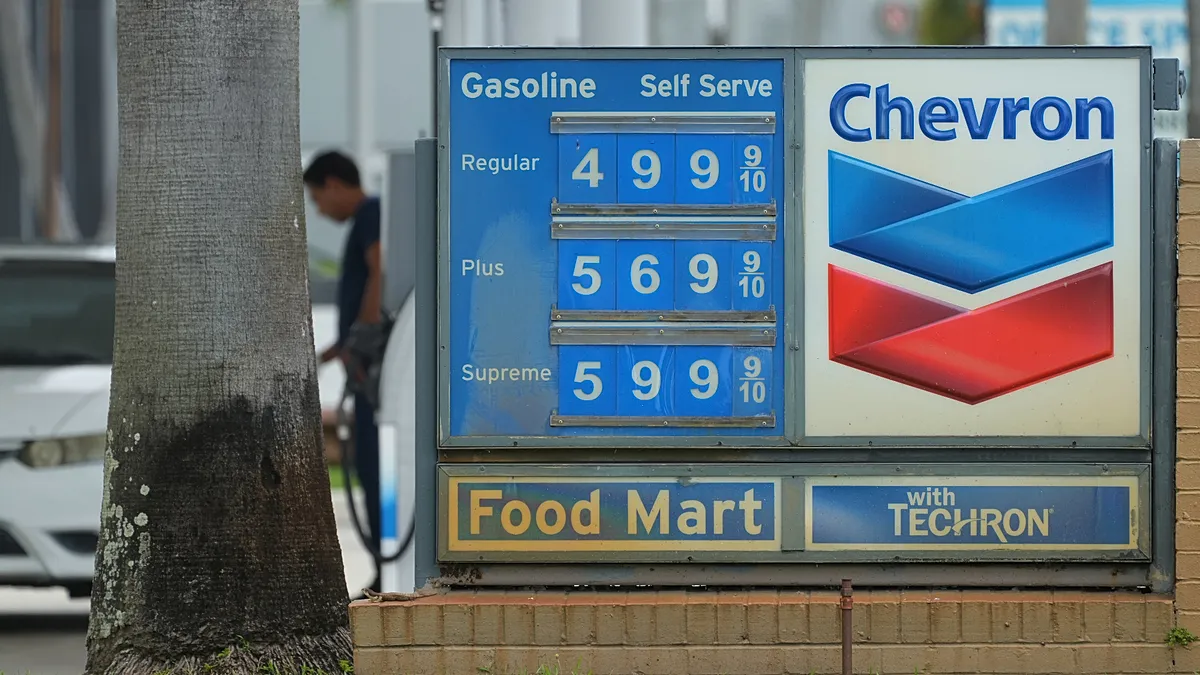
Table of Contents
Chevron’s Venezuela Gambit: A 35% Government Stake, a Show-of-Hands Vote, and a Race Against the Midterm Clock
Poinews.com – The White House is treating Venezuelan oil not as a distant geopolitical curiosity but as a domestic fuel-price lever. With gasoline prices climbing after fresh American strikes on Iranian targets near the Strait of Hormuz, President Donald Trump convened oil executives at the White House on Tuesday and posted online that “we are unleashing American Energy Dominance!” The urgency is electoral: November’s midterm elections threaten to strip Republicans of control over both chambers of Congress, and cheaper fuel at the pump has become a campaign imperative.
At the centre of that strategy sits Chevron, the second-largest oil producer in the United States, which is preparing to deepen its operations in a country most of its Western rivals walked away from roughly two decades ago. An unnamed US official briefed reporters that Chevron executives would stand beside Energy Secretary Chris Wright in Caracas to announce new investment — the first corporate commitment to follow an agreement that had just cleared Venezuela’s National Assembly. Wright touched down in the capital late on Tuesday, after the parliamentary vote, with the formal signing scheduled for Wednesday.
The Only American Major Still in the Room
Chevron’s continued presence in Venezuela is itself a historical anomaly. When Hugo Chávez completed the nationalisation of the country’s oil sector in 2007, ExxonMobil and ConocoPhillips exited. Chevron stayed, operating under a concession that kept it tethered to the Orinoco Belt through a turbulent decade of state intervention, currency controls, and production collapse. No other major American producer has maintained a foothold since.
Secretary of State Marco Rubio, speaking in Spanish for an interview posted online on Tuesday, framed the new arrangement in unusually blunt institutional language.
“Essentially, this is now an agreement with the US government, specifically involving the Defense Department, which holds a special account allowing it to take possession of a certain percentage of these assets.”
Rubio added that American governmental backing would help the company attract the private capital required to develop the fields. He noted that the “vast majority” of the 17 fields in question had previously been held by Chinese and Russian interests — a point the White House has explicitly tied to a reassertion of the Monroe Doctrine, the 19th-century principle that the Western Hemisphere falls under American strategic influence.
How the Deal Is Structured
The fields carry 100-year rights granted to North American Blue Energy Partners (NABEP) and are estimated to hold 65 billion barrels of oil. Under the new framework, a newly created entity will be established in which the US Department of War’s Office of Strategic Capital takes a 35% equity stake. Separately, the State Department is entitled to purchase 20% of output at production cost. US citizens must constitute a majority of the board of directors, and Washington retains a veto over all appointments.
Officials stressed that the United States is not putting its own money into the venture. The administration’s argument is that its political and institutional endorsement alone will be sufficient to draw the private capital needed to bring dormant fields back online.
A Show of Hands and a Fine-Print Dispute
Venezuelan lawmakers approved the agreement by show of hands. Several opposition members abstained, explaining that they had not been given the full text in advance.
“We need and are obliged to know what is written in the fine print,” said opposition lawmaker Luis Emilio Rondón.
Assembly chief Jorge Rodríguez pushed back, arguing that the question was not whether the oil should be extracted but who would benefit if it remained in the ground.
“Who benefits from this oil if it stays underground?”
The Betancourt Question
NABEP is owned by Alejandro Betancourt, a figure whose profile has drawn scrutiny. He has faced investigations into alleged money laundering in both Spain and Switzerland, though no charges were ultimately filed. He has also been accused of involvement in a corruption scheme at Venezuela’s state oil company, PDVSA.
An unnamed US official described him as a “proven operator” while acknowledging that geopolitical realities sometimes require working with imperfect partners.
“I’m not nominating anyone for sainthood here. What I am telling you is that this is a person that, in the past, has been helpful to the United States government.”
Analyst Doubt and the Exxon Wildcard
Energy analysts remain sceptical that production can be revived on a short timeline. Estimates for when new barrels might actually reach the market range from one to ten years, depending on infrastructure condition, permitting, and capital deployment. The gap between political announcement and first flow is, in Venezuelan oil history, often measured in years rather than months.
Trump suggested on Monday that other majors would follow Chevron into the country.
“We have Exxon going in, we have Chevron going in. We have our big oil companies going in.”
Exxon’s position, however, appears unchanged. A company spokesman said on Tuesday that “nothing has changed,” a statement that lands with particular weight given that CEO Darren Woods had earlier this year labelled Venezuela “uninvestable.” Whether that calculus shifts under the new governmental framework remains to be seen.
For now, the administration’s calculus is straightforward: a 35% state stake, a production-cost purchase right, board-majority control, and a presidential endorsement aimed at making Venezuelan barrels flow again before voters head to the polls in November.
Related Reading
Frequently Asked Questions
What is Chevron set to expand in Venezuela?
Chevron set to expand in Venezuela is the main topic of this guide. The article explains the context, practical details, and next steps readers should understand.
Why does Chevron set to expand in Venezuela matter?
Chevron set to expand in Venezuela matters because readers are looking for a useful answer, not just a short summary. Good content should match search intent and help them decide what to do next.