Venezuela hands the US control over a fifth of its oil in landmark deal
The Venezuelan legislature gave its stamp of approval on Tuesday to a multibillion-dollar pact that places roughly one-fifth of the nation's petroleum

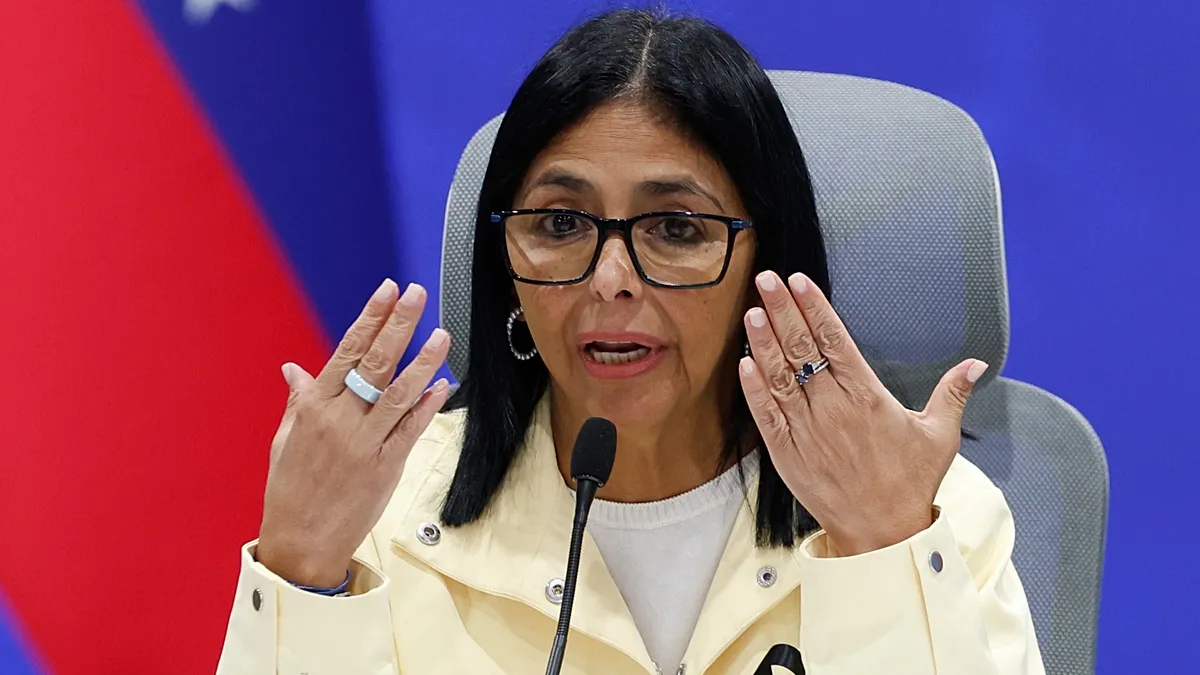
Table of Contents
Washington Seizes a Quarter of Venezuela’s Oil Output in Sweeping Post-Coup Arrangement
Poinews.com – The Venezuelan legislature gave its stamp of approval on Tuesday to a multibillion-dollar pact that places roughly one-fifth of the nation’s petroleum reserves under direct American oversight. The measure locks in Washington’s economic leverage over a government it helped put in place after deposing President Nicolás Maduro in January, marking one of the most consequential shifts in Latin American energy politics in decades.
A Government Under American Stewardship
The political context makes the deal’s significance difficult to overstate. Since Maduro’s removal, the United States has maintained an extraordinary degree of influence over Caracas’s decision-making — a level of control that has no clear parallel in recent hemisphere history. US Energy Secretary Chris Wright touched down in Venezuela late Tuesday, with the formal signing ceremony scheduled for Wednesday. On that same day, Chevron is expected to unveil a substantial expansion of its Venezuelan operations, underscoring how quickly American corporate and governmental interests are converging on the country’s hydrocarbon infrastructure.
President Donald Trump had met with senior oil executives at the White House in the days preceding the vote, framing the Venezuela arrangement as part of a broader effort to rein in gasoline prices that have been climbing amid the ongoing Iran conflict. After that meeting, he posted on his Truth Social platform:
“We are unleashing American Energy Dominance!”
How the Arrangement Works
At its core, the pact grants Washington preferential access to seventeen oil fields — many of which had previously been operated by Russian and Chinese state-linked firms. The vehicle for American involvement is North American Blue Energy Partners (NABEP), Venezuela’s second-largest privately held oil company. Under the terms, the US government will acquire a 35 percent equity stake in NABEP and receive the right to purchase 20 percent of the firm’s crude output at production cost.
Governance provisions go further: US nationals must hold a majority of NABEP’s board of directors, and Washington retains veto authority over board appointments. In effect, the arrangement hands the United States operational command over a meaningful slice of Venezuela’s oil sector.
Rubio Frames the Deal as Economic Normalization
Secretary of State Marco Rubio addressed the arrangement in a Spanish-language interview posted to YouTube on Tuesday, speaking with US-based Venezuelan journalist Sergio Novelli. Rubio characterized the setup as a partnership between a private enterprise and the American state aimed at stabilizing the Venezuelan economy.
“Essentially, this is now an agreement with the US government — specifically involving the Defense Department, which holds a special account allowing it to take possession of a certain percentage of these assets.”
He elaborated that the company would ramp up output and, with American backing, draw in the private capital necessary to develop the productive capacity of the fields. Rubio noted that the “vast majority” of the seventeen sites had been “in Chinese and Russian hands” until now, positioning the deal as a strategic counter to Moscow and Beijing’s foothold on what he described as Washington’s doorstep.
Domestic Pushback and Military Endorsement
Not every member of the National Assembly voted in favor. Several opposition lawmakers abstained from the show-of-hands tally, arguing they had not been permitted to review the written terms before casting their ballots.
“We need and are obliged to know what is written in the fine print,” said opposition lawmaker Luis Emilio Rondón.
Assembly Chief Jorge Rodríguez, by contrast, framed the revenue stream as a lifeline for ordinary Venezuelans.
“Who benefits from this oil if it stays underground?” Rodríguez asked.
Defence Minister Gustavo González López offered full military backing for the arrangement, calling it “prosperity and well-being for the country” and insisting the pact represented a choice of peace rather than capitulation.
“Turning a political difference into an economic cooperation agreement is simply a decision to choose peace; it is not subordination,” González López stated.
The Betancourt Question
One of the most contentious elements of the deal is the central role of Alejandro Betancourt, a Venezuelan entrepreneur whose business history stretches back to the socialist era of the late Hugo Chávez administration. Betancourt, who leads NABEP, has previously faced accusations of involvement in a corruption scheme at Venezuela’s state-run oil company, PDVSA. Critics see his prominence in the arrangement as troubling given those allegations.
A US official defending the choice called Betancourt a “proven operator” while conceding that geopolitical realities sometimes require working with “imperfect” figures.
“I’m not nominating anyone for sainthood here. What I am telling you is that this is a person that, in the past, has been helpful to the United States government,” the official said.
The same official argued that American oversight would purge entrenched corruption from the dilapidated Venezuelan oil industry and put an end to what he described as Caracas funneling large volumes of supply to its ally Cuba.
“It was used as a personal piggy bank” by Maduro’s government, the official added.
Election-Year Stakes
For the Trump administration, cheaper oil is not merely an economic objective but a political one. With US midterm elections looming in November — contests in which the Republican Party risks losing its congressional majorities — the Venezuela arrangement is being pitched domestically as a tangible lever on pump prices. Whether the deal delivers measurable relief at the pump, or instead deepens perceptions of American hegemony in South America, will shape both Caracas’s political trajectory and Washington’s electoral calculus in the months ahead.
Related Reading
Frequently Asked Questions
What is Venezuela hands the US control over?
Venezuela hands the US control over is the main topic of this guide. The article explains the context, practical details, and next steps readers should understand.
Why does Venezuela hands the US control over matter?
Venezuela hands the US control over matters because readers are looking for a useful answer, not just a short summary. Good content should match search intent and help them decide what to do next.