2,500-year-old bronze chariot sheds light on Tartessos history
2,500-Year-Old Bronze Chariot Illuminates Tartessos’ Ancient History 2 500 year old bronze chariot - During the eighth phase of excavations at the Casas del

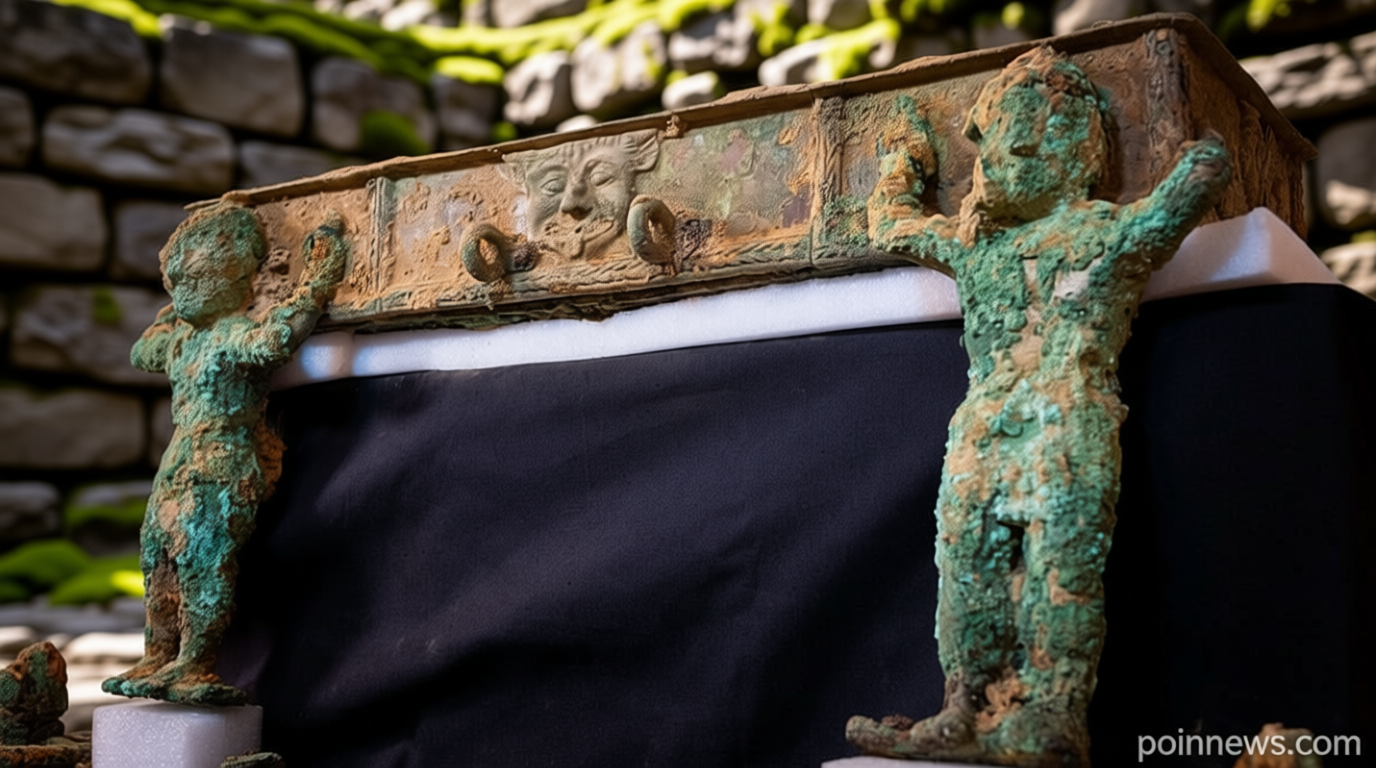
2,500-Year-Old Bronze Chariot Illuminates Tartessos’ Ancient History
Poinews.com – During the eighth phase of excavations at the Casas del Turuñuelo site in Guareña, Badajoz, researchers uncovered a bronze chariot unlike any previously found in the Iberian Peninsula. This artifact, discovered in the southern part of the main structure, features intricate reliefs that depict mythological and symbolic elements. The front of the chariot is adorned with an image of Achelous, a river god linked to the underworld, while its sides showcase two griffins—creatures with eagle heads and lion bodies—flanking a central panel. At the ends, human figures with outstretched arms appear to support the frame, which is complemented by wheels embellished with similar designs.
“This discovery ranks among the most remarkable at the site,” noted Esther Rodríguez, one of the excavation’s co-directors. “It offers a rare glimpse into the cultural practices and artistic sophistication of Tartessos.”
The chariot’s presence suggests a connection to Tartessos’ trade networks, as its only known parallels are from the Etruscan civilization in central Italy, which flourished between the 8th and 5th centuries BC. This aligns with theories that the chariot was transported to the Iberian Peninsula via the same maritime and overland routes that linked Tartessos to the broader Mediterranean world.
Sebastián Celestino, another co-director, proposed that the chariot might have been part of ceremonial events. Its location near a chamber believed to have hosted a final banquet before the building was sealed at the end of the 5th century BC hints at its potential role in feasting rituals. Additional findings, including ceramics from Greek Attica, an Egyptian alabaster vessel, and ivories with warrior and natural motifs, further enrich the understanding of Tartessos’ interactions with distant regions.
“These artifacts are transforming our view of Tartessos’ external ties,” said Rodríguez. “They reveal a complex web of trade and cultural exchange spanning from the eastern Mediterranean to the Iberian Peninsula.”
The 2026 excavation campaign, spanning April and May, also deepened insights into the structure itself. The mound, measuring 90 meters in diameter and six meters in height, yielded new rooms and pathways. In the northern sector, two braziers and a bronze cauldron were uncovered, though ceramic volumes were lower than in earlier years, possibly due to the less defined function of the areas explored.
A Decade of Transformative Discoveries
Over the past ten years, the Casas del Turuñuelo site has been a cornerstone of Tartessos research. In 2017, the largest known animal sacrifice in the western Mediterranean was documented. By 2023, the first human figures representing Tartessos were identified, and a slate plaque featuring warrior scenes and an alphabet in southern Palaeohispanic script added a new layer to the culture’s history. The 2025 campaign revealed the oldest Greek marble altar in the region, underscoring the site’s significance as a hub of ancient activity.
With fieldwork complete, the project is shifting to its analysis phase at the Autonomous University of Madrid’s Service for Conservation, Restoration, and Scientific Studies of Archaeological Heritage (SECYR). This collaboration, which has spanned the project’s entire lifespan, now focuses on restoring and interpreting the artifacts. “The lab phase is vital,” Rodríguez added. “It will clarify the chariot’s purpose, the building’s layout, and the daily lives of its inhabitants.”
The initiative involves nearly thirty institutions and over a hundred researchers from around the globe, supported by local authorities in Badajoz and Guareña, as well as the Spanish National Research Council (CSIC) and Extremadura’s regional government.