A queen, a guillotine, and a mailbox: Marie Antoinette still gets letters, even yours
rs: A Queen and Guillotine Legacy A queen a guillotine and a mailbox - Imagine writing a letter to a queen who met her end by guillotine, yet continues to

Marie Antoinette Gets Letters: A Queen and Guillotine Legacy
Poinews.com – Imagine writing a letter to a queen who met her end by guillotine, yet continues to receive messages from people across the world. The “To Your Pens! Write to Marie-Antoinette” campaign has revived this unique tradition, allowing modern correspondents to connect with the French royal figure through a centuries-old medium. Since the initiative began in 2026, the Château de Fontainebleau—once a favored retreat for Marie Antoinette and Louis XVI—has received over 4,000 letters, each bearing the weight of personal reflection and historical curiosity. This project transforms the past into a living conversation, offering a rare opportunity to engage with a queen whose story is etched in both triumph and tragedy.
The Campaign’s Historical Roots
The idea for the initiative was inspired by the 240th anniversary of Marie Antoinette’s final visit to the Château de Fontainebleau, located 60 kilometers southeast of Paris. Between 1770 and 1786, the royal couple frequented the estate 17 times, seeking respite from the opulence and political intrigue of Versailles. The campaign, launched to coincide with the castle’s theme year dedicated to the queen, invites participants to imagine themselves in her world, writing letters that could be read by her in the afterlife. As Cécile Berly, a 18th-century history expert, explains, the act of penning a message to Marie Antoinette bridges the gap between past and present, making history feel intimate and immediate.
“Why not dare to write a letter to the most iconic queen in French history, addressed to a place where she once found solace? Sending a letter to the Château de Fontainebleau is a rare and meaningful act,” says Berly.
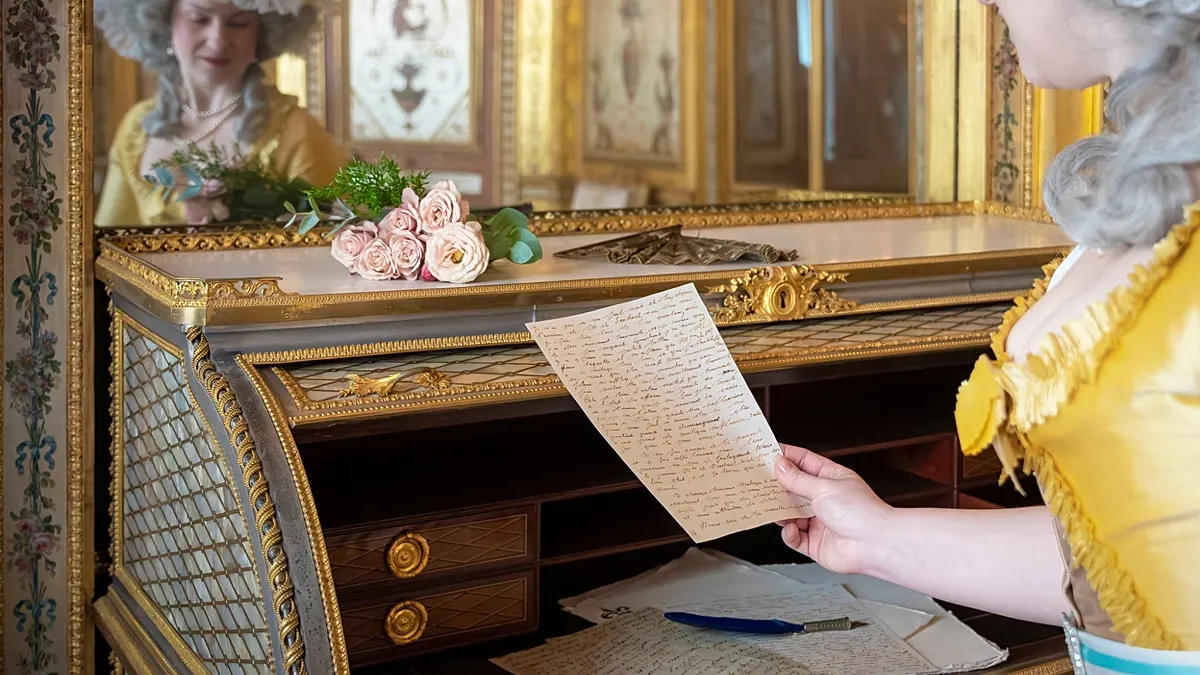
The campaign’s design mirrors the queen’s own correspondence with her subjects, a practice that once symbolized her connection to the people. Today, the letters are curated by the château’s team, who preserve them in a specially recreated boudoir within the castle shop. This immersive space, designed to evoke the private salons of the 18th century, encourages visitors to step into the role of a modern-day correspondent. The letters, though fictional, spark discussions about the monarchy’s role in French society, the queen’s personality, and the events leading to her execution by guillotine in 1793.
Marie Antoinette’s Enduring Symbolism
Marie Antoinette’s life remains a subject of fascination, not least because of her dramatic end. Executed by guillotine on October 16, 1793, just months after her husband Louis XVI, she became the last reigning queen of France. Her image has oscillated between admiration and condemnation, with historical narratives often casting her as both a symbol of royal excess and a victim of revolutionary fervor. The campaign taps into this duality, allowing people to express their own interpretations of her legacy. Whether they view her as a figure of extravagance or a queen who endured the tides of history, the letters offer a personal lens through which to explore her story.
Her story has also transcended the confines of history, inspiring nearly 70 films in the 20th century alone. From romanticized portrayals to more critical ones, these works have kept her name alive in popular culture. The recent French-Italian film “Le Déluge” and the TV series “Marie-Antoinette” further cement her place as a cultural icon, with the latter drawing particular attention for its vivid recreation of her life. This continued interest in her legacy is reflected in the surge of letters received, with many coming from the U.S. and Canada, where her image is often romanticized rather than vilified.
Letters can be submitted until July 4, 2026, and the most poignant messages will be compiled into an anthology, celebrating the emotional and intellectual bond between past and present. The château’s team will display these letters in a special exhibition, offering visitors a chance to see how people from around the world imagine their correspondence with a queen and a guillotine. This project not only honors Marie Antoinette’s historical significance but also highlights the enduring power of storytelling to connect generations.