‘Defining image of the era of American history’: July 4 Patriot Front photo goes viral
an Era: July 4 Patriot Front Photo Goes Viral The Viral Moment Defining image of the era of American - A photograph that has become the defining image of the

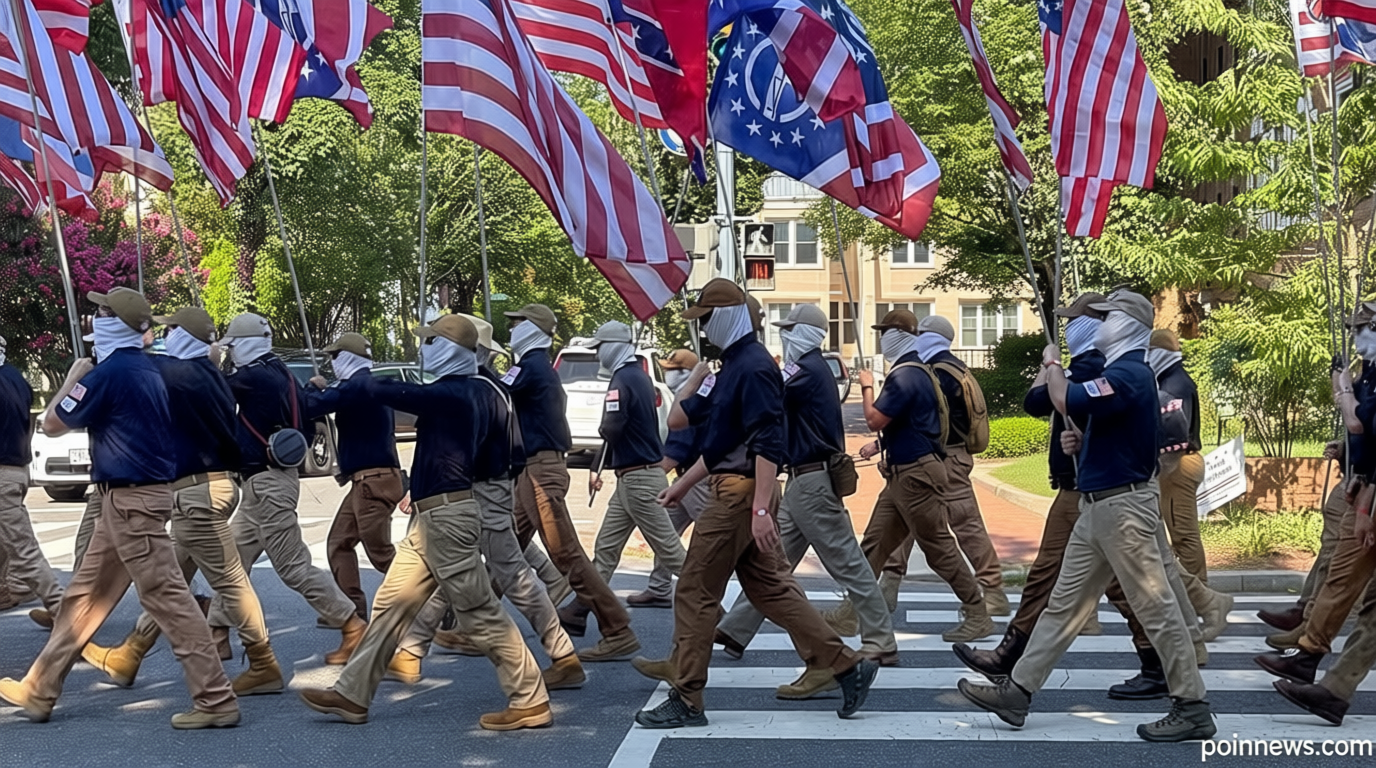
Defining Image of the American Era: July 4 Patriot Front Photo Goes Viral
The Viral Moment
Poinews.com – A photograph that has become the defining image of the American era has captured global attention. Taken on 4 July 2026, the image shows a Black woman calmly seated on a Washington Metro train, surrounded by members of the white nationalist group Patriot Front. The scene, which occurred during the 250th Independence Day celebrations, highlights the intersection of historical symbolism and contemporary racial dynamics. This moment, described as a “defining image of the American era,” has sparked widespread debate and emotional resonance online.
The caption of the photo reads: “A commuter sits as members of the group Patriot Front ride the metro on the 250th anniversary of U.S. independence in Washington, D.C., July 4, 2026.” This image is now seen as a symbol of the ongoing struggle for equality in America. Its simplicity and stark contrast between the woman’s composure and the group’s presence have made it a powerful representation of modern societal tensions. The post has been shared extensively, generating thousands of responses and highlighting the significance of the defining image of the American era.
Context of the Group
The Patriot Front, a white supremacist militia based in Texas, was founded in 2017. It promotes a vision of a homogenous, white ethnostate in the U.S., framing multiculturalism, immigration, and diversity as threats to traditional American identity.
“A white nationalist and fascist organization that advocates for the preservation of white European culture. The group views multiculturalism, immigration, and diversity as existential threats to its vision of America.”
This ideology is reflected in their public demonstrations, which often include upside-down American flags and Confederate banners.
During the July 4 event, members of the Patriot Front wore caps with 13 stars—a symbol of the original 13 colonies that ratified the Declaration of Independence in 1776. While these symbols evoke historical pride, they contrast sharply with the racial tensions depicted in the defining image of the American era. The photo captures a moment where the group’s presence in a public space underscores the divide between the nation’s founding ideals and current political realities.
Symbolism and Public Reaction
Many have drawn parallels between the defining image of the American era and the civil rights movement, comparing the Black woman’s quiet defiance to Rosa Parks’ act of resistance in 1955.
“Anyone else get flashbacks to the image of Rosa Parks on that bus?”
This analogy emphasizes the enduring fight for equality in the face of systemic bias. The photo has been interpreted as a mirror of America’s progress and its lingering challenges.
The defining image of the American era has also been praised for its emotional impact. It encapsulates the clash between historical celebration and present-day racial dynamics, offering a visual narrative of both unity and division. Some have even suggested it could be a contender for the Pulitzer Prize, recognizing its ability to distill complex social issues into a single, poignant moment.
Clarifying the Image’s Authenticity
Claims that the defining image of the American era was staged or generated by AI have not been substantiated. The photo appears to be an authentic snapshot of the group’s presence during the Independence Day commemorations. This authenticity reinforces the image’s relevance as a reflection of current events and the group’s role in shaping public discourse.
The photo’s simplicity and clarity have made it a focal point for discussions on patriotism, identity, and equality. It serves as a reminder that the defining image of the American era is not just about historical pride, but also about the societal values we uphold today. The contrast between the Black woman’s calm and the group’s masked presence has ignited conversations about the true meaning of American ideals in the modern context.