‘I remain deeply sorry’: John Galliano calls off Met Gala retropective show over racism row
The Metropolitan Museum of Art in New York has withdrawn a planned career retrospective of British designer John Galliano, ending a project that was

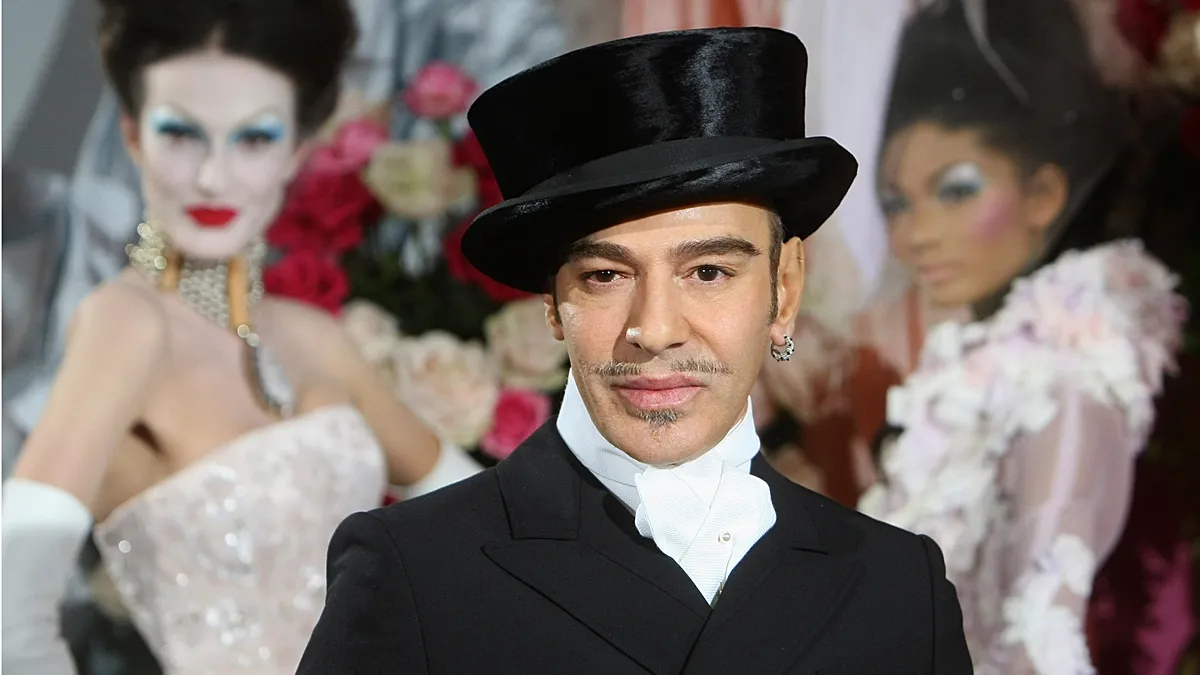
Table of Contents
Met Gala Retrospective for John Galliano Scrapped After Backlash Over Past Remarks
Poinews.com – The Metropolitan Museum of Art in New York has withdrawn a planned career retrospective of British designer John Galliano, ending a project that was originally slated to anchor next year’s Met Gala. The cancellation came swiftly after the exhibition, titled “John Galliano: Horizons,” was revealed last month, triggering immediate criticism rooted in the designer’s well-documented history of antisemitic and racist outbursts that once derailed his career at the height of his fame.
In a formal announcement issued on Monday, museum director and CEO Max Hollein confirmed the decision. The institution stated that the planned showcase would be swapped for an exhibition whose identity has not yet been disclosed.
“Following thought discussions with John Galliano, we have together decided not to proceed with the exhibition,” Hollein said.
Galliano himself took to Instagram to acknowledge the decision, framing it as a personal choice made after extensive deliberation with museum leadership and other stakeholders.
“After much reflection and discussion with The Met and all those involved, I have decided, with great sadness, that it is best for the exhibition not to take place at this time,” he wrote. “I remain fully accountable for the pain caused by my words in the past, particularly the hurt I caused to the Jewish and Asian communities, and I remain deeply sorry for it.”
A Career Built on Spectacle, Shattered by a Café Incident
To understand why a single exhibition announcement could provoke such a sharp reaction, one must revisit the arc of Galliano’s professional life. Throughout the 1990s, the British-born designer was the defining voice of Parisian fashion. His tenure at Givenchy, where he introduced bold, theatrical silhouettes that redefined the house’s identity, earned him rapid promotion within the LVMH conglomerate. Within roughly two years of joining the parent company, he was elevated to lead Dior, where his collections continued to dominate headlines across luxury retail and popular culture.
The collapse came in the run-up to the autumn/winter 2011 Paris Fashion Week. Video captured Galliano, visibly intoxicated, directing a stream of slurs at a couple seated in a Parisian café. Among the remarks recorded was the sentence “I love Hitler,” alongside comments suggesting the couple’s families would have been sent to gas chambers. Dior dismissed him almost immediately. French courts subsequently convicted him of public insults tied to origin, religion, race, or ethnicity. The presiding prosecutor described the remarks as “pitiful and dreadful.” The court imposed a €6,000 fine and rejected Galliano’s defence that he had been in a fragile emotional state following the death of a close friend.
Rehabilitation, Apology, and the Question of Limits
By 2013, however, the fashion establishment had begun to soften its stance. Anna Wintour, then editor of Vogue, facilitated a temporary residency for Galliano at the studio of Dominican-born designer Oscar de la Renta ahead of the autumn 2013 New York Fashion Week. The resulting collaboration drew favourable reviews, with critics singling out the signature drama and narrative flair that had made Galliano’s earlier work so distinctive. Since then, the 65-year-old designer has issued repeated apologies, attributing his behaviour to alcoholism and drug addiction. Several prominent Jewish leaders have publicly accepted his contrition as sincere.
Yet the Met’s original decision to mount a career-spanning retrospective — describing Galliano in its initial materials as “one of the most inventive and influential designers of the past four decades” while characterising his antisemitism merely as “derogatory conduct” — struck many observers as a misjudgment of timing and proportion.
Yad Vashem USA: “A Disclaimer Is Not Accountability”
The most pointed institutional criticism came from the Yad Vashem USA Foundation, which supports Yad Vashem, the World Holocaust Remembrance Center in Jerusalem. In a written statement, the foundation argued that the museum’s withdrawal should not be framed as a moral correction but as the belated avoidance of an error that should never have been made in the first place.
“The Met deserves no praise for abandoning an exhibition it never should have conceived. It still owes Holocaust survivors, the Jewish community and the public an apology for planning to use the Met Gala to honor a man who said, ‘I love Hitler’ and told people their families would have been gassed, on the evening Yom HaShoah begins,” the statement read.
“The Met called John Galliano ‘one of the most inventive and influential designers of the past four decades’ while reducing his antisemitism to ‘derogatory conduct.’ A disclaimer is not accountability.”
“At a time of rising antisemitism, culture should awaken conscience and build bridges, not use its prestige to rehabilitate someone who praised Hitler. The exhibition is gone, but the Met’s moral failure remains.”
Broader Implications for Fashion’s Relationship With Memory
The episode underscores a recurring tension in the luxury-fashion world: how quickly the industry is willing to reintegrate a figure whose past conduct has caused genuine communal harm. Galliano’s talent is widely acknowledged, and his influence on theatrical runway presentation remains visible in contemporary collections. But the Met Gala, which functions as both a fundraising engine and a cultural signal, carries symbolic weight far beyond a single evening. Choosing to spotlight a designer whose most infamous words invoked the Holocaust — and doing so on the eve of Yom HaShoah — placed the museum in direct conversation with communities still processing that history.
The replacement show, still unnamed, will now occupy the slot originally reserved for the Galliano retrospective. Whether the museum issues any further public commentary beyond the initial cancellation notice remains to be seen. For Galliano, the episode adds another chapter to a long pattern of public apology followed by quiet professional re-emergence. For the broader cultural conversation, it raises questions about where institutional prestige ends and moral responsibility begins — questions that, as the Yad Vashem statement insists, no withdrawal notice can fully answer.
Related Reading
Frequently Asked Questions
What is I remain deeply sorry?
I remain deeply sorry is the main topic of this guide. The article explains the context, practical details, and next steps readers should understand.
Why does I remain deeply sorry matter?
I remain deeply sorry matters because readers are looking for a useful answer, not just a short summary. Good content should match search intent and help them decide what to do next.