‘Mehrzweckeier’: dig at Merz for youth word of the year? Voting under way
Mehrzweckeier: A Satirical Term Gaining Momentum in Youth Word of the Year Contest Mehrzweckeier - For the past week, German citizens have been entering

Mehrzweckeier: A Satirical Term Gaining Momentum in Youth Word of the Year Contest
Poinews.com – For the past week, German citizens have been entering nominations for the Youth Word of the Year contest, a tradition that has sparked widespread participation. Among the submissions, one phrase has emerged as a notable contender: “Mehrzweckeier”, as confirmed by the publishing house Pons Langenscheidt. This term is rooted in a satirical twist on the slogan
“Merz leck Eier,”
which became a rallying cry during months-long protests against a recent conscription reform.
Origins in Protest and Public Discourse
The phrase first appeared on a placard held by an 18-year-old student during a demonstration in Berlin in early March. The placard was later confiscated by law enforcement, but the term quickly gained traction online. Similar incidents followed in Gießen, where a similar protest led to an investigation by the local public prosecutor’s office, citing “slander and defamation of persons in public political life” as the initial charge. This legal action fueled public outrage, catapulting the term into mainstream awareness.
Social media platforms, particularly Instagram, have seen a surge in posts featuring
“Merz leck Eier,”
with users creatively expressing their views. One activist, known as
“sacksaftbeats,”
even renamed several CDU party offices as
“Eierhaus”
on Google Maps. A shared screenshot highlighted the message:
“161 of your changes are now live.”
Political Backlash and Legal Reforms
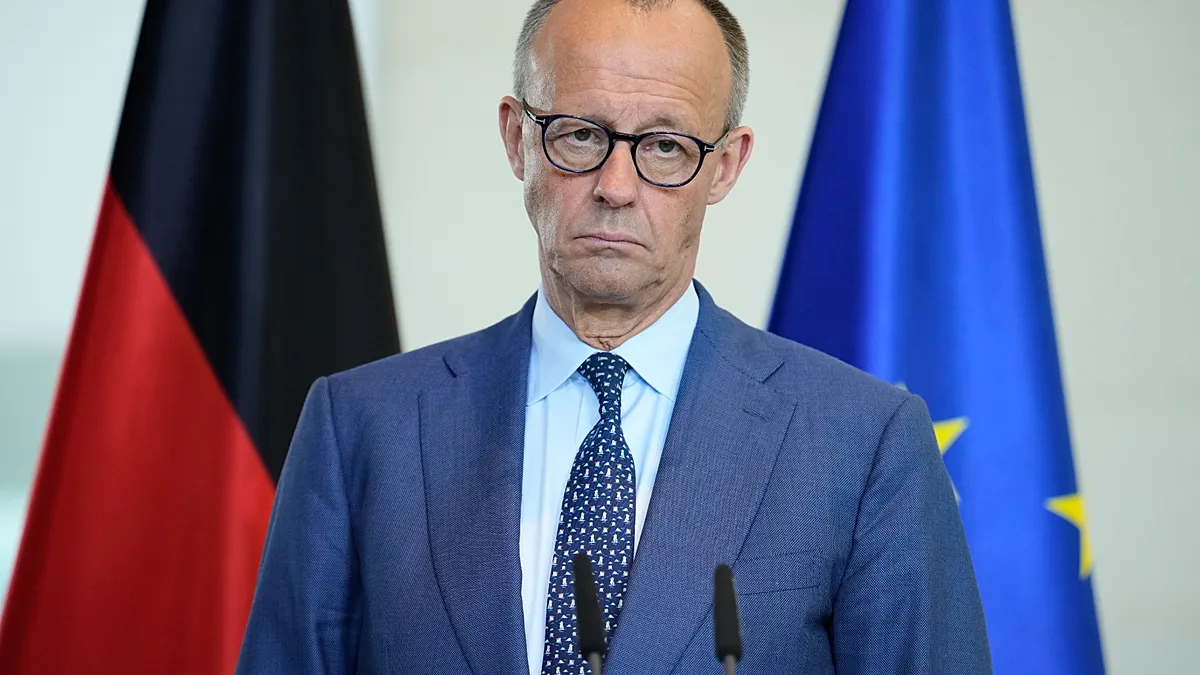
What began as criticism of the conscription policy has evolved into a broader critique of Chancellor Friedrich Merz. In an interview with Der Spiegel, Merz remarked:
“If you look at what is being spread about me there, how I am attacked and disparaged; no chancellor before me has had to endure anything like this.”
Now, the term “Mehrzweckeier” is being submitted in significant numbers, potentially shaping the 2026 Youth Word of the Year.
The conservative CDU/CSU bloc has proposed revising section 188 of the Criminal Code, which criminalizes insults, slander, and defamation targeted at politicians. This law was recently strengthened in 2021, adding the offense of “insult” with a maximum penalty of three years imprisonment. Critics argue that the reform enables prosecution without a formal complaint, leading to increased penalties. For example, a man in Baden-Württemberg was ordered to pay nearly a month’s net salary after calling the chancellor “Lügenfritz” on Facebook, while another citizen faced a fine equivalent to 20 daily wages for referring to Merz as a “Lackaffe.”
Debating Free Speech and Political Protection
The debate over section 188 has divided political factions. While some CDU and CSU members, including general secretary Carsten Linnemann and parliamentary leader Jens Spahn, advocate for reverting to the previous standard—where prosecution requires a complaint—Green politician Erik Marquardt supports its abolition, emphasizing the importance of preserving free expression. The SPD, however, opposes this, citing the need for special safeguards against public insults and defamation. Carmen Wegge, the SPD’s legal affairs spokesperson, noted that the number of investigations has risen from 2,600 in 2025 to 4,500 recently.
Regardless of the political discourse, the outcome of the Youth Word of the Year 2026 remains uncertain. Submissions are open until mid-June, with a shortlist of top 10 terms announced at the end of July. The final winner will be revealed in the autumn, setting the stage for a cultural reflection on the year’s most impactful phrase.