Venice Biennale Russian pavilion: EU Commission confirms funding withdrawal
Venice Biennale Russian Pavilion: EU Commission Confirms Funding Withdrawal Venice Biennale Russian pavilion - The European Union Commission has officially

Venice Biennale Russian Pavilion: EU Commission Confirms Funding Withdrawal
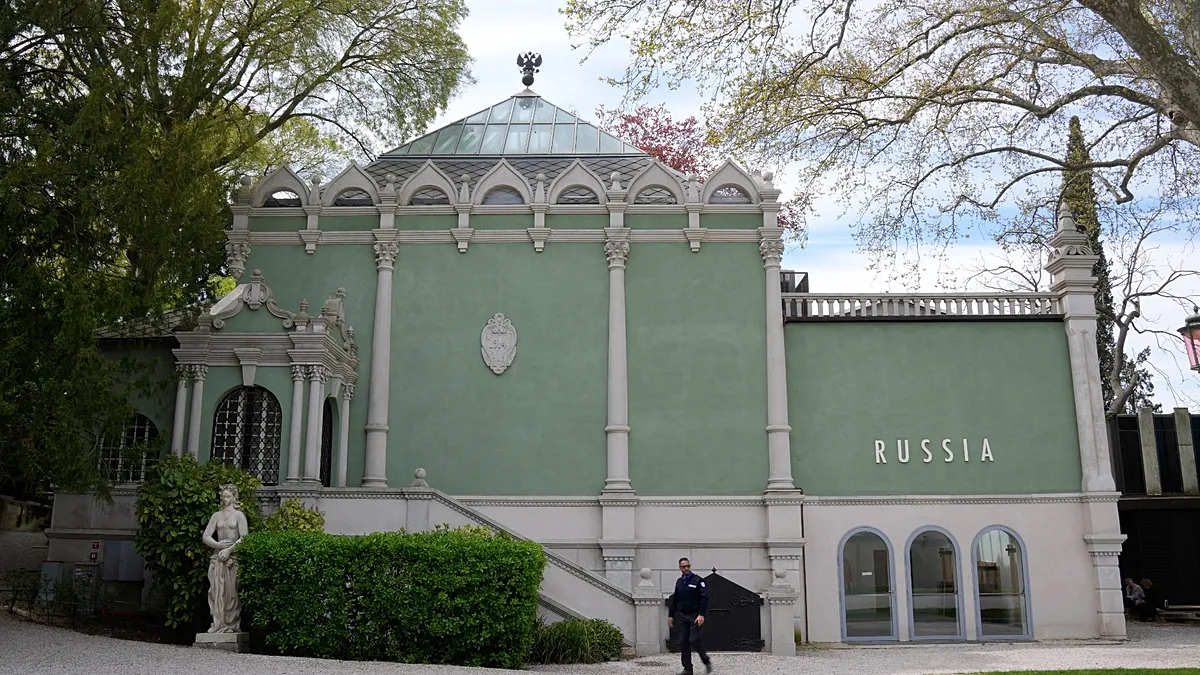
Poinews.com – The European Union Commission has officially announced its decision to withdraw funding from the Russian Pavilion at the Venice Biennale for the 2025-2028 period, marking a significant step in its efforts to align cultural initiatives with democratic values. This move, which revokes a €2 million grant, was confirmed by European Commissioner for Democracy Henna Virkkunen, who emphasized that “cultural projects funded by public money should promote and safeguard democratic values, and that such values are not respected in Russia today.” The decision underscores the EU’s growing scrutiny of Russia’s role in international art events, particularly in light of the ongoing Ukraine conflict and geopolitical tensions.
The EU’s Rationale for Funding Withdrawal
The Commission’s recommendation to cut funding stemmed from a thorough evaluation of the Russian Pavilion’s activities and its alignment with EU principles. The European Education and Culture Executive Agency, which oversees such grants, was given the final say in the matter, and it endorsed the withdrawal as a necessary action. The decision was based on the pavilion’s participation in the Venice Biennale, which had become a focal point of debate due to its continued presence amid Russia’s military actions in Ukraine. Critics argue that the Russian Pavilion’s reopening in 2024, following a period of closure, symbolizes a broader effort to maintain cultural ties despite political disagreements.
The funding revocation was initiated in April 2024 after the Biennale Foundation, under President Pietrangelo Buttafuoco, declared its intent to reopen the Russian Pavilion. This followed its closure during the 2022 and 2024 editions due to sanctions and the war in Ukraine. The pavilion’s return for the upcoming Biennale cycle was seen as a gesture of resilience, but it also sparked controversy over its perceived neutrality in the face of Russian aggression. The EU’s stance reflects a growing trend of using cultural funding as a tool to reinforce political messaging.
Historical Context and Biennale Significance
The Venice Biennale, one of the world’s most prestigious contemporary art exhibitions, has long served as a platform for cultural exchange. The Russian Pavilion, a key part of this event since the 1990s, has historically showcased Russian art and innovation on an international stage. However, its participation in recent years has been scrutinized, particularly after the 2022 invasion of Ukraine. The closure of the pavilion during those editions highlighted the impact of geopolitical tensions on cultural diplomacy. The 2025-2028 period, therefore, represents a critical moment in the pavilion’s history, as it seeks to reestablish its presence under new conditions.
The Biennale Foundation’s decision to reopen the Russian Pavilion was met with mixed reactions. While some saw it as a pragmatic move to preserve artistic collaboration, others viewed it as a compromise on democratic values. The EU’s withdrawal of funds, which has been a subject of discussion since the pavilion’s return, aims to ensure that financial support does not inadvertently legitimize Russia’s actions. This aligns with the EU’s broader strategy to use cultural funding as a means of political leverage, particularly in times of crisis.
International Reactions and Implications
International responses to the EU’s decision have been varied. Russian gallerist Marat Gelman, who has been vocal about the move, accused Italy of being a “weak link” in the EU’s efforts to isolate Russia. He stated, “The Biennale is history, culture, art, innovation and freedom. If some Brussels bureaucrat fails to understand that, we will live with it. Culture does not bow to Brussels diktats.” Meanwhile, the League, the majority party led by Deputy Prime Minister Matteo Salvini, pledged to support Giorgia Meloni’s government in covering the withdrawn funds, signaling a potential challenge to the EU’s decision.
The withdrawal of €2 million from the Russian Pavilion at Venice Biennale has raised questions about the future of cultural funding in the EU. While the Commission maintains that the decision is justified by Russia’s lack of adherence to democratic principles, some argue that it risks alienating cultural partners and undermining the Biennale’s reputation as a neutral event. The debate highlights the tension between artistic collaboration and political alignment, as the EU seeks to balance cultural engagement with geopolitical priorities.