Europe’s record-breaking heatwave: What you need to know
Europe's Record-Breaking Heatwave: What You Need to Know Europe s record breaking heatwave - Europe is grappling with its most intense heatwave on record, as

Europe’s Record-Breaking Heatwave: What You Need to Know
Poinews.com – Europe is grappling with its most intense heatwave on record, as temperatures soar to historic levels across the continent and the scorching conditions gradually extend toward the Balkans and Ukraine. This extreme weather has prompted widespread concern, with officials and scientists highlighting its unprecedented nature and potential consequences.
The heatwave is being driven by an atmospheric phenomenon known as an omega block, a term derived from the Greek letter Ω due to the pattern’s distinctive shape. This weather system acts as a barrier, trapping hot, dry air from North Africa over a region while low-pressure systems on either side prevent its escape. As a result, temperatures have climbed 18°C above seasonal norms, creating a dangerous and prolonged heat event.
Europe’s susceptibility to such extremes is exacerbated by its limited infrastructure for coping with heat. Only around 20% of homes are fitted with air conditioning, and much of the housing stock was constructed to retain heat rather than release it. This makes the continent particularly vulnerable to the effects of rising temperatures.
Adding to the severity, this is the second major heatwave to strike Europe within two months. The first, which began on 24 May, saw temperatures 10-15°C higher than usual, leading to several fatalities. Now, the current wave has intensified, with over 130 million people in central and eastern Europe facing temperatures above 35°C on Monday, a drop from over 190 million the prior day. Scientists estimate that 269 million people across the continent will experience temperatures exceeding 30°C.
“This heatwave would have been ‘virtually impossible’ this early in summer without climate change,” noted the World Weather Attribution group of scientists.
WHO chief Tedros Adhanom Ghebreyesus emphasized Europe’s rapid warming, stating that the continent is heating at twice the global average. He warned that heat stress is a “silent killer” and called for national governments to adopt robust heat health action plans to mitigate risks.
Since June 21, the WHO has documented over 1,300 excess deaths in Europe, including cases where children perished in locked cars and young individuals drowned in unattended swimming areas. France has been particularly affected, with the national health agency reporting around 1,000 more deaths than expected since June 24, primarily among those aged 65 and above. At least 74 drowning incidents have been recorded in the country since June 18.
Notable fatalities include that of Ligue 2 footballer Kenzo Kies, who reportedly drowned in the Rhone River during the heatwave. Meanwhile, Poland logged 17 drownings in a single day on Sunday, underscoring the widespread impact of the extreme weather.
Temperature records have been shattered across central Europe. The Czech Republic recorded 41.9°C at Doksany, north of Prague, marking its highest-ever reading. “This is the first time we have ever registered a temperature of 41 degrees in our official weather station network,” said the Czech Hydrometeorological Institute (CHMI). Germany also saw 41.7°C in Coschen, near the Polish border, breaking a record just 24 hours earlier. Overnight temperatures in eastern Germany reached an all-time high, with Kubschuetz not dropping below 29.4°C, the warmest night since records began over 150 years ago.
Spain’s Cantabria region hit 43.7°C in Tama, the highest temperature ever recorded in the area. The agency reported that June 22 and 23 were the two hottest days of the month since 1950 in mainland Spain. Similar records were broken in the UK and Switzerland, highlighting the continent-wide scale of the crisis.
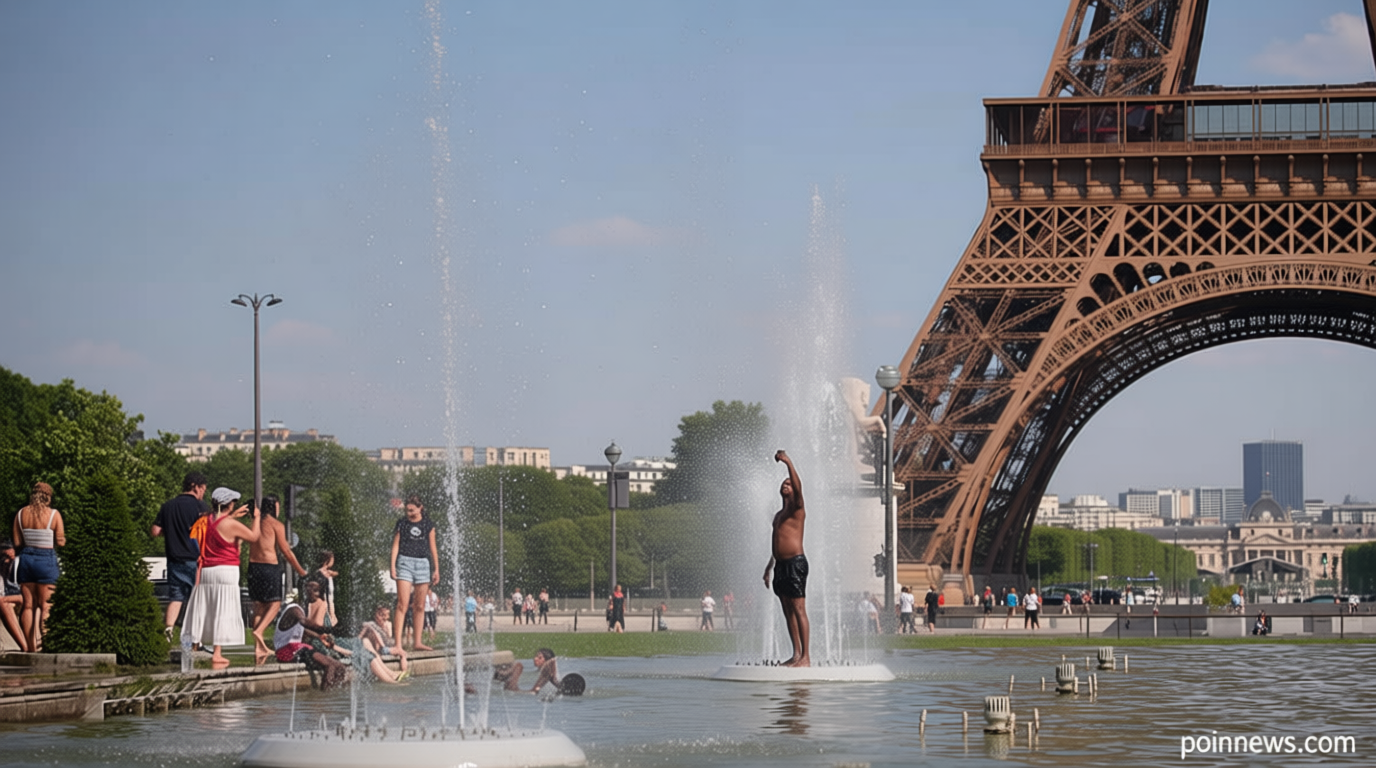
In Paris, authorities took emergency measures, banning alcohol consumption in public over the weekend to reduce pressure on emergency services. The city also postponed its Pride March. The Eiffel Tower and Louvre Museum began closing early due to the extreme heat, reflecting the growing strain on public amenities.
France’s Prime Minister Sebastien Lecornu called an urgent cabinet meeting to evaluate the heatwave’s effects and prepare for further extreme conditions, following the national weather service’s forecast of another episode in July. In Berlin, police deployed water cannons on consecutive days to assist residents in cooling down, including during Bruno Mars’ performance at the Olympia venue on Sunday.
Belgium canceled its annual reenactment of the Battle of Waterloo, citing concerns over public safety, participants, volunteers, and emergency personnel. “The safety of the public, participants, volunteers, and emergency service workers cannot be compromised,” explained the event organizers.
“This is not a fiasco — we were prepared,” asserted France’s Interior Minister Laurent Nunez in response to criticism of the government’s handling of the crisis.
Efforts to address the situation include financial allocations for cooling systems and infrastructure upgrades in French schools and nurseries, with over 130 million euros set aside for these measures. The ongoing heatwave continues to test the resilience of communities across the continent, raising urgent questions about adaptation and preparedness in the face of climate change.