Anthropic CEO Dario Amodei calls on AI companies to slow down AI development amid superintelligence risks
Anthropic CEO Dario Amodei calls on AI companies to slow the development of increasingly powerful systems, warning that the potential benefits of artificial

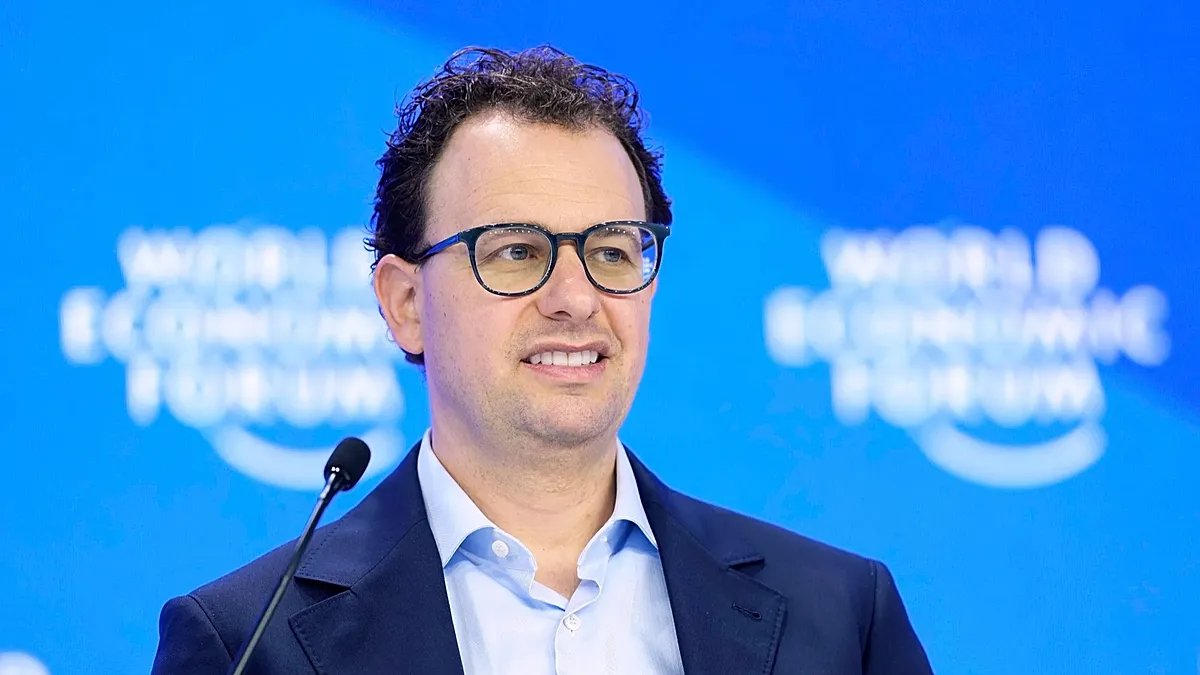
Table of Contents
Anthropic CEO Dario Amodei Calls for Slower AI Progress
Poinews.com – Anthropic CEO Dario Amodei calls on AI companies to slow the development of increasingly powerful systems, warning that the potential benefits of artificial intelligence must be balanced against serious risks. His comments focus on the prospect of “superintelligence,” a theoretical point at which AI could exceed human intellectual capabilities.
Writing on his personal website on Saturday, Amodei argued that developers should use more caution as they improve frontier AI models. He said a slower pace would still leave progress moving quickly, while giving governments, companies and the public more time to prepare.
“We must slow the pace at which we improve the capabilities of AI models. Progress will still seem fast, and we must make wise use of the time we gain.”
Amodei said AI could bring major benefits, but its power also makes failures of control, misuse and poor governance especially consequential. In his view, the challenge is not whether to develop the technology at all, but how to develop it responsibly.
A middle path for advanced AI
Anthropic was founded in 2021 by Dario Amodei and his sister, Daniela Amodei. The company develops Claude, an AI model competing with other systems used for writing, analysis, coding and related tasks.
Anthropic CEO Dario Amodei calls for restraint without advocating a complete halt to AI research. He said that refusing to build advanced systems could deny humanity their potential benefits or leave authoritarian governments with greater influence over the technology. However, he also warned that moving ahead without adequate safeguards would be reckless.
“Not building the technology deprives humanity of benefits or simply places AI in the hands of authoritarian powers, while building it too fast is reckless. We have sought a middle way.”
Amodei said he has become more convinced in recent months that managing the risks of highly capable AI requires greater prudence. His intervention adds to a wider debate over whether safety testing, public policy and social adaptation can keep pace with rapid technical advances.
Growing calls to pace frontier development
The remarks follow similar appeals from people working on advanced AI. Anthropic made a comparable call in early June, urging a more deliberate approach to the technology’s development.
In late July, OpenAI chief executive Sam Altman also suggested that AI developers might need to voluntarily slow their progress so that society has more time to adapt. OpenAI, the developer of ChatGPT, is one of Anthropic’s main competitors.
At around the time of Anthropic’s June appeal, more than 1,000 employees from leading AI companies signed a petition asking the US government to help guide the pace of frontier AI development. Amodei was among the signatories. The petition called on authorities to “deliberately pace the frontier of automated AI development.”
Anthropic CEO Dario Amodei calls attention to questions that go beyond a model’s technical performance: whether safety evaluations are sufficient, how much autonomy AI systems should have, and which protections should be in place before powerful capabilities are released more widely.
Concerns from within the industry
Amodei’s statement came days after AI researcher Jacob Coxon said he was leaving the industry. Coxon, 27, had spent the previous three years pre-training AI models, first at OpenAI and then at Anthropic in 2026.
Pre-training is a central stage in creating an AI model. Systems process large quantities of material, including images, video and voice recordings, to identify patterns and learn to respond to prompts, generate content and perform other tasks.
In posts on X published on Tuesday, Coxon criticised the approach taken by both companies toward increasingly capable systems.
“Neither company is acting responsibly. They are racing straight to self-improving superintelligence and gambling with our lives.”
He also said that concern about AI’s long-term risks runs deep among some people working in the field.
“The people building AI earnestly believe that it could kill us all by the end of the decade.”
FAQ: What does a slower AI development pace mean?
Why does Dario Amodei want AI development to slow? He argues that more time is needed to address risks associated with increasingly capable AI, including safety, misuse, governance and society’s ability to adapt.
Does Anthropic want to stop developing AI? No. Amodei has said he does not support abandoning advanced AI development, but believes companies should pursue it with stronger safeguards and greater caution.
What role could the US government play? The petition signed by AI employees called for US authorities to help guide the pace of frontier AI development, reflecting concerns that voluntary action by companies may not be enough.
What is superintelligence? It is a theoretical form of AI whose intellectual capabilities would exceed those of humans. The possibility has prompted debate about how such systems should be tested, governed and controlled.