Climate cooperation must go on despite US absence, Chinese minister says
Climate Cooperation Must Continue Amid US Withdrawal, Says Chinese Minister Climate cooperation must go on despite - At the EU’s annual climate ministerial

Climate Cooperation Must Continue Amid US Withdrawal, Says Chinese Minister
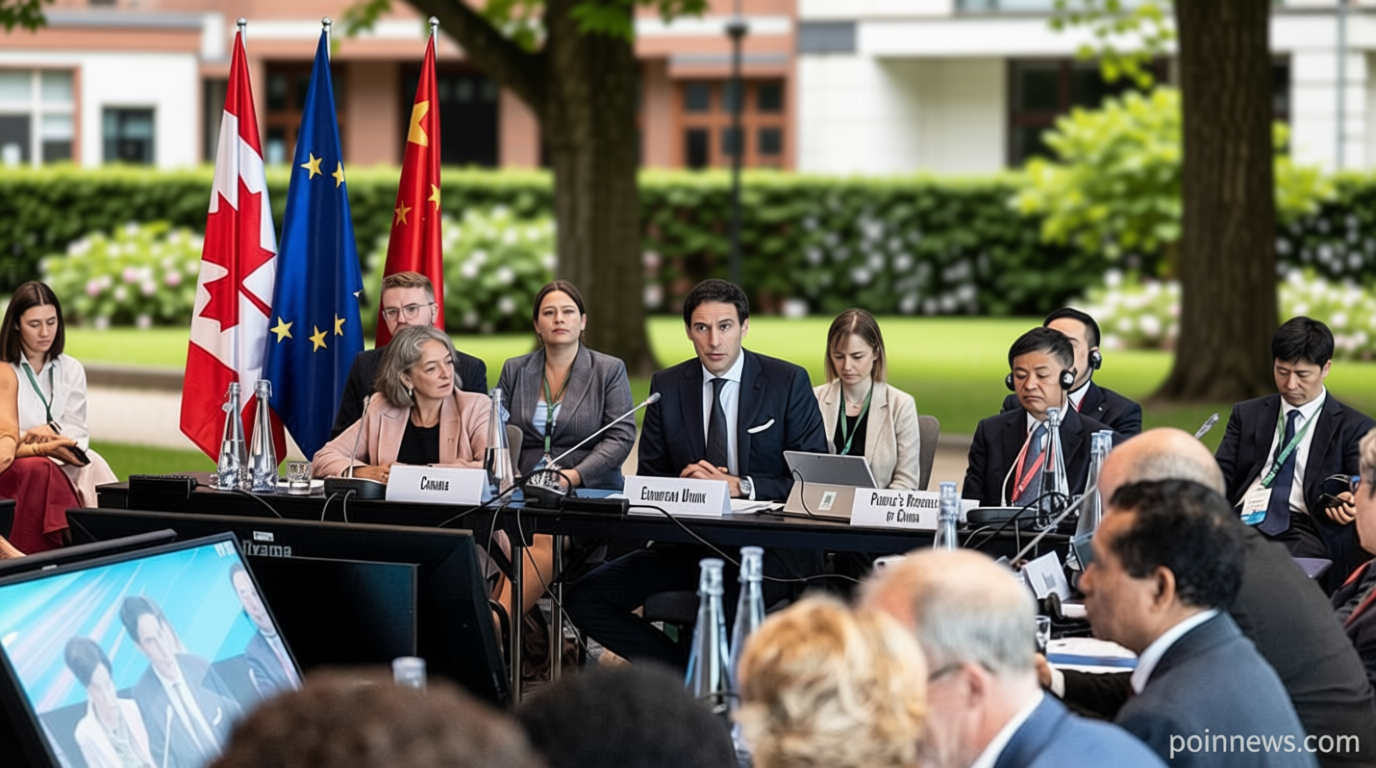
Poinews.com – At the EU’s annual climate ministerial meeting in Brussels, China’s Minister of Ecology and Environment, Huang Runqiu, asserted that global climate efforts should not be disrupted by shifting political priorities. His remarks, delivered during a pivotal discussion on international collaboration, came in response to concerns over the United States’ withdrawal from key climate agreements under the Trump administration. Huang emphasized that climate cooperation must go on despite the absence of the world’s largest emitter in critical climate initiatives. “Our collective commitment to the environment is a shared responsibility that transcends national borders,” he stated, reinforcing the need for sustained global action regardless of political changes.
Global Commitment Amid Political Uncertainty
“We are determined to keep moving forward, even when certain nations step back,” Runqiu remarked. “Climate cooperation must go on despite the challenges posed by political instability or unilateral decisions.” His comments underscored China’s resolve to maintain its leadership in global environmental diplomacy. With the US having withdrawn from the Paris Agreement and shown hesitation in COP30, the Chinese minister framed the situation as an opportunity to strengthen alliances with other nations.
The dialogue highlighted the critical role of the EU and China in steering international climate policy. While the US has taken a backseat in recent years, Europe and China have stepped up their efforts to compensate. This includes increasing investments in renewable energy, expanding carbon neutrality targets, and implementing stricter emissions regulations. Runqiu also pointed to China’s 15th Five-Year Plan, a comprehensive roadmap for advancing green energy and reducing reliance on fossil fuels. “This plan is a testament to our commitment to sustainable development,” he said, noting that China aims to become carbon neutral by 2060.
EU’s Strategic Response to Climate Pressures
European Climate Commissioner Wopke Hoekstra echoed Runqiu’s sentiments, stressing that climate cooperation must go on despite domestic challenges. The EU, currently grappling with a severe heatwave that has strained energy supplies, is pushing for a unified approach to climate action. “Energy security, economic growth, and climate goals are interdependent, and we must act in concert to address them,” Hoekstra explained. His remarks highlighted the urgency of the COP31 conference, which is expected to bring nations together to refine climate strategies.
“In a world where climate impacts are intensifying, the role of evidence-based strategies has never been more vital,” Hoekstra added. “We cannot afford to delay our commitments.”
This sentiment aligns with the broader message of the meeting, where participants stressed the importance of scientific data in shaping policy decisions. The EU also called for the rapid submission of updated Nationally Determined Contributions (NDCs), which are central to achieving the Paris Agreement’s goals.
Meanwhile, Canadian Environment Minister Julie Dabrusin emphasized the need for a coordinated international response, despite geopolitical tensions. “Climate cooperation must go on despite the uncertainties of the current era,” she said, citing Canada’s commitment to renewable energy expansion and carbon pricing mechanisms. The three leaders—China, the EU, and Canada—agreed that climate diplomacy must remain a priority, even as other nations reassess their involvement.
Strengthening Global Partnerships
The meeting also addressed the importance of fostering stronger partnerships among developing and developed nations. With the US absent from key climate negotiations, China and the EU have taken on a more prominent role in promoting multilateralism. “We are not only working with traditional allies but also engaging new partners to ensure a balanced and inclusive approach,” Runqiu noted. This includes strengthening ties with the African Union and other emerging economies, which face unique challenges in transitioning to sustainable energy.
Participants also discussed the need for greater financial support to help developing countries meet their climate goals. “Without substantial investment in clean technologies, many nations will struggle to maintain their momentum,” Hoekstra said. China, on the other hand, pledged to increase funding for climate initiatives in the Global South, reinforcing its position as a global climate leader. The minister acknowledged that climate cooperation must go on despite the economic pressures faced by some countries, particularly in the aftermath of the pandemic and rising energy costs.
Looking ahead, the next phase of climate action will depend on the success of COP31. Runqiu described the conference as a turning point for global environmental governance. “This summit is an opportunity to bridge gaps and set new targets that reflect the reality of climate change,” he said. The minister also called for the acceleration of renewable energy projects, emphasizing that the transition to a green economy is both necessary and achievable, climate cooperation must go on despite the obstacles that lie ahead.