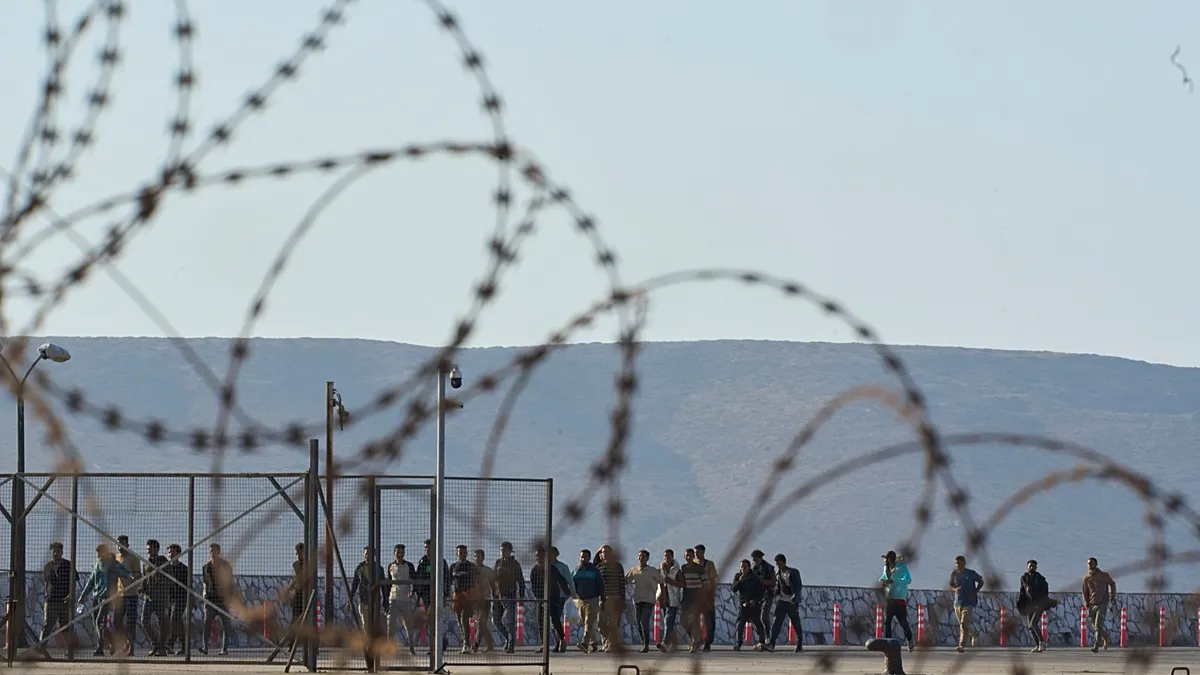
EU fails to reach agreement on sanctioning Israel’s Ben Gvir despite member state pressure
EU Fails to Reach Agreement on Sanctioning Israel's Ben Gvir Despite Pressure EU fails to reach agreement on sanctioning - On June 15, 2026, the European


EU Fails to Reach Agreement on Sanctioning Israel’s Ben Gvir Despite Pressure
Poinews.com – On June 15, 2026, the European Union struggled to secure a unified stance on imposing sanctions against Itamar Ben Gvir, the Israeli national security minister, despite increasing pressure from several member states. The inability of EU leaders to reach consensus on targeting Ben Gvir highlighted the bloc’s internal tensions, particularly around its approach to Israel’s political figures. This development came as foreign ministers gathered in Luxembourg for a critical discussion, where the proposed measures against the far-right leader were met with divided opinions.
The Debate Over Ben Gvir’s Role
The decision to sanction Ben Gvir, known for his hardline policies and controversial statements, was driven by concerns over his recent actions. A video he shared, which appeared to mock pro-Palestinian activists detained during a Gaza-bound aid flotilla, sparked outrage among critics. While some EU nations saw his behavior as a clear violation of international norms, others defended his role as a key figure in Israel’s security apparatus. This divergence in perspectives made it challenging for the EU to present a cohesive response to the situation.
As the meeting progressed, it became evident that the debate was not just about Ben Gvir’s conduct but also about the broader strategy of holding Israeli officials accountable. Proponents of sanctions argued that such measures would send a strong message against policies perceived as oppressive to Palestinians. However, opponents emphasized the importance of maintaining strong bilateral ties with Israel, particularly in light of ongoing security challenges in the region. The focus keyword “EU fails to reach agreement” resurfaced repeatedly as a central theme of the discussion.
Member State Divisions and Political Dynamics
Several EU nations, including France and Germany, had urged the bloc to take action against Ben Gvir, citing his involvement in incidents that undermined human rights. France, in particular, had taken steps to restrict his access to the country, a move that underscored its growing frustration with Israel’s policies. Yet, countries like Poland and Hungary resisted, arguing that Ben Gvir’s actions were justified in the context of national security and the fight against terrorism. These opposing views created a stalemate, with no clear path to a unified decision.
The lack of agreement also reflected deeper ideological splits within the EU. While some members prioritized human rights and diplomatic leverage, others focused on economic partnerships and military cooperation. This tension was further amplified by the political climate in member states, where public opinion often influenced government positions. The result was a fragmented approach to sanctions, with the EU’s foreign ministers unable to forge a majority consensus on the issue.
As the meeting concluded without a binding resolution, the implications of the EU’s failure to reach agreement became apparent. The absence of a unified stance weakened the bloc’s ability to assert its authority on global issues, leaving room for criticism that its actions were inconsistent or politically motivated. Meanwhile, the decision to delay sanctions raised questions about the EU’s commitment to accountability and its capacity to respond to crises in a timely manner. The focus keyword “EU fails to reach agreement” remains central to understanding the bloc’s current geopolitical posture.