European Parliament to ask for probe into FIFA boss Infantino over Balogun red card
European Parliament to ask for probe -

European Parliament Seeks Probe into FIFA’s Infantino Over Balogun Red Card Decision
The Controversial Red Card and Political Allegations
Poinews.com – The European Parliament has escalated its scrutiny of FIFA leadership, with a growing number of lawmakers demanding a formal investigation into the controversial red card decision involving French striker Folarin Balogun. The incident, which occurred during the World Cup round-of-16 clash against Bosnia and Herzegovina, sparked accusations of political interference after Balogun was initially sent off but later reinstated for the subsequent match against Belgium. This reversal has raised questions about the impartiality of FIFA’s disciplinary process and the potential influence of U.S. political figures on the outcome.
European lawmakers are now rallying to hold FIFA accountable, citing the decision as a breach of fair play. The focus keyword, “European Parliament to ask for probe,” is central to this growing campaign, which has gained momentum in response to concerns over the Trump administration’s role in the matter. Balogun’s red card, which led to a one-game suspension, was contested by his team and supporters, who argued that the ruling was unjust. FIFA, however, defended its use of a specific legal provision to overturn the decision, a move that has drawn sharp criticism from across the continent.
FIFA’s Response and the Call for Transparency
“Once again, Infantino and FIFA have yielded to the demands of the Trump administration,” said MEP Barry Andrews, one of the letter’s organizers, during an interview with Euronews. “The reversal of Balogun’s suspension is a disgrace and a betrayal of fair play.”
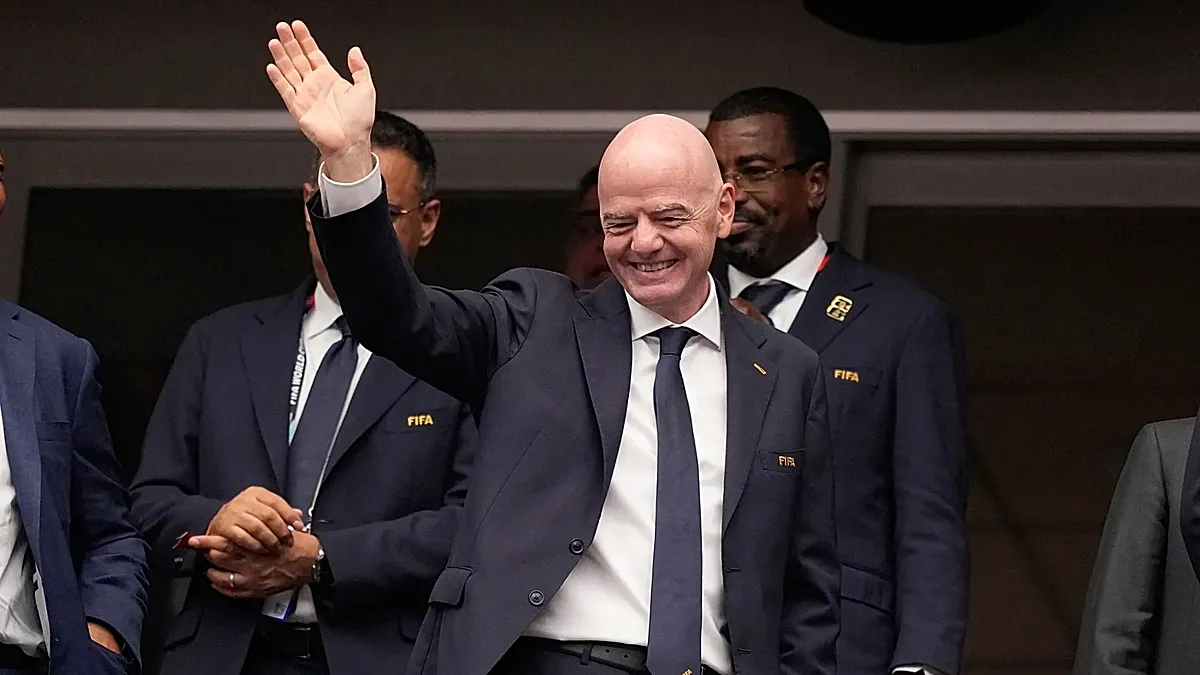
FIFA President Gianni Infantino has maintained that the disciplinary committee operated independently, emphasizing that the decision was based on procedural grounds rather than political pressure. Yet, the European Parliament’s inquiry seeks to challenge this claim by examining the circumstances surrounding the reversal. The letter, addressed to the 27 EU football associations, urges them to take formal action, with lawmakers accusing FIFA of prioritizing political alliances over sportsmanship.
Balogun’s suspension was reversed using a legal clause that allows for the review of decisions within 24 hours, a tool that FIFA has rarely employed in World Cup history. Critics argue that this provision was strategically used to appease U.S. interests, particularly after President Donald Trump praised the reversal as a correction of “a great injustice.” The European Parliament’s push for transparency aims to uncover whether the Trump administration exerted undue influence on the matter, potentially undermining FIFA’s credibility as a neutral governing body.
The inquiry has sparked a wave of reactions from European football organizations. UEFA, the continent’s governing body, called the decision “unprecedented, incomprehensible, and unjustifiable,” highlighting its concern over the integrity of the disciplinary process. Meanwhile, the Belgian Football Federation has submitted a formal appeal, requesting further review of Balogun’s eligibility. These responses underscore the broader implications of the case, which could reshape perceptions of FIFA’s governance and its ties to global politics.
The Political Context and Previous Criticisms
European Commissioner Glenn Micallef, who oversees sports policy, has joined the chorus of critics, stating that the decision was “a wrong decision” that reflects FIFA’s growing reliance on political considerations. William Gaillard, former UEFA communications director, echoed these sentiments, noting that the reversal “undermines FIFA’s integrity and creates a significant scandal.” The debate has also reignited discussions about the role of politics in international sports, with some lawmakers drawing parallels to a prior letter from 50 MEPs that questioned the awarding of the Peace Prize to Trump.
As the European Parliament prepares to formalize its demands, the inquiry is set to gather more signatures before a Wednesday deadline at 6 p.m. CET. MEPs Barry Andrews (Renew Europe), Lara Wolters, and Niels Fuglsang (Socialists and Democrats) are leading the effort, which aims to ensure FIFA officials are held accountable if evidence of political bias is found. The campaign reflects a broader shift in European political sentiment, where sports governance is increasingly seen as a battleground for ideological and diplomatic influence.
The ongoing probe into FIFA’s actions is expected to have far-reaching consequences, potentially prompting a reevaluation of the organization’s policies and decision-making frameworks. With the European Parliament leveraging its authority to demand accountability, the case has become a pivotal moment in the intersection of sports and politics. As the inquiry progresses, the focus keyword “European Parliament to ask for probe” will remain a key element in highlighting the organization’s role in safeguarding fair play and neutrality in international football.