France and Germany abandon joint fighter jet project as companies unable to reach agreement
ter Jet Project France and Germany abandon joint fighter - France and Germany have officially ended their collaborative fighter jet initiative, marking a

France and Germany Abandon Joint Fighter Jet Project
Poinews.com – France and Germany have officially ended their collaborative fighter jet initiative, marking a significant shift in European defense strategy. The decision, announced on Monday, stems from unresolved disagreements between the leading companies involved in the project. As tensions rise both within and outside the European Union, this move has sparked discussions about the future of integrated defense efforts in the region. The Future Combat Air System (FCAS) program, once hailed as a cornerstone of unity among European nations, now faces an uncertain path following the breakdown of negotiations between Dassault Aviation and Airbus.
The FCAS Program and Its Ambitious Goals
The FCAS initiative was launched in 2017 with the aim of developing a next-generation combat aircraft to replace France’s Rafale fighter jets and Germany’s Eurofighter Typhoon planes. This project sought to combine cutting-edge technology, including advanced drones, sensors, and communication systems, into a unified defense network. The collaboration was expected to reduce dependency on foreign suppliers and position Europe as a global leader in aerospace innovation. However, the inability to reach a consensus between the key partners has left the program in limbo, raising questions about its viability and the future of European military cooperation.
France and Germany’s decision to abandon the joint project highlights the growing challenges of aligning national priorities within a unified framework. While the French government emphasized the need for sovereignty in defense matters, Germany prioritized cost-sharing and technological integration. The split between Dassault Aviation and Airbus, which represented Germany’s interests, created a rift that neither side could bridge. This disagreement not only affected the FCAS but also set back efforts to create a cohesive European defense industrial base, which had long been seen as a way to counter U.S. and Russian influence in the region.
Strategic Shift and New Collaborative Pathways
In response to the project’s collapse, French and German defense officials have outlined a new approach to cooperation. Rather than pursuing a large-scale joint venture, they plan to focus on smaller, more achievable initiatives that can demonstrate progress without requiring extensive consensus. The upcoming meeting between officials will explore strategies centered on “few realistic and relevant projects,” as outlined in recent government statements. This shift reflects a broader move toward bilateral partnerships, with both nations seeking to maintain their individual aerospace ambitions while still working together on critical defense programs.
One such initiative that will continue is the Combat Cloud project, a digital platform designed to enhance military coordination through advanced networking capabilities. This project, which does not require the same level of industrial collaboration as FCAS, is seen as a pragmatic step forward in Europe’s defense modernization. The decision to abandon the joint fighter jet program underscores a growing emphasis on national sovereignty in defense, with both France and Germany now positioning themselves to pursue independent designs under a shared technological foundation.
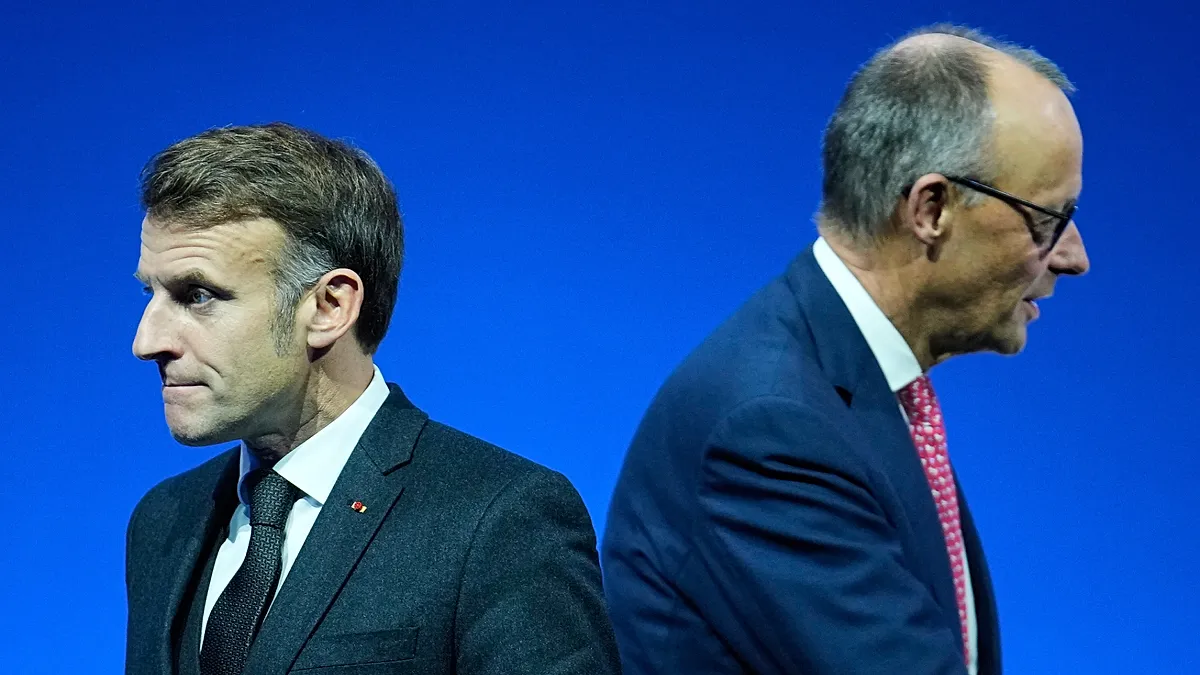
The failure of the FCAS program has sparked debates about the balance between unity and independence in European defense. French President Macron and German Chancellor Olaf Scholz have both expressed concerns about the need for self-reliance in military production, especially amid geopolitical uncertainties. Macron, in a recent statement, emphasized that “Europe has never needed unity, greater independence, and greater sovereignty more than it does now,” signaling a strategic pivot away from large multilateral projects. This sentiment aligns with Germany’s desire to reduce its reliance on France for key defense technologies, as highlighted in discussions earlier this year.