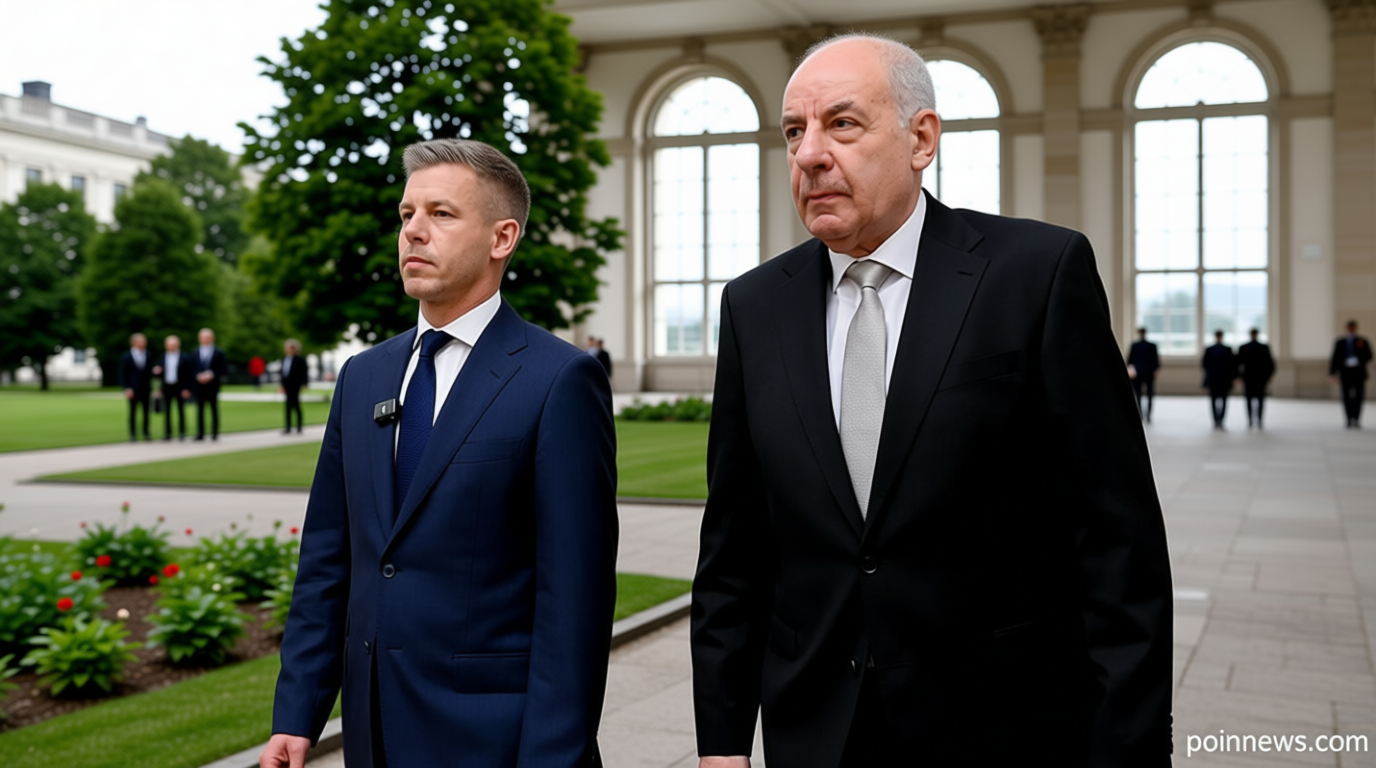
How NATO leaders reacted to Erdoğan’s elaborate firearm gift
Erdoğan's Gifting of Vintage Revolvers Sparks NATO Leaders' Reactions How NATO leaders reacted to Erdoğan has been a topic of discussion following the summit

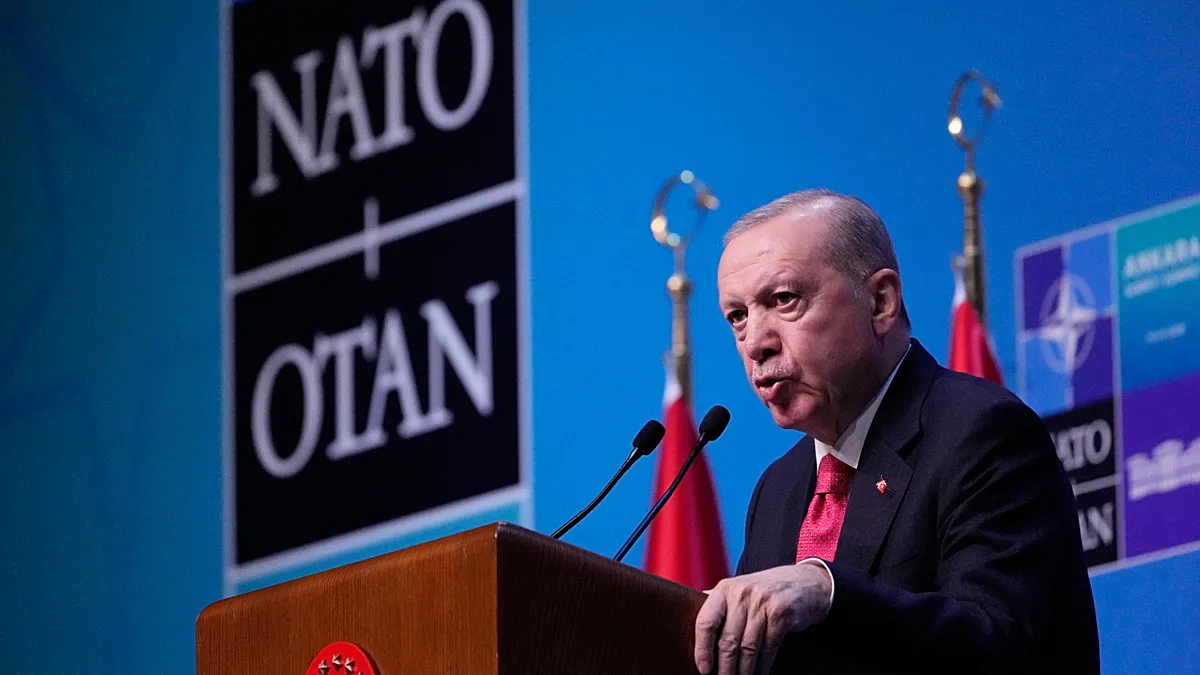
Erdoğan’s Gifting of Vintage Revolvers Sparks NATO Leaders’ Reactions
Poinews.com – How NATO leaders reacted to Erdoğan has been a topic of discussion following the summit held in Ankara on 8 July 2026, where Turkish President Recep Tayyip Erdoğan surprised allies with an unusual token of appreciation: a handcrafted vintage revolver. This gesture, which symbolized both Turkish heritage and a reaffirmation of the alliance’s bond, was met with a range of responses from NATO members. Each leader received a .357 Magnum revolver, engraved with their name and the Turkish flag, and equipped with live ammunition. The weapons were presented in a wooden case, accompanied by a note from Erdoğan that highlighted the revolver’s historical significance as “Gümüşay, the first revolver-type handgun produced in our country.” The gesture, while unexpected, was framed as a meaningful nod to Turkey’s contributions to NATO’s collective security.
Symbolism and Strategic Context
Erdoğan’s choice to present revolvers as gifts was not merely ceremonial. The act was intended to underscore Turkey’s historical role in the alliance and its unique position as a NATO member with a strong military tradition. The Gümüşay revolver, a model produced in the 1920s, represents a pivotal era in Turkish military history, when the nation was transitioning from its Ottoman past to a modern state. By gifting these weapons, Erdoğan sought to highlight Turkey’s enduring influence and its symbolic connection to the NATO partnership. The event also occurred during a critical moment in the alliance’s history, as leaders grappled with ongoing geopolitical tensions and the need to solidify unity.
The revolvers were distributed with a special waiver for export controls, allowing their transfer to member states without immediate restrictions. This decision reflected a mutual understanding among NATO leaders that the gifts were more about cultural and historical recognition than military utility. For instance, Germany’s Chancellor Friedrich Merz entrusted the weapon to the Ankara Embassy, which would later send it to Berlin for official storage. A government representative explained,
“The revolver was transferred to the embassy to ensure proper importation and its addition to the inventory of state gifts.”
This process was repeated in Spain, where Prime Minister Pedro Sánchez directed the firearm to the Interior Ministry, where it would be deactivated by the Guardia Civil’s Weapons Intervention Service.
Varied Reactions and National Approaches
While the revolvers were universally acknowledged as a symbolic gesture, member states approached their handling differently. Portugal’s leader, Luís Montenegro, reportedly passed the revolver to local police for a forensic evaluation, emphasizing its value as a historical artifact. A source from his office noted,
“The gun was given to our security team, who transported it to Portugal for analysis.”
In contrast, Poland’s Secretary of State, Marcin Przydacz, prioritized safekeeping, stating,
“It is stored in an appropriate facility to ensure respect and security.”
Belgium’s Prime Minister Bart De Wever handed the weapon to airport authorities upon returning home, while his team managed similar gifts for EU officials Ursula von der Leyen and António Costa.
Greece’s Prime Minister Kyriakos Mitsotakis took a different route, choosing to donate the revolver to the Athens War Museum. This decision was seen as a gesture of appreciation for Turkey’s shared history in the region. Meanwhile, the UK’s Keir Starmer left the firearm in Turkey with officials, awaiting deactivation before its arrival in London. The Canadian Prime Minister, Mark Carney, humorously remarked on the disparity between his nation’s syrup gift and Erdoğan’s weapon, quipping,
“This is something for the war museum—it’s interesting and ties back to NATO.”
These varied responses highlighted the nuanced ways NATO members interpreted the significance of the gift.
The event sparked conversations about the intersection of tradition and modernity within NATO. While some leaders expressed surprise at the nature of the gift, others saw it as a creative way to strengthen diplomatic ties. De Wever, for example, reportedly learned the specifics of the revolver’s presentation only after returning to Belgium. Despite this, the revolvers were not intended for active use, with officials ensuring they would be rendered inert before being displayed or archived. This approach underscored the balance between honoring Turkey’s legacy and maintaining the alliance’s strategic focus.
In the broader context of the NATO summit, Erdoğan’s gesture was part of a larger effort to showcase Turkey’s cultural and military contributions. The summit, which concluded with renewed commitments to Article 5, provided a platform for leaders to express solidarity while also addressing emerging challenges. The revolvers, though a small part of the event, added a memorable touch to the proceedings. As the alliance continues to navigate complex global dynamics, such symbolic gestures may play a role in reinforcing unity and mutual respect among its members. The reaction to Erdoğan’s gift thus serves as a microcosm of NATO’s evolving relationship with Turkey and its broader strategic goals.