No, the EU is not about to censor access to the internet
s not about to censor access to the internet No the EU is not about - The European Union has faced growing concerns and misinformation about its plans to

No, the EU is not about to censor access to the internet
Poinews.com – The European Union has faced growing concerns and misinformation about its plans to implement stricter controls on internet access. However, the truth is that “No the EU is not about to censor access to the internet” — the proposals in question are focused on age verification, not internet censorship. The recent claims of an “internet passport” requirement, which gained traction online, have sparked confusion and fear among users. These rumors suggested that citizens would need to prove their age before browsing the web, with some even speculating that Virtual Private Networks (VPNs) might be banned to prevent circumventing the system. Yet, the European Commission has clarified that such measures are designed to protect children from harmful content, not to restrict digital freedom.
The Age Verification Initiative Explained
The proposed age-verification system is part of a broader effort to ensure that online services, particularly those targeting younger audiences, can confirm users’ ages accurately. While the system requires users to provide proof of age — such as a passport or ID card — it does not mandate the sharing of personal details like names or birth dates. This process is intended to be seamless and secure, with the European Commission President Ursula von der Leyen comparing it to the age checks required for purchasing alcohol. “The system allows people to prove they meet the age verification requirement without revealing additional personal details,” she stated in a recent statement. The initiative aims to reduce exposure of children to online risks, such as inappropriate content or scams.
“The European Commission is not planning to create a system that restricts internet access. Instead, we are developing tools to protect users, especially minors, from harmful content,” explained a spokesperson. “The focus is on verification, not control.”
The implementation of this system will be carried out by individual EU member states or integrated into existing Digital Identity Wallets, which are part of the EU’s broader digital strategy. The verification process will likely involve a combination of government-issued IDs and secure authentication methods, ensuring that users can access age-restricted content without unnecessary barriers. Critics have raised concerns about the potential for misuse, but the Commission has emphasized that the system is designed to be transparent and open-source, allowing for public scrutiny and feedback before its rollout.
Debunking Misinformation and Addressing Concerns
Despite the Commission’s efforts to clarify its goals, the idea of an internet passport has been widely misunderstood. Some social media posts have exaggerated the scope of the initiative, claiming it could lead to a form of digital surveillance or internet censorship. However, these claims are not supported by the actual proposals. The system is meant to be a tool for content protection, not a mechanism for restricting access. For example, the requirement to prove age applies primarily to services that offer content tailored to children, such as gaming platforms or video-sharing sites.
Another common misconception is that the EU plans to ban Virtual Private Networks (VPNs) to enforce the new verification system. While some online rumors suggest this, the European Commission has explicitly denied any intention to restrict VPN usage. The spokesperson for the Commission reiterated that the system will coexist with existing technologies, including VPNs, which can be used to bypass geographic restrictions or enhance privacy. The confusion likely stems from the fact that the EPRS briefing, which discussed potential uses of VPNs to evade age checks, was misinterpreted as an official EU policy.
Furthermore, the system is not a blanket approach to internet regulation. It focuses on specific online services that target minors, rather than imposing restrictions on all digital activity. The Commission has also highlighted that the system will be optional for some platforms, allowing for a gradual rollout and testing of its effectiveness. This approach ensures that the system adapts to different needs without stifling innovation or limiting user choice.
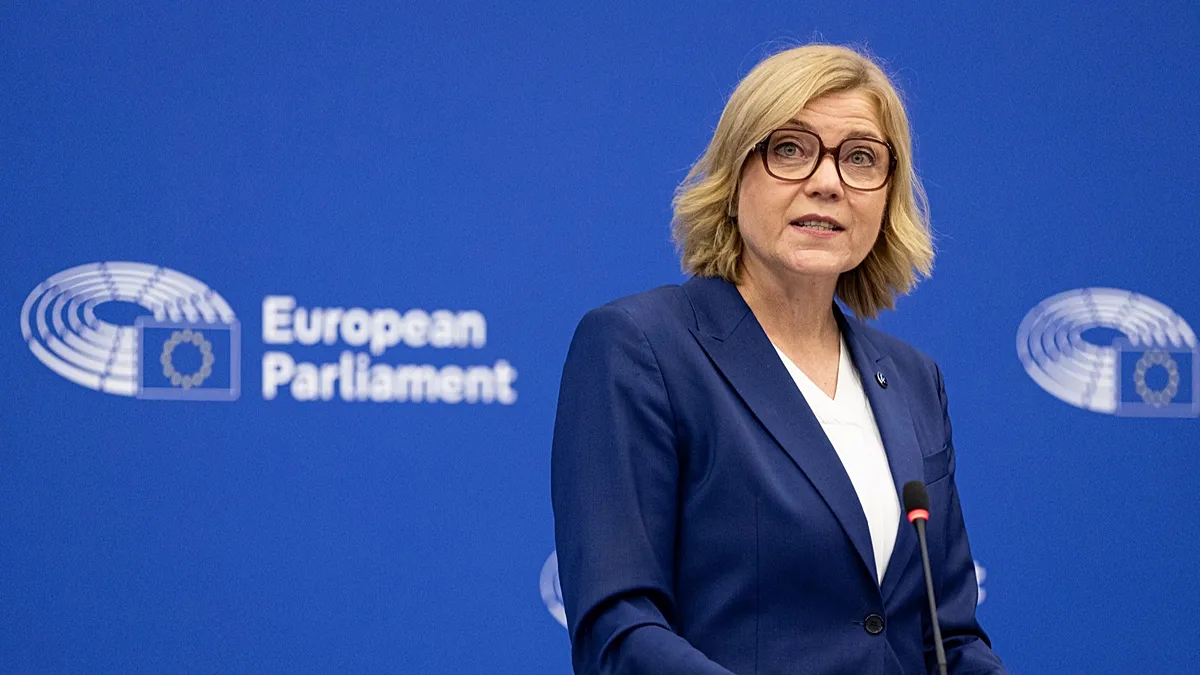
“The EU is not about to censor access to the internet. We are about to introduce a system that empowers users to control their own digital environment,” said the European Commissioner for Tech Sovereignty, Henna Virkkunen. “This is a step toward a safer internet, not a more restricted one.”
As the system moves forward, experts and stakeholders are closely monitoring its development to ensure it meets its intended goals without unintended consequences. While the proposal has sparked debate, the Commission remains committed to balancing child protection with digital freedom. With the system set to launch by the end of the year, the key challenge will be to implement it in a way that is both effective and user-friendly. The final decision on its structure and application will depend on feedback from the public and ongoing discussions among EU officials.