Proscribing pro-Palestinian group as ‘terrorist’ was lawful, UK court says
Proscribing pro-Palestinian group as 'terrorist' was lawful, UK court says Proscribing pro Palestinian group as terrorist - The UK court’s recent decision to

Proscribing pro-Palestinian group as ‘terrorist’ was lawful, UK court says
Poinews.com – The UK court’s recent decision to uphold the government’s designation of the pro-Palestinian activist group Palestine Action as a terrorist organization has sparked debate over the balance between national security and civil liberties. The ruling, delivered by the Appeals Court, concluded that the proscription of the group was legally sound, affirming the state’s authority to classify it under the Terrorism Act. This decision comes amid growing tensions in the UK over the treatment of pro-Palestinian protesters, who have been accused of inciting violence through their actions and rhetoric. The court’s analysis has reinforced the government’s position that the group’s activities meet the threshold for terrorist classification, despite arguments that its methods were peaceful and aimed at non-violent advocacy.
The Legal Justification for the Ban
Palastine Action, founded in 2020, has been actively organizing protests against UK-based weapons manufacturers, particularly those involved in supplying equipment to Israel’s military. The group’s website, which was blocked from UK access, outlines its goal of ending what it describes as global support for Israel’s “genocidal and apartheid regime.” Its tactics include targeting factories and infrastructure associated with these companies, often using direct action to disrupt operations. The court emphasized that the group’s covert structure, with secret cells designed to evade detection, justified its classification as a terrorist entity. This contrasted sharply with the suffragettes, who engaged in open civil disobedience, highlighting the legal distinction between organized violence and peaceful protest.
The Political and Legal Context
The proscription of Palestine Action has been framed as a necessary step to combat perceived threats to national security. Critics, however, argue that the designation was politically motivated, especially following the Hamas attack on southern Israel in October 2023, which escalated the Gaza war and intensified scrutiny of pro-Palestinian groups. The government defended its decision, citing the group’s alleged use of violence in targeting Israeli defense firms. Foreign Secretary Yvette Cooper stated that supporters of the group were often unaware of its “full nature” and that its activities posed a tangible risk to public safety. This argument aligns with the broader legal framework that allows the UK to label organizations as terrorist based on their capacity to plan and execute attacks, even if their primary focus is on advocacy.
“It is a covert organisation operating with secret cells to avoid the detection and prosecution of those using violence to destroy the property of third parties,” stated Judge Sue Carr in the ruling.
The court’s ruling was pivotal in maintaining the group’s status on the UK’s terrorist list, which includes groups like Hamas and Hezbollah. This classification has significant implications, as it enables the government to justify arrests, asset freezes, and other restrictive measures against the organization’s members. The case has drawn attention to the evolving definition of terrorism in the UK, where the focus has increasingly shifted toward actions that challenge Israel’s policies, even if they do not directly involve armed conflict. Legal experts have noted that the decision sets a precedent for how pro-Palestinian activism is perceived under national security laws, raising questions about the potential for broader crackdowns on similar groups.
Impact on Activists and Public Perception
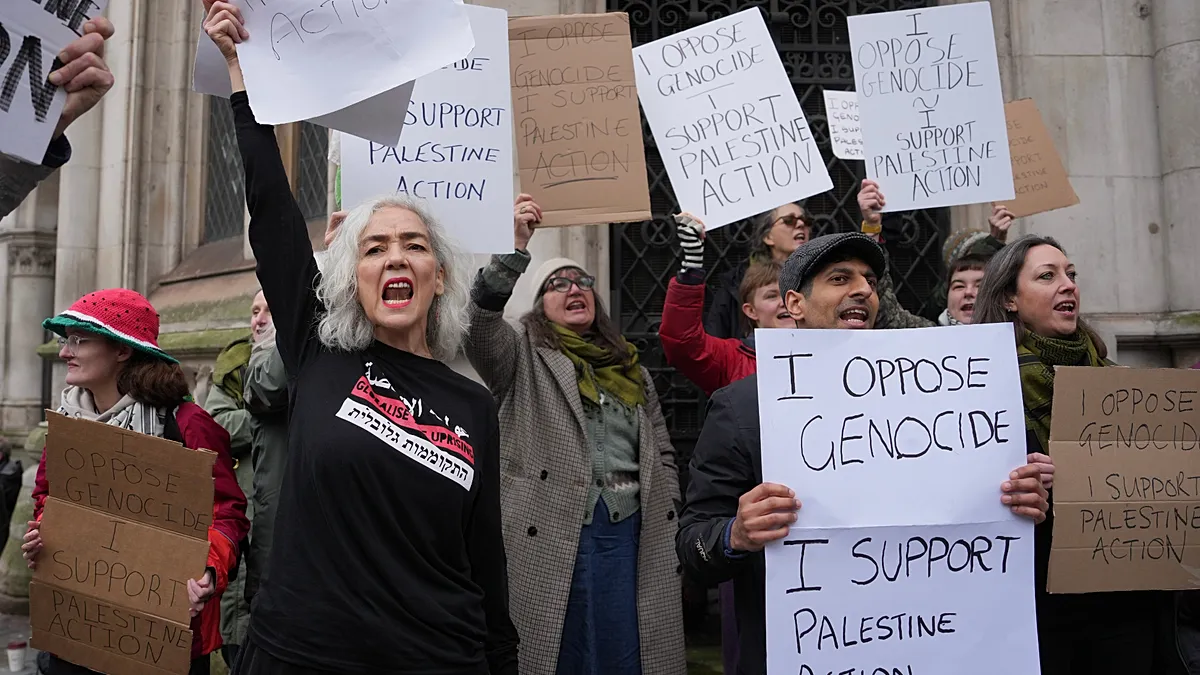
Since the group’s designation under the Terrorism Act on July 5, 2025, over 3,000 individuals have been arrested for their association with Palestine Action. Protests have turned into high-profile events, with demonstrators carrying signs like “I oppose genocide, I support Palestine Action” as they face charges of supporting terrorism. The High Court initially ruled against the proscription in February 2025, finding it disproportionate and overly broad, but the Appeals Court overturned this decision, citing the group’s organized, covert operations. This has left activists and human rights groups concerned about the erosion of free speech and the potential for political bias in the application of anti-terrorism laws.
Recent legal proceedings have further underscored the group’s activities. In August 2024, four members of Palestine Action were sentenced for damaging an Elbit site near Bristol. The group claimed their actions were aimed at dismantling drones and weaponry that could be used against civilians in Gaza, a cause they have consistently championed. While the court acknowledged the group’s intent, it deemed their methods as acts of terrorism, emphasizing the risk of violence that their covert operations posed. This decision has amplified the group’s role in the UK’s broader response to the Israel-Gaza conflict, positioning it as a key player in the debate over the use of military force in the region.
Meanwhile, the International Court of Justice (ICJ) case against Israel for alleged genocide in Gaza has continued to gain traction, with the court recognizing a “plausible risk” of genocide. This has deepened the legal and political complexities surrounding the conflict, as the UK’s proscription of Palestine Action is seen by some as part of a larger effort to align with Israel’s position. The ruling has also prompted discussions about the role of international law in domestic legal decisions, with critics arguing that the UK’s actions may prioritize geopolitical interests over the rights of activists. As the debate over the group’s classification persists, the case serves as a focal point for examining the intersection of terrorism law, activism, and international conflict.