UK fighter jets intercept Russian plane near aircraft carrier over Norwegian Sea
UK Fighter Jets Intercept Russian Plane Near Aircraft Carrier in Norwegian Sea UK fighter jets intercept Russian plane - During a NATO-led air defence

UK Fighter Jets Intercept Russian Plane Near Aircraft Carrier in Norwegian Sea
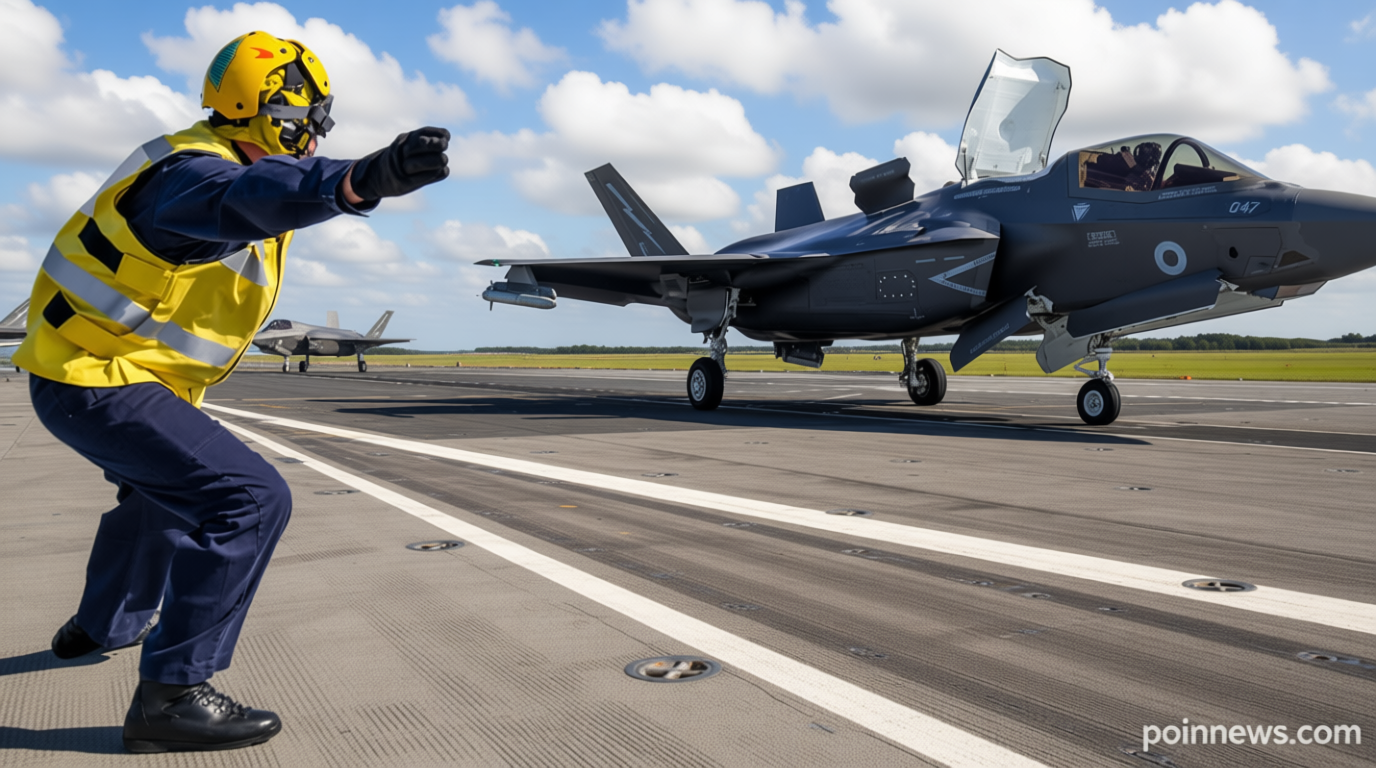
Poinews.com – During a NATO-led air defence operation in the Norwegian Sea, UK fighter jets intercepted a Russian aircraft that approached the HMS Prince of Wales, the UK’s flagship aircraft carrier, at low altitude. The incident, which occurred last week, involved a Russian Bear-F patrol plane conducting “unsafe” maneuvers close to the carrier. According to the UK Defence Ministry, the aircraft was observed deploying multiple sonar units near the carrier, raising concerns about potential surveillance or threat activities. Two F-35B Lightning II jets were swiftly deployed from the carrier to escort the Russian plane and ensure it remained within safe operational limits before departing the area. A spokesperson for the ministry described the encounter as “unprofessional” and emphasized its occurrence in the strategically significant High North region.
Strategic Implications of the Intercept
The interception near the HMS Prince of Wales highlights the growing tension in the North Atlantic as Russia intensifies its military presence in the region. The Norwegian Sea, a key area for NATO operations, has become a focal point for countering Russian expansionist ambitions. Officials noted that the Bear-F’s low-altitude approach and sonar deployment could have posed a risk to the carrier’s defenses, especially with its role as a mobile airbase for joint operations. This event underscores the importance of maintaining a visible NATO military footprint to deter aggression and reassure allies. The UK’s participation in the mission, alongside Iceland, demonstrates the alliance’s commitment to collective security in this volatile region.
“This incident reinforces the necessity of a robust NATO presence in the High North, where Russian activities are becoming more frequent and assertive,” said Defence Secretary Dan Jarvis, who recently took over as head of the UK Ministry of Defence. His comments were made following a visit by Icelandic Foreign Minister Thorgerdur Katrin Gunnarsdottir to the carrier, where she praised the UK’s contribution to the alliance’s strategic goals.
NATO’s Enhanced Air Defence in the Region
The operation involving the HMS Prince of Wales is part of NATO’s broader efforts to strengthen its aerial defences in the face of Russian military advancements. The carrier, which has been deployed in the Norwegian Sea since early July, serves as a critical platform for demonstrating NATO’s readiness to respond to potential threats. The deployment of F-35B jets from the carrier marks a significant shift in the alliance’s operational capabilities, allowing for rapid response to emerging challenges. Analysts suggest that this move is part of a larger strategy to project power closer to Russia’s borders and maintain a deterrent presence in contested waters.
Historically, the Norwegian Sea has seen increased Russian activity, including submarine patrols and air sorties, as part of its efforts to assert influence over Arctic regions. The recent interception adds to a series of incidents that have raised alarms about Russia’s readiness to challenge NATO in its own backyard. The UK’s participation in these operations is also a strategic move to support its long-term goal of modernizing its naval and air forces. With the carrier acting as a mobile hub for NATO missions, the UK aims to solidify its role as a key player in the alliance’s security framework.
UK Defence Spending and Modernisation Efforts
The incident took place just days after the UK government unveiled its 10-year Defence Investment Plan, which outlines significant commitments to modernise the armed forces. Outgoing Prime Minister Keir Starmer announced nearly £300 billion ($350 billion) in defence funding over four years, with an additional £15 billion ($17 billion) allocated specifically for enhancing NATO readiness. However, the plan faced criticism from the Ministry of Defence, which had requested £28 billion ($32 billion) more to support urgent procurement and training initiatives. Despite these disagreements, the recent intercept serves as a practical example of how the UK’s investment is being utilised to bolster its military capabilities in critical theatres.
The UK’s focus on air and naval modernisation is a direct response to evolving threats, including Russian military activity in the High North. The F-35B jets, equipped with advanced radar and targeting systems, are designed to operate in contested environments, making them ideal for intercepting Russian aircraft. Analysts believe that this operation not only tested the UK’s response capabilities but also highlighted the growing interoperability between NATO allies. As Russia continues to expand its military presence in the region, the UK’s commitment to NATO operations remains a vital component of the alliance’s strategic posture.