Unitree’s viral dancing, rollerblading robots make a 600% stock market debut
On Wednesday, shares of Unitree — the largest humanoid robot manufacturer in the world — exploded upward by more than 600 percent during their first day of

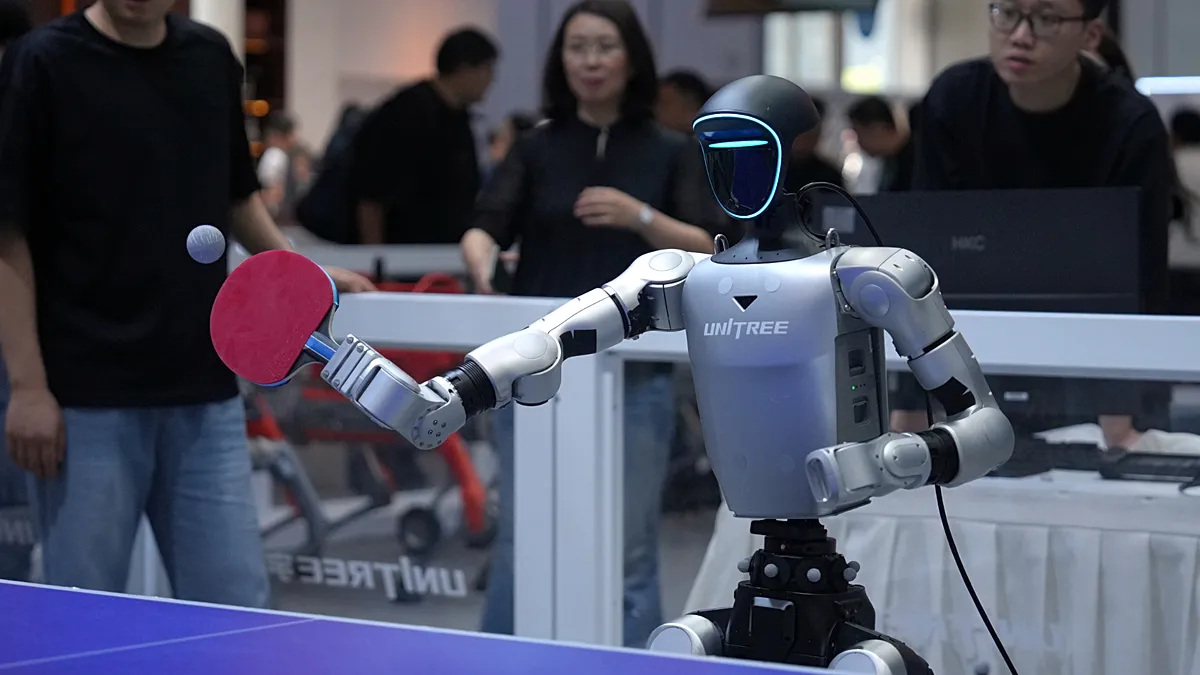
Table of Contents
Unitree Rockets 600% in Historic Stock Market Debut
Poinews.com – On Wednesday, shares of Unitree — the largest humanoid robot manufacturer in the world — exploded upward by more than 600 percent during their first day of public trading. The Chinese firm’s stock climbed from an IPO price of roughly 150.8 yuan (€19.3) to a peak of 1,100 yuan (€140.6) before easing back to a gain of nearly 500 percent by the close.
The frenzy was fueled overwhelmingly by Chinese retail investors. In the allocation reserved for non-professional buyers, demand outstripped available supply by thousands of times over, underscoring the extraordinary appetite for the company among ordinary shareholders.
From Viral Clips to Wall Street
Unitree’s path to the public markets was paved by a wave of viral internet videos showing its machines performing as backup dancers beside pop stars, executing martial arts routines, rollerblading, rallying table tennis, and completing backflips and vaults. Those spectacular demonstrations, paired with aggressive marketing, propelled the brand to global recognition and positioned it as a high-volume player ahead of several major American and European rivals.
A Cost Advantage Built in Hangzhou
The company’s competitive edge rests heavily on affordable hardware. Its robot dogs and budget-tier humanoids sell at a fraction of what comparable US products cost, a margin sustained by robust local supply chains in Hangzhou that keep manufacturing expenses comparatively low. That pricing strategy has allowed Unitree to turn a profit far earlier than most other early-stage robotics startups.
Wang Xingxing, who founded the company and serves as its chief executive, retains approximately one-fifth of the equity.
Robotics as National Priority and Physical-AI Engine
Beijing treats robotics as a strategic pillar in its effort to offset a rapidly shrinking workforce. More broadly, the sector sits at the intersection of artificial intelligence and the physical world. By deploying robots for real-world trial and error — walking, gripping objects, reacting to environments — developers generate rich data loops that feed back into smarter models while sharpening perception and reaction capabilities.
Goldman Sachs projects the global humanoid-robot market will reach $38 billion (€32.7 billion) by 2035. At present, only a handful of firms are publicly listed in the space, including Unitree and China’s UBTECH Robotics. Tesla, Xiaomi, and Hyundai Motor each maintain internal humanoid-robot divisions, while additional Chinese players such as Leju Robotics and Deep Robotics are reportedly preparing their own public offerings.
Geopolitical Friction
Despite the sector’s momentum, several governments — the United States among them — continue to favor a cautious approach to importing or depending on foreign-made humanoid and quadruped robots, citing national-security considerations. Unitree itself has been placed on a Pentagon roster of Chinese military-linked companies. The department described the firm as
a “contributor to the Chinese defence industrial base”
a characterization the company disputes, maintaining that its robots are designed exclusively for civilian applications.
Related Reading
Frequently Asked Questions
What is Unitree s viral dancing rollerblading robots?
Unitree s viral dancing rollerblading robots is the main topic of this guide. The article explains the context, practical details, and next steps readers should understand.
Why does Unitree s viral dancing rollerblading robots matter?
Unitree s viral dancing rollerblading robots matters because readers are looking for a useful answer, not just a short summary. Good content should match search intent and help them decide what to do next.