Meet the man tracking 39,000 flights over Lisbon from his terrace
Every few minutes, a jet tears across the sky above central Lisbon, its engines audible well before the aircraft clears the city's skyline. For residents

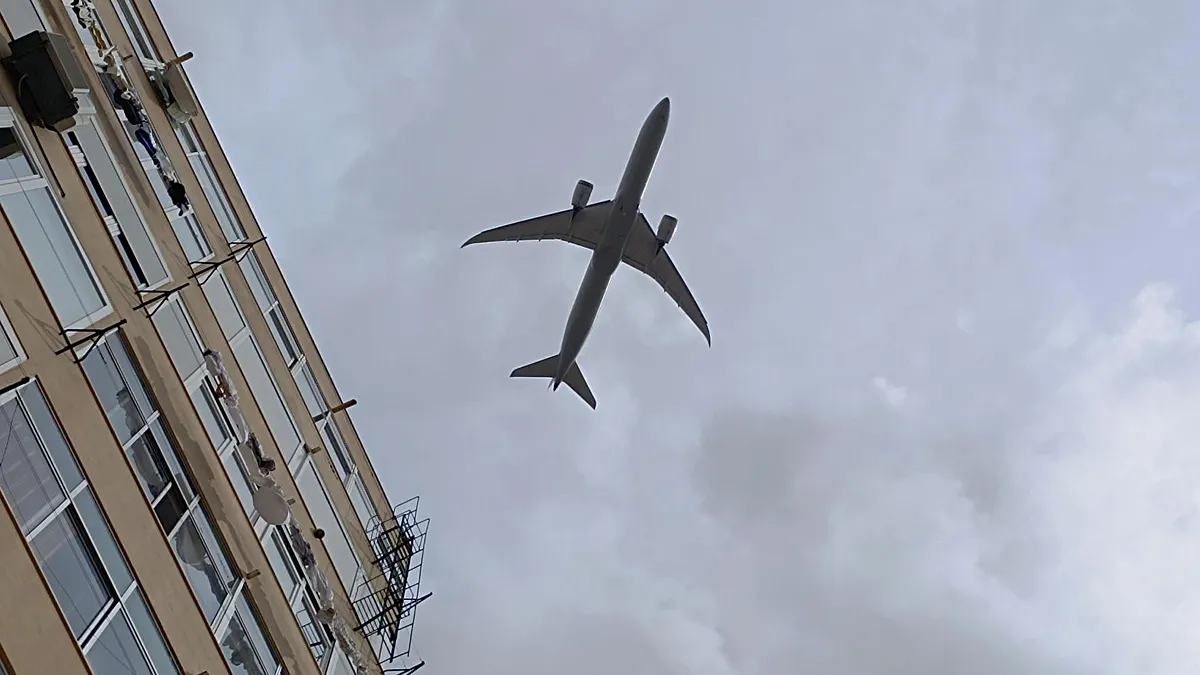
Table of Contents
A Lisbon Rooftop Turns into a Flight-Tracking Observatory
Poinews.com – Every few minutes, a jet tears across the sky above central Lisbon, its engines audible well before the aircraft clears the city’s skyline. For residents living beneath the flight paths of Humberto Delgado Airport — an international hub squeezed into the heart of the capital — the constant overhead traffic has become a kind of ambient soundtrack. Yet one man decided that familiarity should not mean silence. From his terrace, António Boaventura has been quietly cataloguing every plane that crosses the Lisbon airspace, building what has become one of the city’s most detailed independent flight-monitoring datasets.
From Annoyance to Instrumentation
Boaventura, who grew up in France and spent years abroad before settling in the Portuguese capital, carries a background in business management. His fascination with aviation, however, predates any formal career. He recalls watching aircraft pass overhead as a child, back when his grandparents kept a home in the Alvalade district.
“I’ve got used to it and, honestly, my grandparents had a house in Alvalade, so since I was a kid I’ve been watching the planes go by.”
That childhood habit, combined with the sheer volume of traffic now passing over his terrace, prompted him to ask a practical question: could the noise and vibration be quantified? What began as a casual curiosity project evolved into a structured measurement station.
“I realised we could go much further, measuring the aircraft and recording not only the decibels but also the vibrations on the walls, so I started building the system bit by bit.”
The Lisbon Finals Platform
The resulting project, called Lisbon Finals, went live with its first recorded measurement on 3 May. Since then, the system has logged more than 39,000 individual flights. Each event is timestamped and tagged with variables including aircraft speed, altitude, noise level in decibels, and structural vibration readings taken from the terrace walls. Flight numbers and operating airlines are also displayed, alongside photographs shared through the platform and a linked Instagram account.
Artificial intelligence handles the identification and classification of each aircraft, while the entire pipeline runs autonomously. Boaventura emphasises that no human intervention is required once the station is active.
“The whole system is completely autonomous, it works on its own.”
The physical station cost roughly €1,000 in hardware and took about six weeks to assemble. Software development for the online dashboard required additional time. Boaventura describes the project as perpetually unfinished — he continues to refine correlations between variables and adjust thresholds based on incoming data.
“I’m always working a bit to improve it and make adjustments based on the data, because we can always make new correlations.”
Crucially, the architecture is open. Additional measuring stations can be integrated, meaning the dataset could expand beyond a single terrace into a distributed sensor network across the metropolitan area.
Night-Flight Rules and the Numbers That Challenge Them
Portuguese aviation regulation, administered by ANAC (the National Civil Aviation Authority), imposes strict limits on night operations at Humberto Delgado Airport. Between midnight and 6 a.m., the weekly cap stands at 91 movements, with no more than 26 permitted in any single night-time window. Additional criteria govern aircraft noise levels.
The Lisbon Finals website tracks alleged breaches of these restrictions in real time. A search covering July alone revealed 1,477 night-time flights monitored between 11 p.m. and 6:59 a.m. Of those, the platform flagged 397 as violations of the ANAC-regulated period. At least 207 met the site’s stricter definition of a “critical violation,” meaning recorded noise exceeded 98.9 decibels at the terrace sensor.
For context, 98.9 dB is comparable to the sound level of a chainsaw operating at close range. Sustained exposure at that intensity, particularly during sleep hours, is associated with cardiovascular stress and disrupted rest — concerns that environmental groups have raised repeatedly.
Community Impact and Environmental Scrutiny
Boaventura himself grew accustomed to the daytime roar, but he admits the nocturnal traffic surprised him when he first moved to Lisbon. In France, where he was raised, night curfews on aircraft movements are tightly enforced and rarely exceeded.
“I was surprised to see planes flying at night over the skies of Lisbon.”
Environmental associations active in the Lisbon metropolitan area, including the group ZERO, have long warned about cumulative aircraft-noise exposure and its potential health effects on surrounding neighbourhoods. In April, ZERO published an assessment of the airport’s 2024–2029 Noise Action Plan, scrutinising whether planned mitigation measures are adequate for the density of residential zones directly beneath the approach and departure corridors.
Boaventura positions his platform as deliberately neutral — a data source rather than an advocacy tool.
“The aim of the platform is precisely to remain neutral and give the data to people who need it and who want it. The measurements are completely neutral and I think the figures speak for themselves.”
Whether the figures ultimately inform municipal planning, fuel litigation over noise complaints, or simply satisfy the curiosity of aviation enthusiasts, the terrace station has already accumulated a dataset of considerable scale. For a project that began as a man watching planes from his balcony, the scale of what has been recorded in under five months underscores just how saturated the Lisbon airspace truly is — and how little structured public data existed before one resident decided to start counting.
Related Reading
Frequently Asked Questions
What is Meet the man tracking 39 000 flights?
Meet the man tracking 39 000 flights is the main topic of this guide. The article explains the context, practical details, and next steps readers should understand.
Why does Meet the man tracking 39 000 flights matter?
Meet the man tracking 39 000 flights matters because readers are looking for a useful answer, not just a short summary. Good content should match search intent and help them decide what to do next.