Alpine glacier melts faster as second heatwave hits France
Alpine Glacier Melts Faster as Second Heatwave Hits France Alpine glacier melts faster as second - As the second heatwave of the year intensifies across

Alpine Glacier Melts Faster as Second Heatwave Hits France
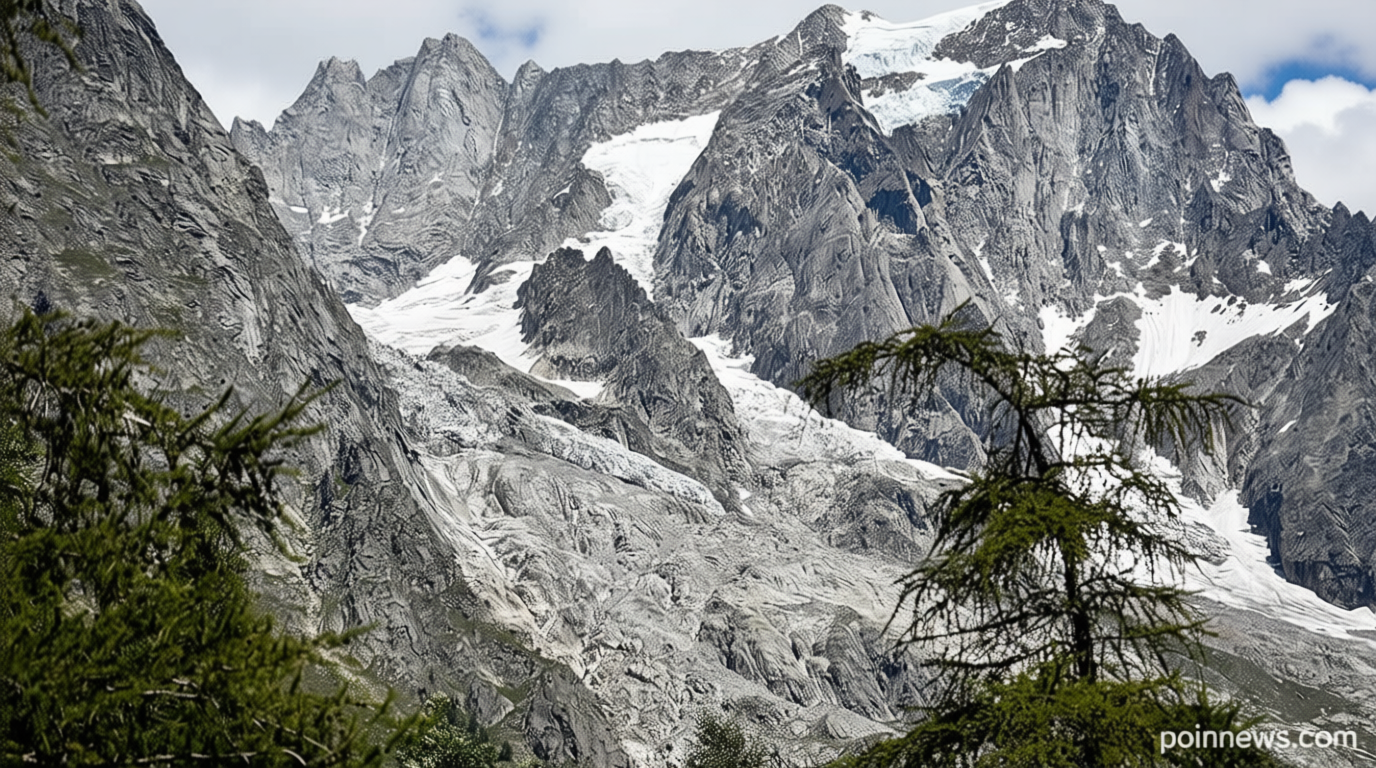
Poinews.com – As the second heatwave of the year intensifies across France, the Alpine glacier is experiencing accelerated melting, raising urgent concerns about the region’s environmental stability. Satellite imagery and ground-based observations reveal a stark decline in ice mass, with the Bossons Glacier—located in the Mont Blanc massif above Chamonix—showing particularly alarming signs. The melting process has intensified over recent weeks, contributing to visible changes in the glacier’s structure, including the expansion of a large cavity in its lower section, first documented in 2025. This phenomenon underscores the growing impact of climate change on alpine ecosystems, as the glacier’s retreat becomes increasingly pronounced under the pressure of consecutive heatwaves.
Climate Change and the Accelerated Melt
The current heatwave marks the second consecutive period of extreme temperatures in the Alps, exacerbating the glacier’s vulnerability to rapid thawing. Scientists have noted that the Alpine glacier melts faster as second heatwaves occur more frequently, driven by rising global temperatures and shifting weather patterns. The Mont Blanc massif, home to the Bossons Glacier, has historically been a critical indicator of climate trends, but the pace of ice loss in recent years has outstripped historical averages. For instance, the glacier’s front has receded by over 30 meters since 2020, a rate of decline that has accelerated following the second heatwave in late June 2026. This melting is not just a seasonal event but a harbinger of long-term ecological shifts.
“The second heatwave has acted as a catalyst for glacier retreat, with temperatures peaking at 32°C in the French Alps during the past fortnight,” explained Dr. Élodie Martin, a glaciologist at the University of Grenoble. “Such extreme conditions are becoming more common, and the Alpine glacier melts faster as second heatwaves disrupt the delicate balance of snow accumulation and melt.”
Regional Impacts and Ecological Concerns
The melting of the Alpine glacier melts faster as second heatwaves create a cascade of environmental challenges. In Chamonix, where the Bossons Glacier is a vital source of freshwater, the increased runoff has already affected local hydrology, altering river levels and impacting agricultural irrigation. Additionally, the exposed rock and debris from the glacier’s retreat are influencing the surrounding microclimate, with potential consequences for biodiversity. Alpine flora and fauna, adapted to cold and stable conditions, are facing habitat loss and shifting ecosystems. The loss of snow cover also reduces the glacier’s albedo effect, accelerating further warming and melting—a feedback loop that scientists warn could worsen the crisis.
Experts have linked these changes to broader climate trends, emphasizing that the Alpine glacier melts faster as second heatwaves are part of a larger pattern of warming. According to the European Environment Agency, the Alps have warmed by 2°C since the 19th century, with glaciers retreating at a rate of 1.5 meters per year on average. However, the second heatwave in 2026 has pushed this rate to unprecedented levels, with the Bossons Glacier losing nearly 20% of its volume in just six months. This accelerated melting not only threatens the glacier itself but also has implications for global sea levels and weather systems.
Historical Context and Global Relevance
The Bossons Glacier, once a symbol of the French Alps’ enduring beauty, has seen its size shrink dramatically over the past few decades. In the 1980s, it extended its ice to the valley floor, but today, it is one of the most rapidly retreating glaciers in the region. The latest data from the French National Institute for Environmental Studies and Analysis (INRAE) highlights that the Alpine glacier melts faster as second heatwaves are occurring more frequently, a trend consistent with global climate models. This rapid loss is part of a worldwide phenomenon, with glaciers in the Andes, Himalayas, and other mountain ranges also showing similar patterns. The Alps, however, remain a critical focal point due to their proximity to major populations and their role in regulating water supply for millions.
Future Projections and Conservation Efforts
If current conditions persist, the Alpine glacier melts faster as second heatwaves could lead to irreversible damage. Climate projections suggest that by 2050, up to 60% of the Alps’ glaciers may disappear, with the Bossons Glacier potentially vanishing entirely within the next two decades. This projection is based on models that account for continued emissions of greenhouse gases and the increasing frequency of heatwaves. Local conservation groups and international environmental organizations are now calling for urgent action to mitigate the impact. Initiatives such as reforestation projects, renewable energy investments, and glacier monitoring programs are being expanded to address the crisis. However, experts stress that these efforts must be scaled up to counteract the accelerated melting driven by the second heatwave and other climate stressors.
“The second heatwave is a stark reminder that the Alpine glacier melts faster as second events are no longer anomalies but part of a new climate reality,” said climate activist Antoine Dubois. “We need to act now to protect not only the glacier but the entire Alpine ecosystem that depends on it.”