Marco Rubio launches sweeping campaign to ‘dismantle’ ICC ‘threat to US sovereignty’
Marco Rubio Launches Campaign to Dismantle ICC Threat to US Sovereignty Marco Rubio launches sweeping campaign to dismantle - US Secretary of State Marco

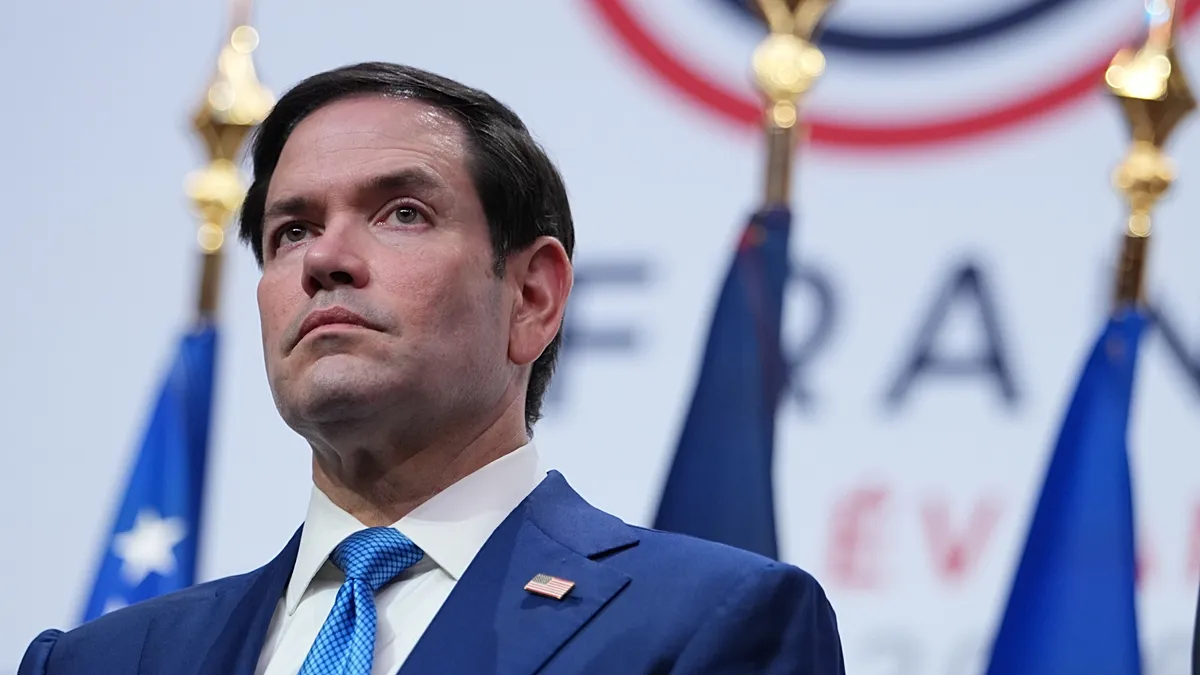
Marco Rubio Launches Campaign to Dismantle ICC Threat to US Sovereignty
Poinews.com – US Secretary of State Marco Rubio has launched a sweeping campaign to challenge the International Criminal Court’s (ICC) influence on American sovereignty. On July 14, 2026, the initiative was officially announced, with Rubio framing the ICC as a growing “threat” to U.S. legal authority. The campaign, which includes targeted diplomatic and legislative actions, aims to weaken the court’s ability to assert jurisdiction over U.S. military personnel and domestic affairs. By emphasizing the ICC’s encroachment on U.S. interests, Rubio seeks to rally international support for a broader movement to limit the court’s power.
U.S. Government’s Strategic Objectives
According to a State Department release, the campaign’s primary goals are to “dismantle” the ICC’s authority and “protect” U.S. sovereignty from international judicial overreach. The administration argues that the court has exceeded its mandate by pursuing cases against American officials without prior agreement. “The ICC operates under the principle that states must invite its investigation, not impose its will unilaterally,” a department spokesperson said. This stance is supported by the claim that the United States has not ratified the Rome Statute, the treaty that grants the ICC its legal standing.
“The ICC and its allies are conducting a legal offensive against our country, using statutes and international agreements rather than military force,” Rubio stated in a video released alongside the campaign announcement. He stressed that the court’s actions risk undermining the U.S.’s ability to govern independently, especially in matters of national security and military operations.
Expanding the Scope of the Initiative
Rubio’s campaign represents a broader effort to reshape the ICC’s global impact. It includes a combination of sanctions, diplomatic pressure, and legislative proposals to isolate the court. The State Department has already begun coordinating with allies to “revise their participation in the ICC” and “reduce financial support for the institution.” This approach aligns with the Trump administration’s earlier criticisms of the ICC, which accused it of targeting U.S. interests without sufficient justification.
“Americans have not endorsed this level of international oversight,” the department said. “The ICC’s power is tied to the consent of states, not the automatic application of its rules to U.S. actions.”
Legal experts have pointed out that the ICC’s jurisdiction is limited to crimes committed in the territory of member states or when a state has accepted its authority. However, the U.S. has consistently opposed this, arguing that the court’s interventions in cases like the war in Afghanistan or the invasion of Iraq represent an overreach. Rubio’s campaign now aims to formalize this opposition through a coordinated strategy across government agencies.
International Reactions and Legal Debates
The announcement has sparked a range of responses from global legal communities. Some critics argue that the U.S. is using the campaign to justify impunity for its military actions, while others support the effort to limit the ICC’s jurisdiction. “The ICC is a valuable institution, but its power must be balanced with the sovereignty of nations like the United States,” said one legal analyst. This debate highlights the tension between international accountability and national legal autonomy, a core theme of Rubio’s initiative.
“The ICC’s authority is not arbitrary—it’s based on the treaties and agreements of its member states,” explained Kenneth Roth, former director of Human Rights Watch. “The U.S. has the right to reject its jurisdiction, but the campaign also risks undermining the court’s credibility in other regions.”
Roth further noted that the ICC’s role in prosecuting U.S. officials depends on the cooperation of member states, a factor that the U.S. can influence. The campaign is seen as a way to leverage this dynamic, potentially persuading other nations to question the ICC’s authority. However, it also raises concerns about the U.S. setting a precedent for selective international accountability, which could impact the court’s legitimacy in the eyes of the global community.
Long-Term Implications and Political Context
As the campaign gains momentum, its long-term implications for U.S. foreign policy and international law remain a topic of discussion. Rubio’s efforts are part of a larger political strategy to position the U.S. as a leader in challenging multilateral institutions, a role that has been central to his public persona. The campaign also aligns with growing bipartisan support for reducing the ICC’s influence, particularly in cases where the court has been accused of bias or lack of evidence.
“Rubio’s campaign is not just about the ICC—it’s about reasserting the U.S. as a sovereign actor on the global stage,” said a congressional aide. “This aligns with the broader goal of ensuring that American decisions are not subject to external judicial review without explicit consent.”
With the ICC now at the center of a political battle over sovereignty, the U.S. is pushing for a revision of the court’s legal framework. The campaign’s success will depend on its ability to build coalitions and demonstrate the ICC’s overreach, while maintaining the U.S.’s credibility as a defender of national interests. As the debate continues, the focus keyword “Marco Rubio launches sweeping campaign” will remain pivotal in shaping the discourse around the ICC’s role in international relations.